

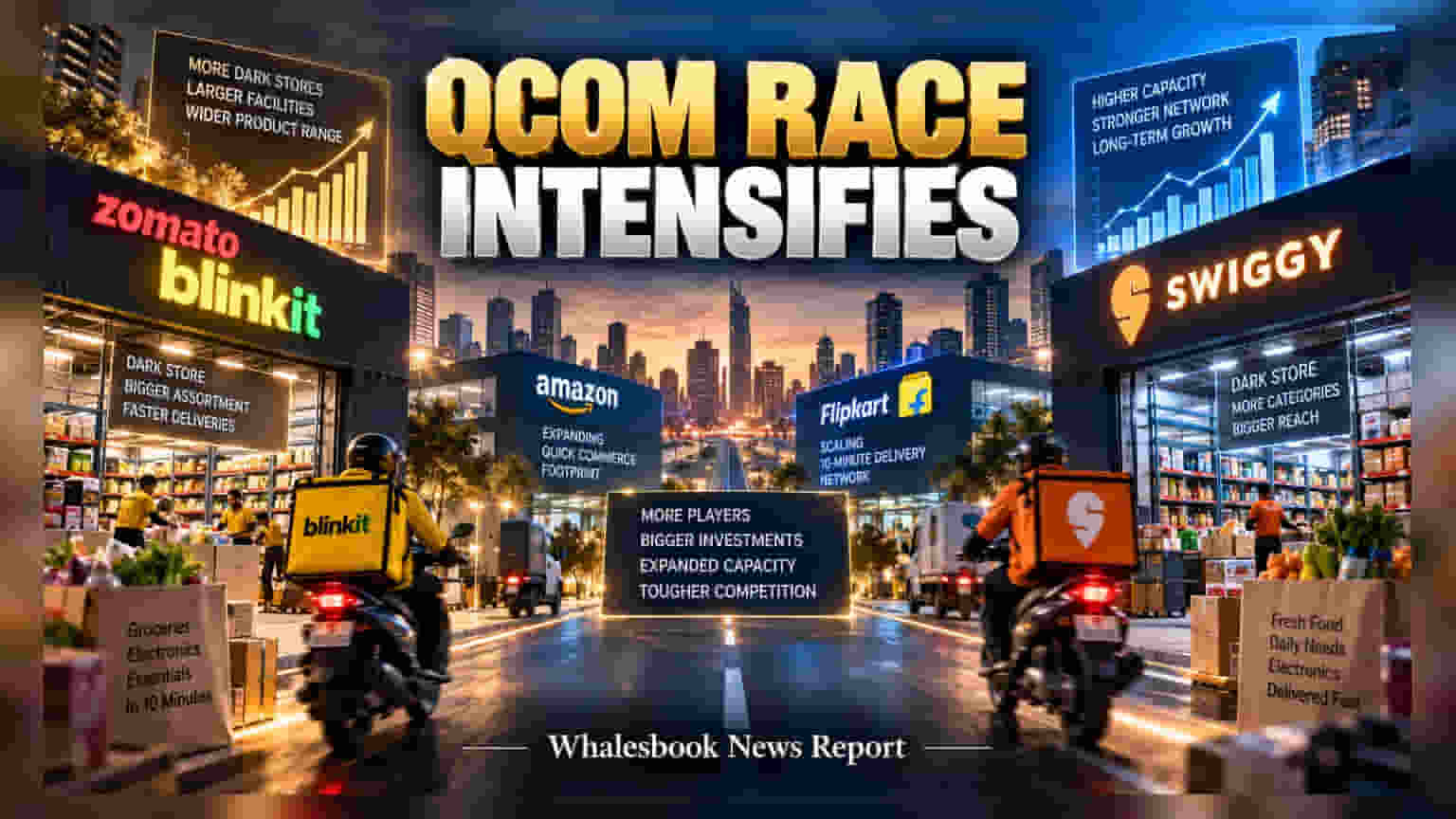
Quick commerce leaders are shifting their strategy by investing in larger dark stores and wider product ranges. While this move aims to increase average order values and long-term profit, it may pressure company margins in the near term due to higher setup costs.
India’s quick-commerce sector is entering a new phase of intense growth as dominant players like Zomato—operating through Blinkit—and Swiggy prepare for increased competition. Major retailers like Amazon and Flipkart are steadily scaling their presence in the 10-minute delivery space, forcing incumbent leaders to strengthen their infrastructure rather than relying solely on promotional discounts.
The Shift to Larger Dark Stores
The industry is moving toward a model of larger, more complex delivery hubs. The cost to set up a single dark store has risen significantly, with capital spending increasing from approximately ₹1 crore in the 2025 financial year to nearly ₹2.5 crore by 2027. Companies are also expanding the average size of these facilities from 3,000 square feet to over 5,000 square feet. This change is designed to store a broader range of items, from electronics to household essentials, which helps the platforms increase the average value of each order.
However, this heavy spending on infrastructure creates a dual challenge. While it allows for better product variety and potentially higher sales per delivery, it also creates an immediate financial burden. The upfront cost to build and manage these larger facilities will likely act as a drag on profit margins while the companies work to scale their operations.
Evolving Margin Targets
Profitability goals are also shifting as the sector matures. Blinkit has adjusted its upper-end contribution margin target to 6% of the net order value, moving slightly up from previous guidance of 5% to 6%. Meanwhile, Swiggy remains focused on expanding its capacity to capture market share, which may lead to continued margin pressure in the coming two years. In the food delivery segment, Zomato continues to report stronger adjusted profit margins compared to Swiggy, though the latter remains focused on its long-term profitability targets.
Competitive Moat and Risks
Despite the entry of well-funded competitors like Amazon and Flipkart, the quick-commerce market currently functions as a duopoly between the two major Indian platforms. Because building a reliable network of dark stores and delivery partners requires massive capital, industry experts suggest that it would be costly and difficult for new entrants to quickly disrupt the existing market leaders. The structural advantage held by these incumbents lies in their established supply chains and customer density.
For investors, the key monitorable will be whether these larger, more expensive dark stores can actually drive enough additional orders and product variety to offset the higher building costs. Tracking the quarterly trend in contribution margins and the pace of new store additions will be essential to understanding if this strategy is delivering sustainable value or if the cost of competition is becoming too high to maintain profitability targets.