 Whalesbook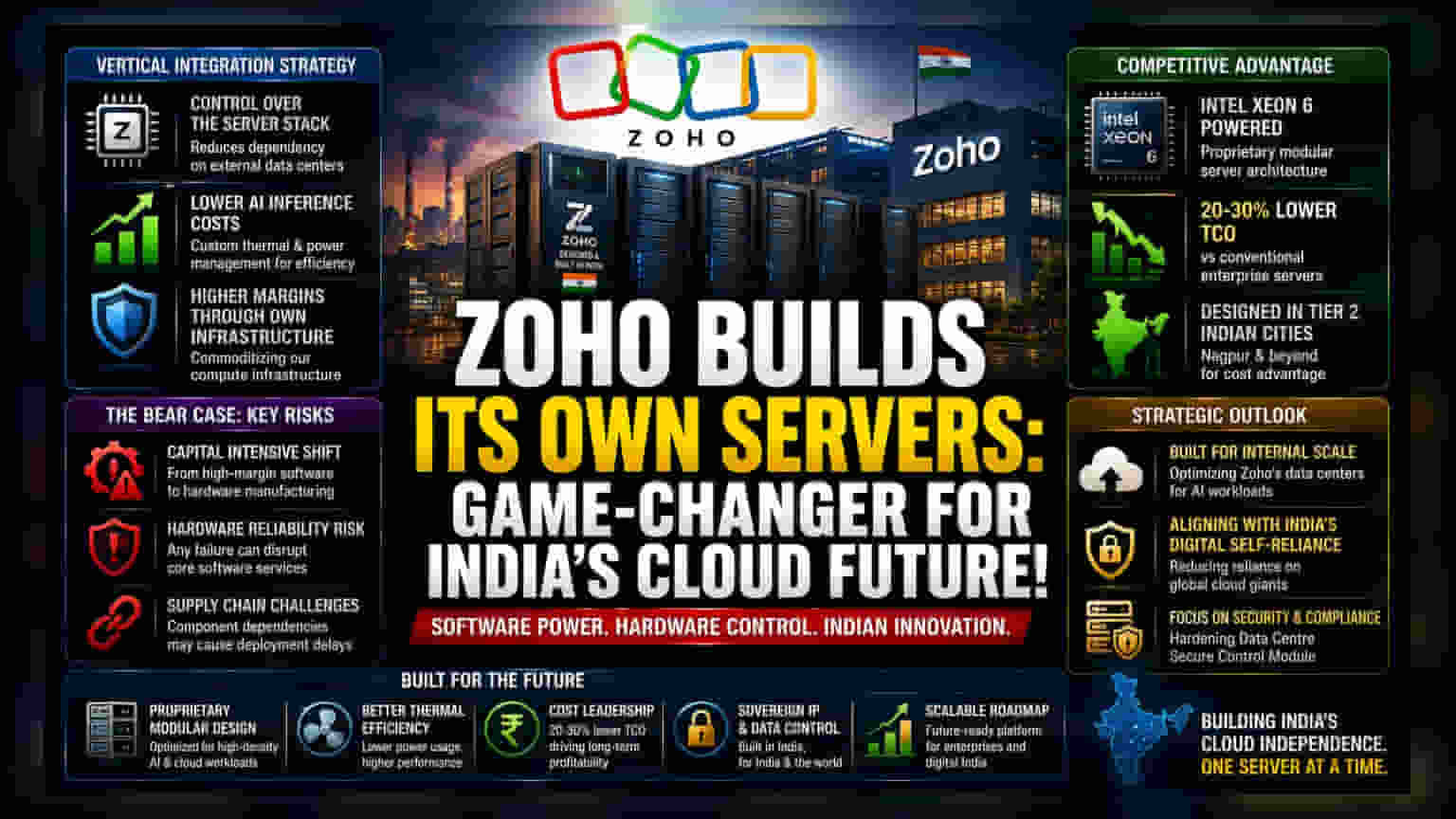


Zoho has debuted Nathu La, an indigenous server platform engineered to slash data center power consumption by up to 18%. By vertically integrating hardware and firmware with its existing software stack, the firm aims to bypass rising third-party infrastructure costs. This move secures greater control over data governance and positions the company to aggressively scale AI inference operations while reducing reliance on foreign supply chains.
The Vertical Integration Strategy
Zoho’s entry into the hardware space signifies a transition from a software-as-a-service provider to a vertically integrated technology enterprise. By assuming control over the server stack, the firm is addressing the primary margin squeeze currently facing the global cloud industry: the ballooning cost of compute power required for AI inference. Rather than simply leasing space in external data centers, the company is effectively commoditizing its own infrastructure, allowing for custom thermal and power management that off-the-shelf, general-purpose servers cannot match.
Competitive Benchmarking and Market Context
While major hyperscalers like Amazon and Google have long utilized proprietary server designs to optimize efficiency, Zoho’s approach is distinct for its focus on sovereign IP within an emerging market framework. Most enterprise software competitors remain tethered to standard hardware vendors, exposing them to inflationary pricing cycles in the semiconductor market. By utilizing Intel Xeon 6 processors within a proprietary modular chassis, the company aims to achieve a total cost of ownership reduction of 20-30%. This puts immense pressure on traditional server vendors who rely on enterprise clients maintaining heavy operational expenditures. Furthermore, by designing these units in Tier 2 cities like Nagpur, the firm has achieved a cost structure that standard Silicon Valley-centric tech firms cannot replicate.
The Forensic Bear Case
Despite the operational efficiencies, significant systemic risks remain. Designing and manufacturing enterprise-grade hardware at scale is a capital-intensive departure from the high-margin software model that historically defined the firm. The company faces the daunting task of sustaining long-term maintenance, firmware security patching, and global supply chain logistics—responsibilities typically handled by established hardware OEMs. Furthermore, any failure in hardware reliability could disrupt the very software applications that drive the company’s core revenue. There is also the risk of 'sovereign tech' projects becoming bogged down by the complexities of localized manufacturing, where supply chain bottlenecks for components not produced domestically could lead to unforeseen deployment delays.
Future Outlook and Strategic Direction
Moving forward, the focus shifts to whether this hardware architecture can be extended beyond internal use cases. While currently positioned to optimize the company's internal data centers, the platform aligns with the broader push for India's digital infrastructure self-sufficiency. If the hardware proves resilient under the high-density load of generative AI workloads, it could eventually serve as a template for other Indian enterprise firms looking to reduce their reliance on global cloud providers. The current roadmap suggests a focus on hardening the Data Centre Secure Control Module, signaling that the next phase of competition will be fought on the grounds of data security and regulatory compliance as much as raw computational power.