

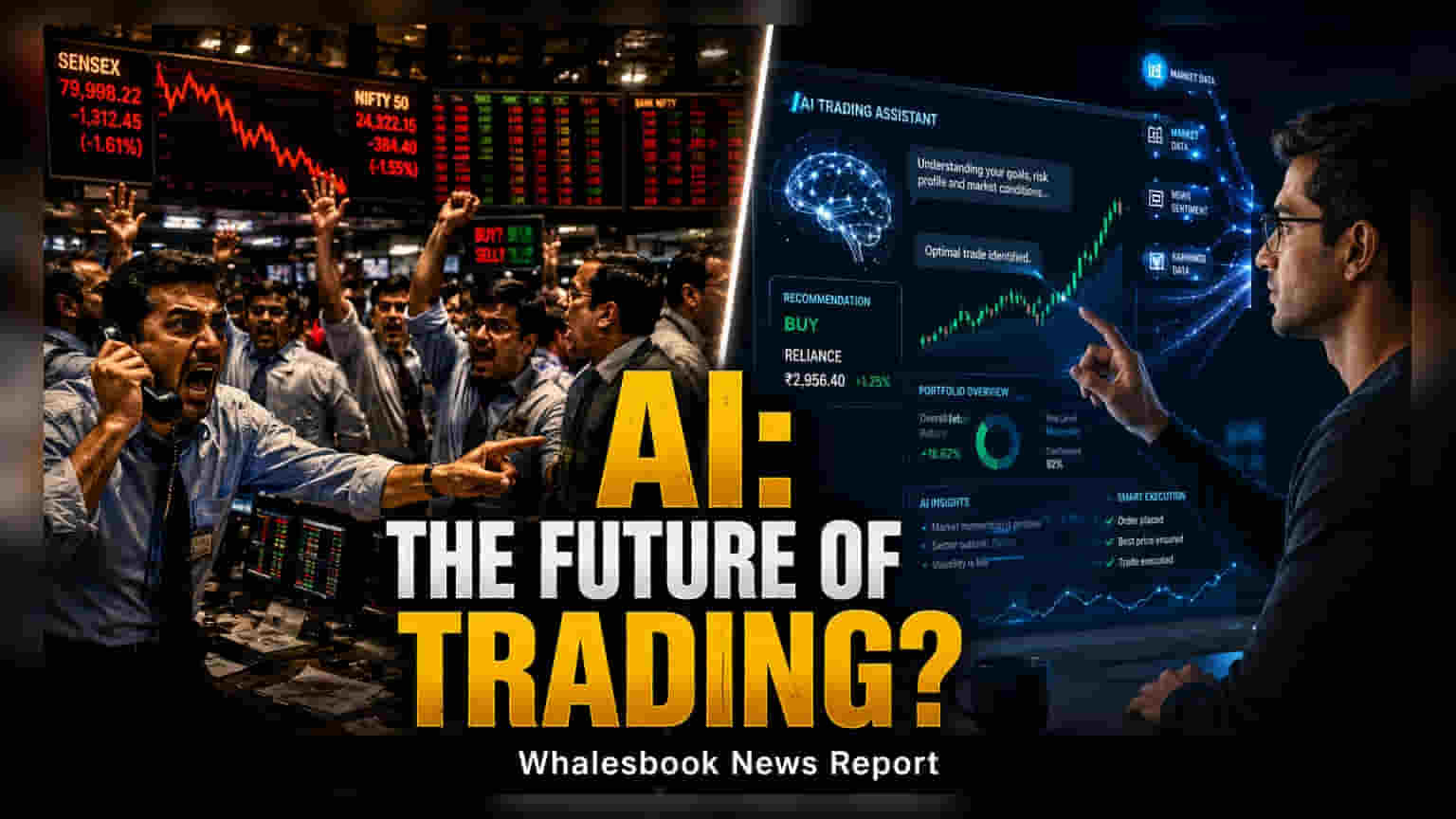
Zerodha CEO Nithin Kamath predicts that Artificial Intelligence could fundamentally change how investors trade, potentially reducing broker apps to mere 'pipes' for connectivity. This shift suggests a future where personalized AI interfaces, rather than traditional trading platforms, manage market interaction. Investors should note that while this promises efficiency, the regulatory responsibility of brokers remains a critical hurdle to clear.
Nithin Kamath, the founder and CEO of Zerodha, has predicted a significant shift in the Indian stockbroking industry, stating that advancements in Artificial Intelligence (AI) may eventually render traditional broker applications obsolete. On August 20, 2026, Kamath suggested that while current trading platforms focus on user interface and information display, the core process of trading—routing an investor's order to an exchange—has remained largely the same for years. He argues that AI is poised to disrupt this structure.
Kamath envisions a future where the current competitive model of building better, more feature-rich broker apps is replaced by AI-centric interfaces. In this scenario, an investor might not interact with a specific broker's app at all. Instead, they would use a personalized AI system that understands their preferences, financial goals, and risk appetite, executing trades in the background. The broker, in this setup, would effectively recede into the background, acting solely as the necessary infrastructure or 'pipe' connecting the investor to the stock exchange.
This shift, if it occurs, would mark a major transition from the current fintech era, where user experience and zero-brokerage models are the primary differentiators. Investors are currently used to comparing brokers based on their app's speed, data quality, and ease of use. If Kamath’s prediction holds, the competitive advantage for financial service providers may shift toward developing superior AI layers that can provide personalized market insights and automated execution, rather than just hosting a trading dashboard.
However, there are significant practical and regulatory realities for investors to consider. In the Indian market, stockbrokers are not just software providers; they are licensed entities regulated by the Securities and Exchange Board of India (SEBI). Brokers hold legal responsibility for trade settlement, Know Your Customer (KYC) norms, Anti-Money Laundering (AML) compliance, and risk management. An AI-only interface would still require a licensed broker on the backend to fulfill these legal and financial obligations. Consequently, while the 'interface' for the investor might change, the underlying requirement for a regulated entity to handle the money and orders remains a firm constraint.
Furthermore, the evolution toward AI-driven trading brings questions about data security and system risk. As automation increases, the reliance on algorithms to make or suggest decisions can introduce new types of operational risks, including potential errors in AI logic or cybersecurity vulnerabilities. As this technology matures, investors should watch for how regulators like SEBI frame guidelines for AI-led trading and how existing brokerages adapt their business models to ensure they remain relevant while navigating these new technological frontiers.