 Whalesbook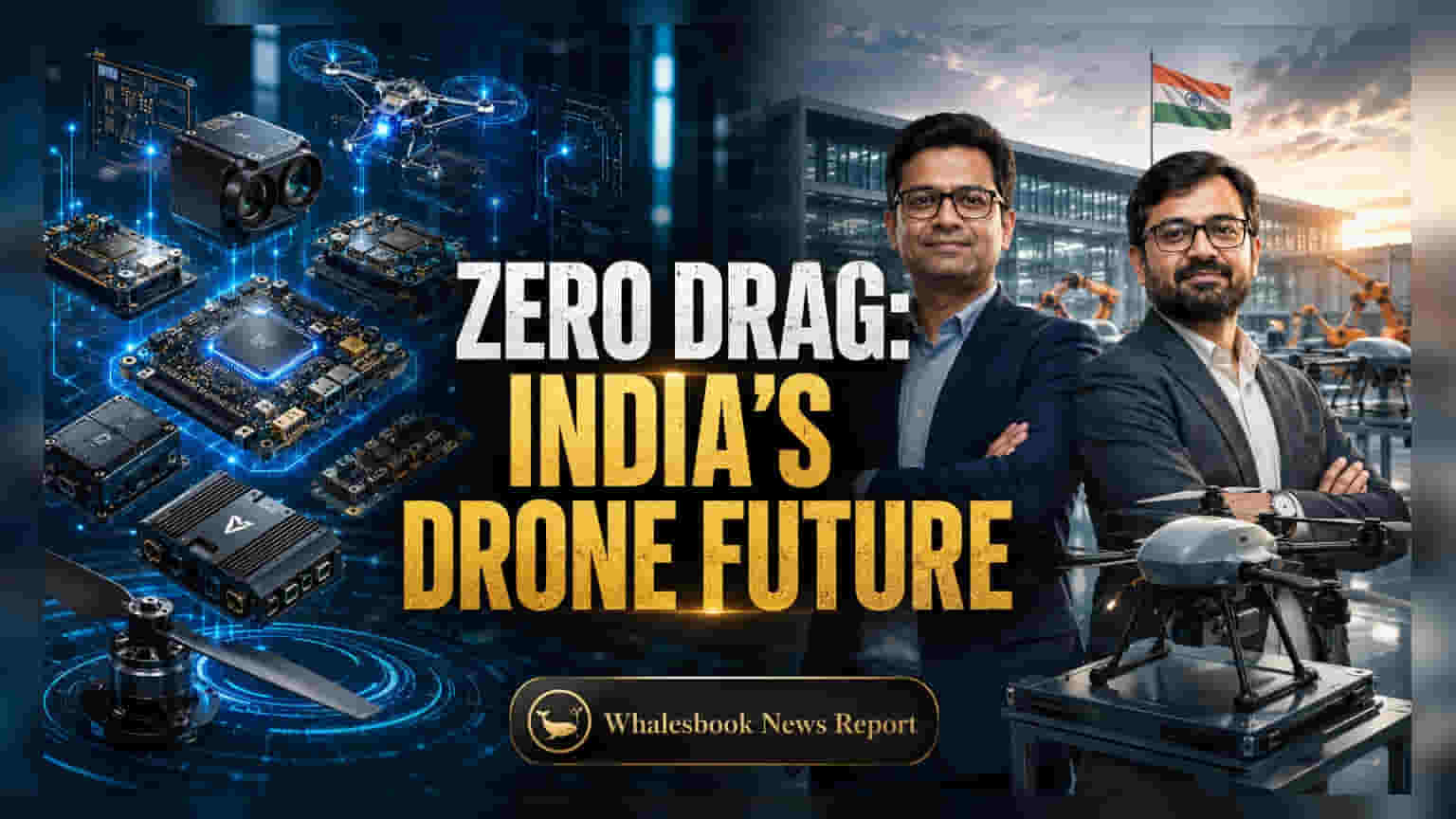


The Shift Toward Vertical Integration
The recent Rs 6.5 crore capital injection serves as a functional bridge for ZeroDrag as it transitions from a niche component developer to a systemic provider for the broader Unmanned Aerial Vehicle industry. By focusing on autopilots and telemetry systems, the company is positioning itself at the essential intersection of hardware and software, where margins are traditionally more resilient than in the volatile airframe assembly business. The focus on local sourcing directly addresses the long-standing vulnerability of Indian drone manufacturers, who have historically relied on imported chips and modules that carry significant operational and security risks.
Scaling the Sovereign Tech Narrative
The strategic necessity for indigenous avionics has become a primary driver for domestic venture capital, particularly as global defense procurement shifts toward trusted hardware supply chains. While India’s drone sector has seen an influx of capital, much of it has focused on platform assembly rather than the underlying intelligence layer. ZeroDrag faces a competitive landscape where domestic incumbents and global players already occupy significant mindshare. Success will depend on the firm’s ability to achieve economies of scale rapidly, as component manufacturing is highly sensitive to production volume and cost-efficiency. Historically, startups entering this sector have struggled to match the cost profiles of established Asian suppliers without significant government-backed volume guarantees or defense-grade certifications.
The Forensic Bear Case
Despite the bullish narrative surrounding sovereign technology, ZeroDrag operates in a high-risk segment characterized by intense capital expenditure requirements. The reliance on heavy-lift drone hardware and potential entry into the eVTOL market introduces significant technical hurdles that may extend the burn rate beyond initial projections. Furthermore, the company must contend with the volatility of the global electronics supply chain, where even minor disruptions in semiconductor availability can halt production cycles. Investors should monitor the company’s ability to move beyond pilot programs into high-volume industrial contracts. Unlike firms that offer specialized software, ZeroDrag’s model is tethered to physical manufacturing, making it susceptible to inventory bloat and quality control liabilities that could erode thin margins if scaling is not executed with precision.
Future Trajectory and Market Outlook
Looking ahead, the firm's growth hinges on its success in penetrating Western markets where the 'China-plus-one' strategy is actively driving procurement decisions. By targeting the United States and European corridors, the startup is attempting to bypass the domestic price wars that often plague early-stage hardware companies. Industry analysts expect further consolidation in the avionics space as defense and logistics entities prioritize interoperability over raw cost, potentially setting the stage for strategic partnerships or future integration into larger aerospace conglomerates.