 Whalesbook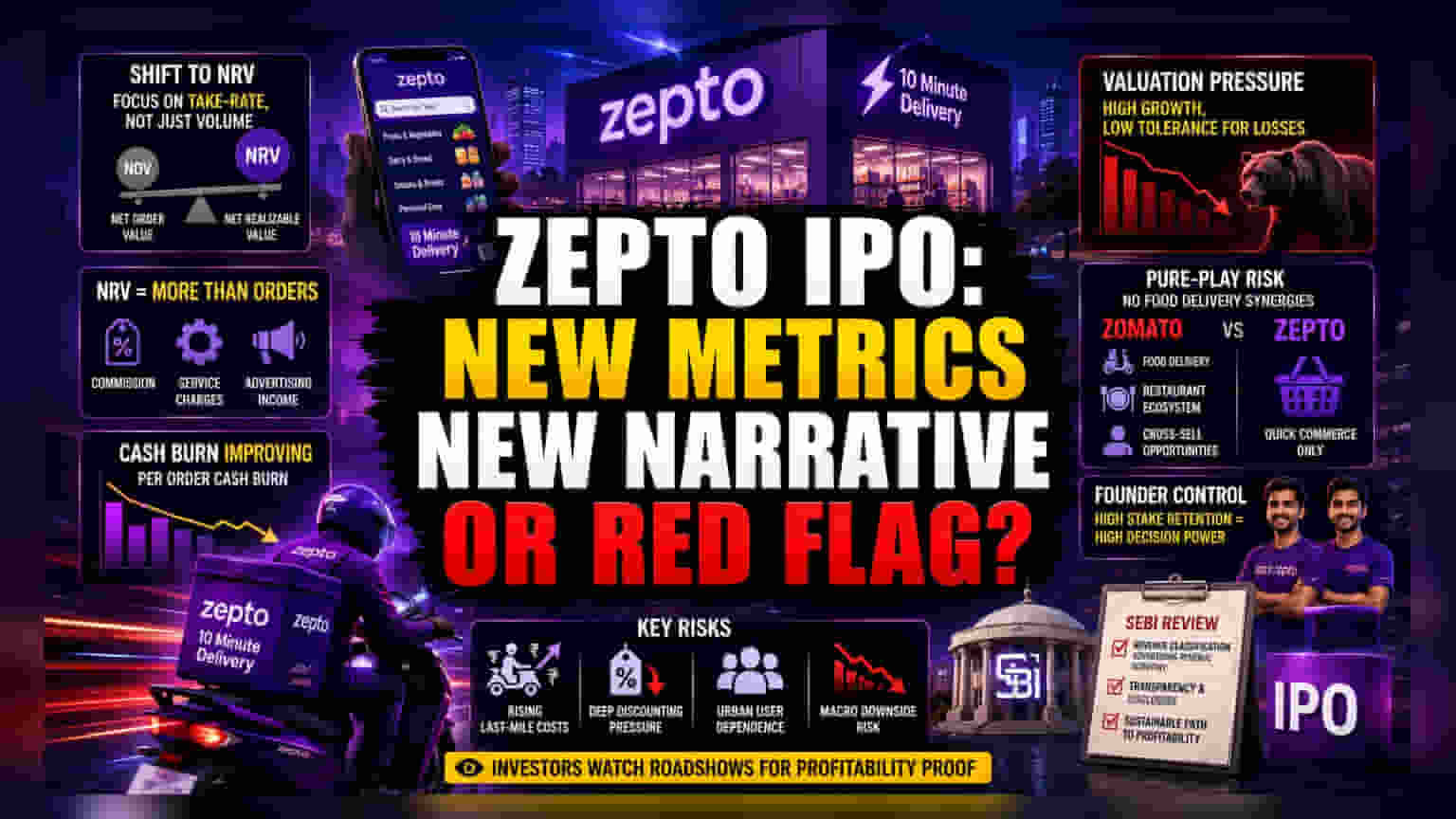


The Shift to Narrative Accounting
The move to prioritize Net Realizable Value (NRV) over the industry-standard Net Order Value (NOV) marks a calculated attempt to reshape investor perception. By folding commissions, service charges, and advertising income into a single metric, management is essentially highlighting the company's take-rate rather than its total volume. This strategic pivot serves to distinguish the platform from Blinkit, yet it invites skepticism regarding the durability of advertising income. As quick commerce becomes increasingly commoditized, sustaining high-margin ad revenue requires constant customer acquisition, which remains an expensive endeavor despite reported reductions in per-order cash burn.
Competitive Benchmarking and Market Reality
Unlike Zomato, which benefits from the synergies of a massive food delivery ecosystem, Zepto remains a pure-play quick commerce operator. This lack of diversification leaves the company uniquely vulnerable to sector-wide volatility and aggressive pricing wars initiated by larger, better-capitalized incumbents. While Zomato leverages cross-selling opportunities across its entire platform, Zepto must achieve operational excellence in a vacuum. Recent market data suggests that investors are becoming less forgiving of high-burn models, even those with strong top-line growth, as the valuation multiples for loss-making unicorns continue to face downward pressure in the current interest rate environment.
The Forensic Bear Case
Critical analysis of the company's financial structure reveals underlying hazards. The insistence by founders Aadit Palicha and Kaivalya Vohra to maintain their stake suggests high internal confidence, yet it also concentrates decision-making power at a time when the business requires mature, institutional oversight to navigate its path to profitability. Furthermore, the company's timeline of reaching break-even in four to five quarters is aspirational. Historically, firms in this sector often miss these targets due to the rising costs of last-mile logistics and the necessity of constant deep discounting to maintain market share. If macroeconomic conditions sour or if consumer discretionary spending dips, the company’s heavy dependence on urban, high-frequency users could see a sharp contraction in revenue.
Future Outlook and Regulatory Scrutiny
As the SEBI review process commences, the company will likely face intense questioning regarding its classification of advertising revenue. Regulators are increasingly focused on ensuring that IPO-bound companies provide transparent, standardized financial reporting that does not rely on opaque non-GAAP metrics. If the draft red herring prospectus fails to demonstrate a clear, credible path to profitability that excludes aggressive accounting adjustments, the market reception could be tepid. Investors will be watching the upcoming roadshows closely to see if management can justify a valuation that reflects a sustainable business rather than just an expansive, cash-heavy footprint.