 Whalesbook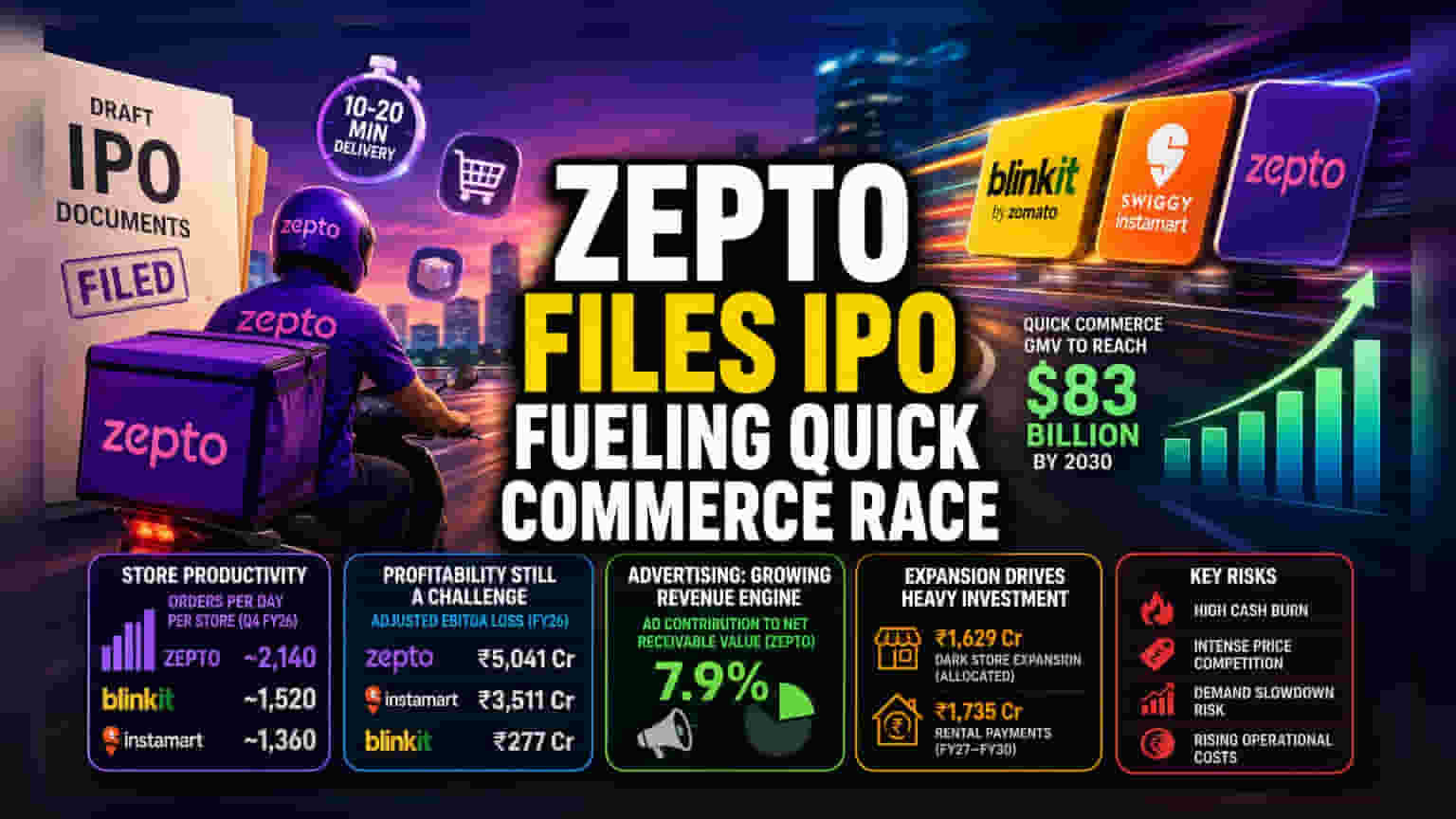


Zepto has filed its preliminary IPO papers, marking a key moment in India's hyper-competitive quick commerce sector. As it competes with Blinkit and Instamart, investors are scrutinizing metrics like store productivity and the heavy costs of expansion. We break down the financials and the risks involved in this fast-growing market.
What Happened
Zepto has taken a significant step toward a potential stock market debut by filing its draft IPO documents. This development brings the company's financials into the public eye and intensifies the rivalry in India’s quick commerce space. Zepto, along with Blinkit (owned by Zomato) and Swiggy’s Instamart, is fighting to capture the growing demand for rapid delivery of groceries and household essentials. The sector is projecting a massive jump in market size, with some estimates suggesting the Gross Merchandise Value could reach up to $83 billion by 2030.
The Battle for Efficiency
For investors, the most critical metric in this sector is how effectively each company runs its "dark stores"—the small local warehouses from which deliveries are made. Nomura estimates that as of the fourth quarter of FY26, Zepto was leading in store productivity with roughly 2,140 orders per day per store. This "order intensity" is crucial because higher volume from a single store helps cover the fixed costs of rent and operations more efficiently. While Blinkit maintains a larger overall network of stores, Zepto’s ability to generate more orders per location is a key point of comparison for market analysts.
The Profitability Puzzle
Despite the rapid revenue growth, these companies are still struggling to turn a profit. The business model of delivering goods in 10-20 minutes is capital-intensive. Zepto, for instance, reported an adjusted EBITDA loss of Rs 5,041 crore for FY26. Instamart also reported a significant loss of Rs 3,511 crore in the same period. Blinkit recorded a smaller adjusted EBITDA loss of Rs 277 crore. To improve margins, these platforms are increasingly looking at "non-delivery" income. Advertising, where brands pay to appear on the app, has become a vital revenue stream. For Zepto, advertising revenue now contributes approximately 7.9% to its net receivable value, offering a glimpse into how these companies hope to eventually become profitable.
Expansion and Cash Burn
Growth requires spending, and Zepto’s IPO plans highlight the need for heavy capital. The company has earmarked about Rs 1,629 crore for expanding its dark store footprint and another Rs 1,735 crore for rental payments between FY27 and FY30. Blinkit is also in aggressive expansion mode, aiming to reach 3,000 stores by March 2027. Swiggy’s Instamart, on the other hand, is currently focusing on optimizing its existing network before pushing for more expansion. This difference in strategy reflects the delicate balance between capturing market share and controlling expenses.
What Could Go Wrong
The primary risk for investors is the heavy cash burn. Expanding into new locations and maintaining rapid delivery speeds requires constant investment in manpower, technology, and real estate. If demand growth slows down, or if operational costs rise faster than revenue, these companies could face severe pressure on their finances. Furthermore, the sector is highly sensitive to pricing competition. If one player lowers prices or delivery fees to win customers, others often have to follow, which can hurt profit margins across the board. The sustainability of this model depends on the ability to scale while eventually reducing the reliance on aggressive capital spending.
What Investors Should Track
As the sector matures, investors should watch several key factors. First, keep an eye on how these companies manage their cash and whether they can show a clear path to profitability. Second, track the "order intensity"—are they able to get more orders from each store? Third, watch the mix of revenue; advertising income is becoming very important for margins. Finally, monitor the expansion pace; rapid store opening is great for growth, but it must be backed by demand to ensure that the investment pays off.