

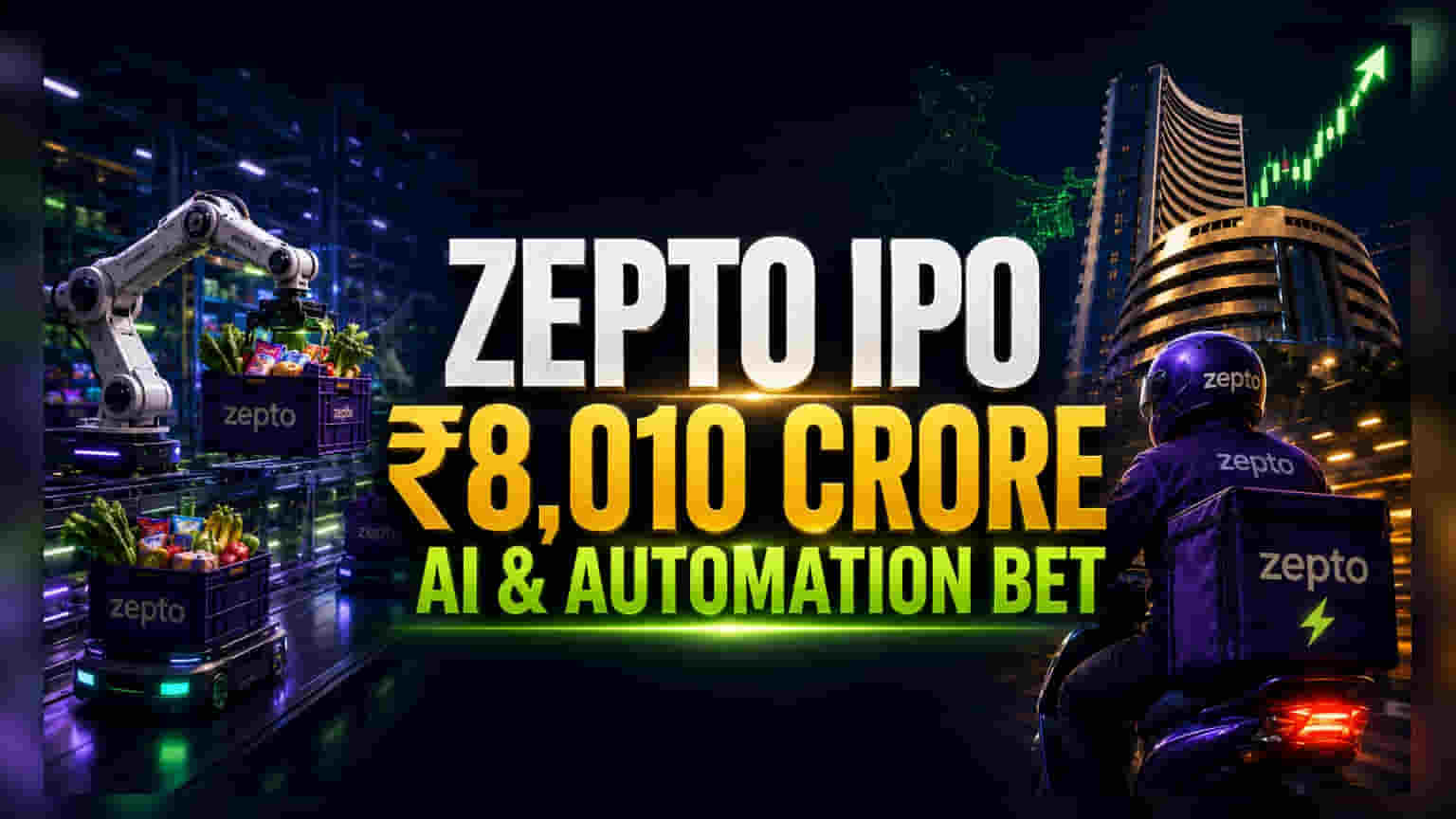
Quick-commerce firm Zepto has filed draft papers for a ₹8,010 crore IPO, aiming to prove its 10-minute delivery model can turn profitable. By using automation and robotics to lower costs, the company hopes to convince investors of its long-term viability. The success of the listing will likely depend on whether these efficiency gains can withstand intense competition from deep-pocketed rivals.
What Happened
Zepto has officially filed its draft red herring prospectus (DRHP) with the Securities and Exchange Board of India (SEBI) for an Initial Public Offering (IPO). The company plans to raise ₹8,010 crore through a fresh issue of shares. This move marks a critical juncture for the quick-commerce player as it looks to transition from a startup funded by venture capital to a publicly traded company. The filing outlines a strategy that relies heavily on technology—specifically automation and artificial intelligence—to solve the high-cost challenge of 10-minute grocery delivery.
The Efficiency Strategy
The company is betting its growth story on operational efficiency. In its filings, Zepto’s leadership, including Co-founder and President of Technology Kaivalya Vohra, emphasizes that automation is replacing manual intervention in their supply chain. The firm is using robotics and 'Put to Light' systems in its 'Mother Hubs' to sort produce by weight and size. These investments are designed to reduce the time taken to process orders and improve inventory management. The goal is to prove to the market that the business can eventually be profitable by lowering the cost of delivering each bag of groceries.
Financials And Cost Improvement
According to the company’s filing, this focus on efficiency has started to reflect in its numbers. In the fourth quarter of the 2026 fiscal year (Q4 FY26), Zepto handled approximately 2.33 million daily orders, with net receivables value reaching roughly ₹8,134 crore. The data shows that the cost to fulfill each order dropped from ₹181 in Q2 FY26 to ₹128 in Q4 FY26. Furthermore, the adjusted EBITDA loss per order narrowed from ₹110 to ₹59 during the same period. While these metrics show progress in operational efficiency, investors will be looking to see if these trends can continue as the company scales up further.
The Competitive Landscape
Zepto operates in a highly intense sector where it faces off against established giants like Zomato (Blinkit), Swiggy (Instamart), and Tata-owned BigBasket. These competitors are also aggressively expanding their dark store networks and delivery capabilities. For public market investors, the key question is whether Zepto’s technological edge is strong enough to maintain market share without engaging in expensive price wars or massive discounting that could hurt profit margins. The quick-commerce space is notorious for high cash burn, and even minor shifts in competitive pricing can impact the bottom line.
Risks And Regulatory Hurdles
While the company highlights automation as a solution, there are broader industry risks. Quick-commerce firms face ongoing scrutiny regarding the safety and well-being of delivery partners. Any potential regulatory changes or labor laws that force a change in the gig-worker model could lead to higher operational costs, potentially offsetting the gains made through automation. Additionally, the reliance on real-time delivery logistics means that any supply chain disruption or surge in delivery partner costs can quickly affect the company’s path to profitability.
What To Watch Next
Investors will be closely monitoring how the company plans to allocate the fresh issue of ₹8,010 crore. Specifically, the market will look for details on how much will be spent on new warehouse infrastructure versus technological upgrades. The primary monitorable will be the sustainability of the narrowing losses in the coming quarters and how the company manages to keep delivery costs low while peers continue to battle for market dominance.