

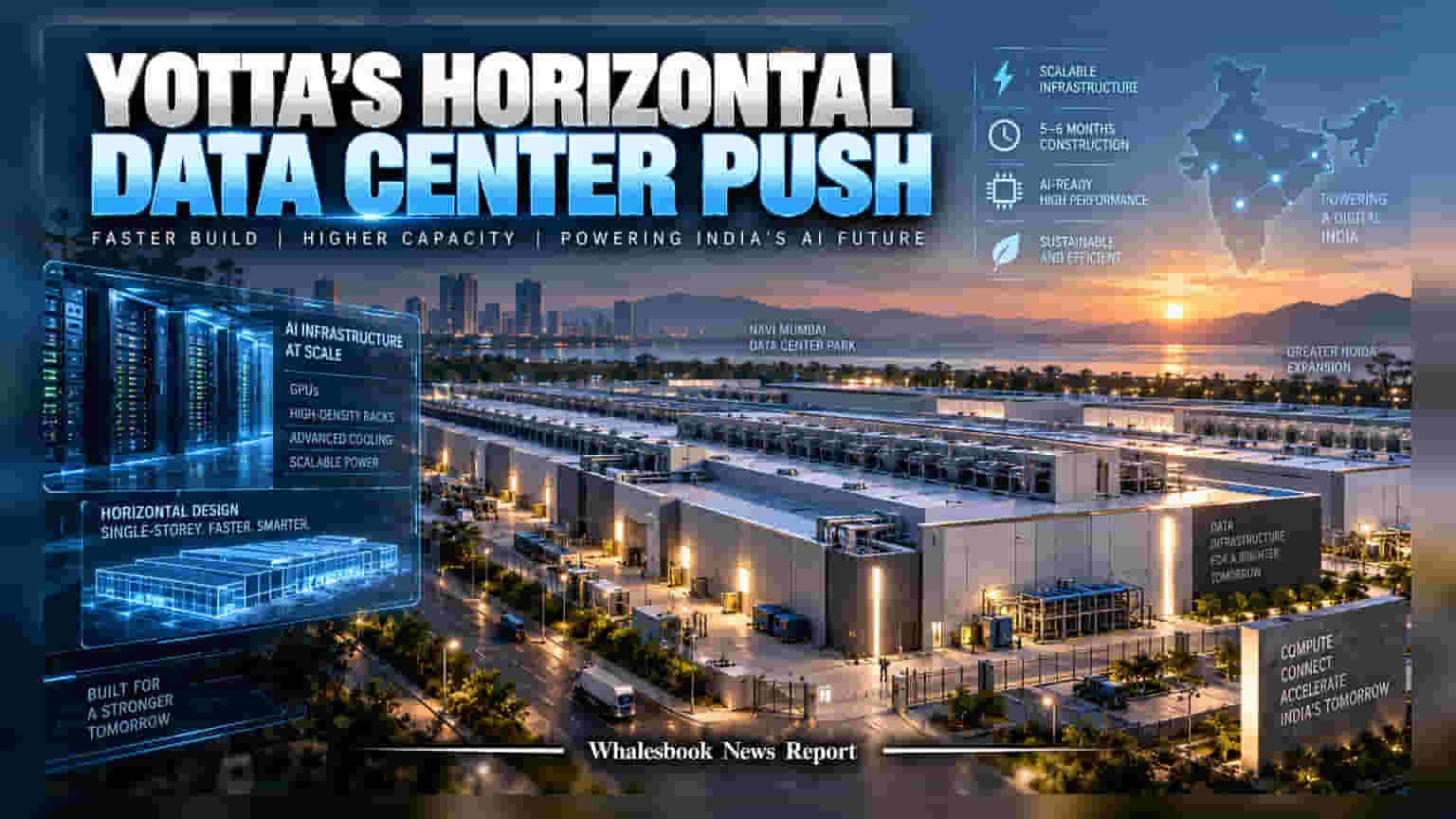
Yotta Data Services is switching to single-story, horizontal data center construction to expedite its 96,000-GPU rollout by mid-2027. The Hiranandani-backed firm is preparing for a potential $1.5 billion IPO in early 2027, as it manages high capital requirements and sector-wide power and supply risks.
Yotta Data Services is changing its construction strategy to accelerate the deployment of high-performance computing power. The company is moving away from traditional high-rise data center designs, which are often used in crowded urban settings like Mumbai and Delhi. Instead, it is adopting a horizontal, single-story architectural model, often referred to as a Texas-style design, which relies on steel and prefabricated materials to significantly reduce construction time. The company aims to complete these new facilities in five to six months, a timeline necessary to support its goal of operationalizing 96,000 GPUs by the second quarter of 2027.
This shift in strategy comes as Yotta prepares for a potential initial public offering, or IPO, tentatively planned for the January-March quarter of 2027. The firm is reportedly targeting to raise up to $1.5 billion. In August 2026, the company raised $150 million in primary growth capital, valuing the business at approximately $3.9 billion. For investors and market observers, this capital-intensive expansion is a significant development, especially as the company balances rapid infrastructure growth with the need for long-term financial stability.
The company is integrating these new horizontal facilities into its existing 600-acre park in Navi Mumbai and a 20-acre site in Greater Noida. While the firm plans for large-scale expansion—with the Navi Mumbai site targeting 2 gigawatts of capacity and the Greater Noida site planned for 350 megawatts—the strategy relies heavily on the continued growth of AI-driven demand. The company is currently working to serve both global clients and domestic enterprise and government sectors, aiming to keep a portion of its GPU capacity reserved for the Indian market.
However, this aggressive expansion strategy brings notable financial and operational risks. The data center sector is highly capital-intensive, requiring constant access to funding to build infrastructure and procure high-cost hardware like GPUs. Any delay in the IPO process or a shortfall in anticipated AI demand could stress the company’s balance sheet. Furthermore, the company has faced recent pressure regarding its credit ratings, with some bank facilities experiencing downgrades. These factors, combined with broader industry challenges such as securing reliable power access and ensuring a steady supply of advanced GPUs, remain important areas for stakeholders to monitor. The success of this horizontal construction strategy will ultimately depend on whether Yotta can maintain its pace of execution while managing the significant debt required to fund such a massive infrastructure build-out.