

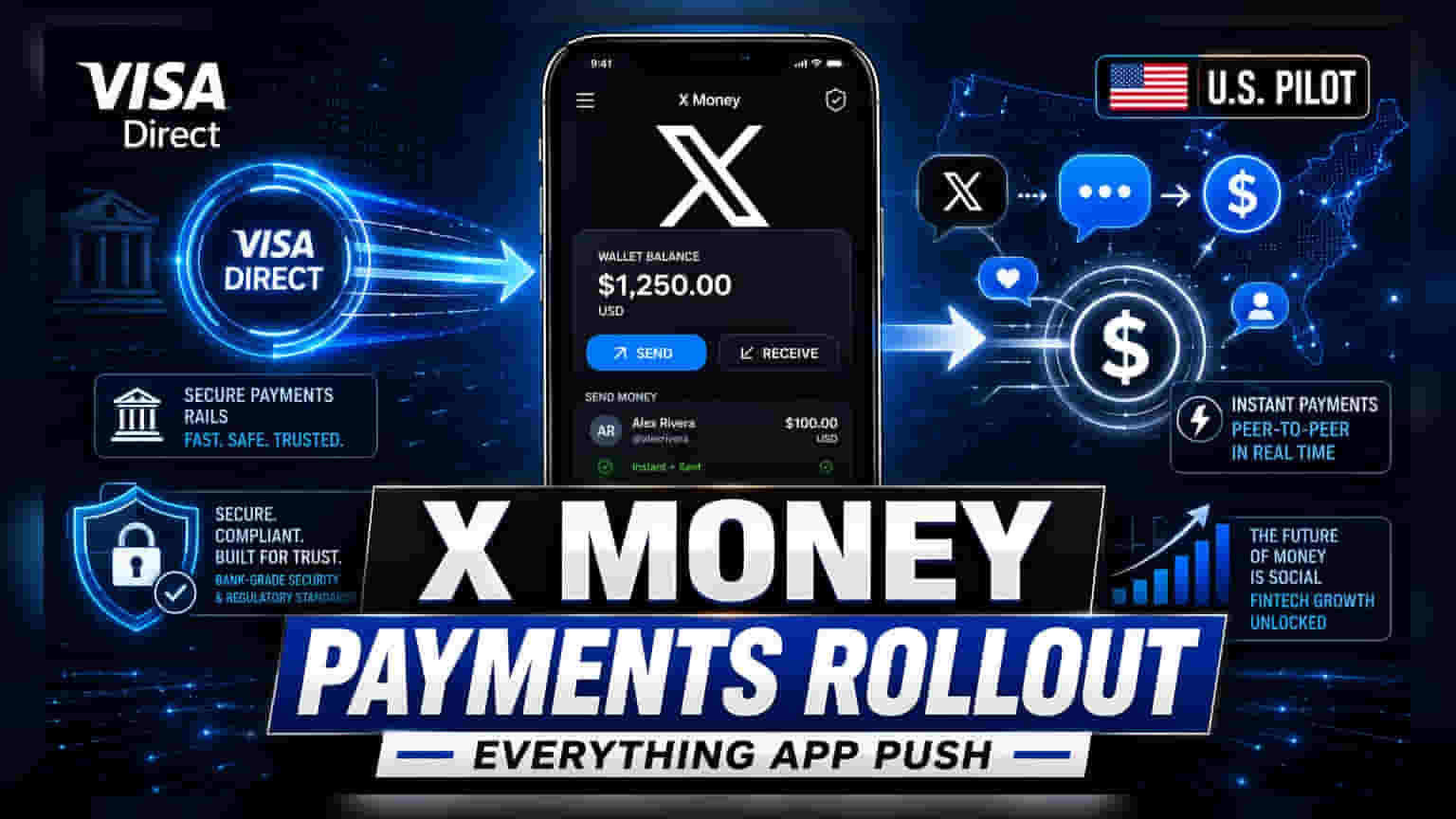
X has officially introduced its 'X Money' digital payments service to premium subscribers in the United States, utilizing Visa’s infrastructure. This rollout is a key milestone in the company's "everything app" strategy, aiming to integrate financial services like peer-to-peer transfers and deposits. While it offers a new way to engage users, the platform faces significant competition from established fintech players and must navigate complex regulatory requirements.
What Happened
X, the social media platform formerly known as Twitter, has begun the rollout of its new digital payments feature, "X Money," to a selected group of premium subscribers in the United States. This service allows users to conduct peer-to-peer money transfers, store funds within the platform, and manage financial transactions without navigating to external banking apps. The service is powered by Visa Direct, a real-time payments platform, which facilitates the instant transfer of funds between users. This launch represents a significant, concrete step in the company's long-stated ambition to transform into an "everything app"—a single platform that combines social media, communication, and financial services.
The 'Everything App' Strategy
For a social media company, the shift into financial services is primarily a strategy to diversify revenue and increase user engagement. By embedding payment functionalities, the platform aims to reduce its reliance on traditional advertising, which can be volatile. The company is positioning X Money as an integrated digital wallet, initially focusing on traditional fiat currency transactions. While earlier speculation often linked Musk's financial plans to cryptocurrency, the initial rollout is strictly limited to fiat money, focusing on core banking features like deposits, interest-bearing balances, and payment processing.
The Regulatory Reality
Entering the financial services sector requires substantial regulatory preparation. To operate as a payment provider in the United States, X has worked to secure money transmitter licenses state-by-state. According to recent reports, the company has obtained such licenses in over 25 states. This is a critical barrier to entry in the fintech space, as each state has its own compliance standards. Despite this progress, the platform is still undergoing regulatory reviews in some jurisdictions, such as New York, which remains a key gap in its national coverage.
Competitive Landscape
The U.S. digital payments market is already highly crowded and dominated by well-entrenched players like PayPal, Venmo, Cash App, and Zelle. These competitors have established deep trust with consumers and possess massive user bases who already rely on them for daily financial needs. X's primary challenge will be convincing users that their financial assets are safe within a social media environment. Trust is a fundamental requirement for financial services, and the platform will need to demonstrate high standards of security and consumer protection to compete with traditional financial institutions and established neobanks.
Risks And Implementation
While the technology integration with Visa is a strong start, operational risks remain. The platform must manage fraud, cyber security, and regulatory compliance at a scale that is new for a social media entity. Additionally, the company operates as a private business under Elon Musk’s ownership, meaning there is no public stock for investors to track directly. Instead, the success of this initiative is a test of the company's ability to evolve its business model from an ad-supported social platform to a diversified digital utility.
What Investors Should Track
As this rollout progresses, the key monitorables are user adoption rates and the speed of regulatory approval in the remaining U.S. states. The effectiveness of the partnership with banking partners—often crucial for providing FDIC-insured deposits—will also be a primary indicator of the service's viability. Furthermore, any future expansion into international markets or the introduction of advanced financial products like equities trading will provide clues about the service’s long-term growth potential and its ability to challenge incumbents in the fintech sector.