

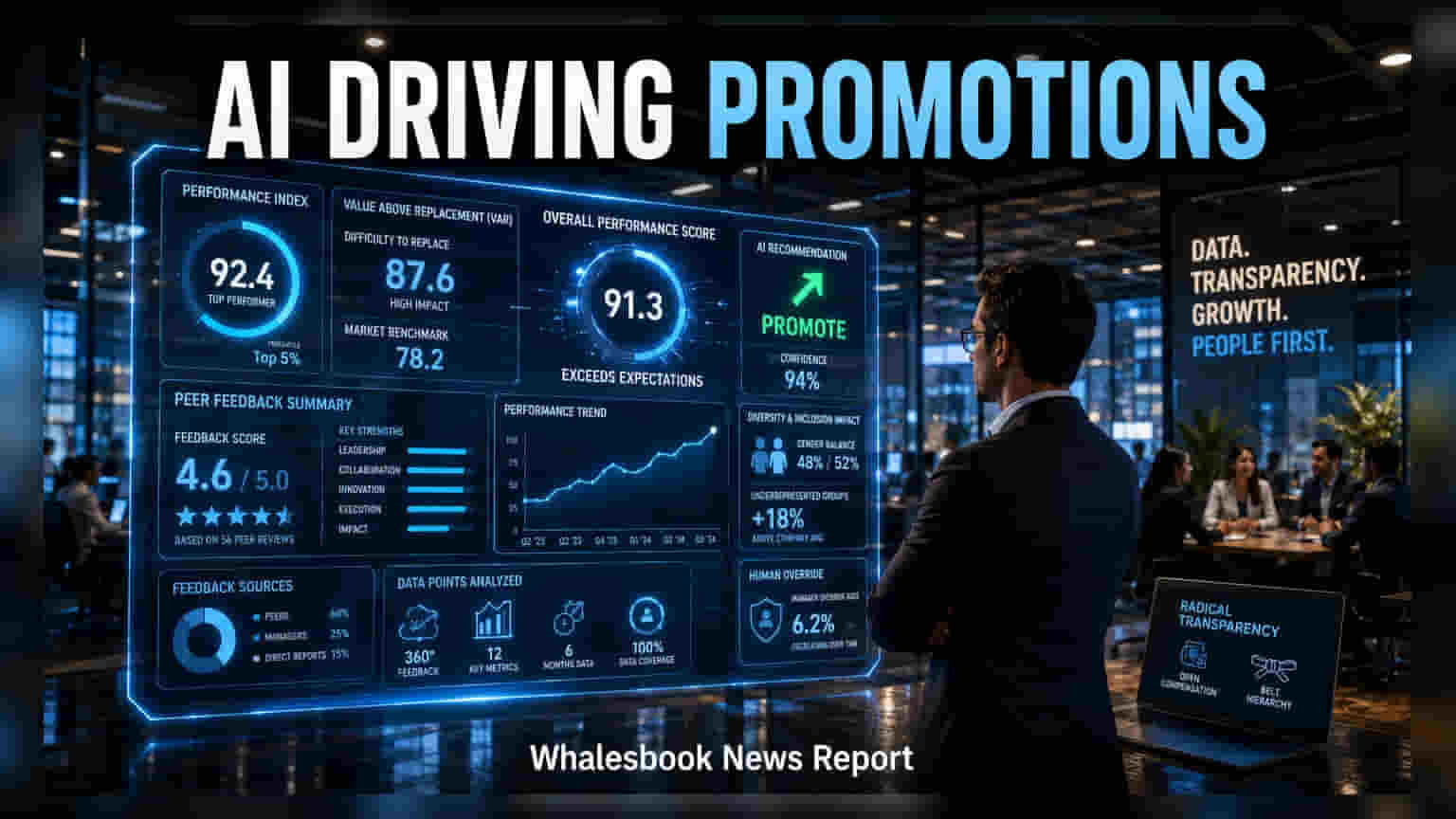
Wonder, the food-tech startup founded by Marc Lore, is using an AI-based system to manage employee promotions, incorporating a 'Value Above Replacement' metric. While the company is private and not yet listed on public exchanges, this operational shift highlights its focus on data-driven management and transparency as it prepares for a potential IPO in the coming years.
Wonder, the food-tech venture led by billionaire entrepreneur Marc Lore, has implemented a new artificial intelligence system to standardize employee promotion decisions. The company is using AI to aggregate feedback from coworkers and performance data to determine career advancement, aiming to reduce human bias in corporate evaluations.
The 'Value Above Replacement' Metric
A central feature of this system is a metric dubbed 'Value Above Replacement' (VAR). Borrowed from sports analytics, this score measures how difficult it would be to replace an employee with a candidate at a similar level in the market. By pairing this quantitative data with qualitative peer feedback collected every six months, the AI generates a performance index that guides decisions on who moves up the ladder.
While the AI provides the initial recommendation, the system includes human oversight. Managers retain the authority to override the model if they believe it lacks the necessary context for a specific employee. According to company leadership, as the data models have matured, these manual interventions have become less frequent.
Corporate Culture and Transparency
This move toward algorithmic oversight is part of Wonder’s broader operational philosophy of radical transparency. The company already utilizes a unique hierarchy system inspired by taekwondo belt rankings and provides staff with open access to compensation data. By automating promotions, the management aims to minimize the subjective biases that often affect corporate advancement, such as those that can disadvantage women or minority employees.
Context for Future Investors
For those monitoring the company’s progress, this focus on data-driven HR practices is a notable signal of its operational maturity. Wonder is a private entity that recently completed a significant $650 million Series D funding round. Reports suggest the company is eyeing a potential public listing, or IPO, between 2027 and 2028. Establishing standardized, scalable management processes is a common step for high-growth startups looking to transition into a stable, publicly traded corporation.
However, investors should be aware of the inherent risks in this approach. Relying on AI for personnel decisions brings the risk of algorithmic bias, where the system may inadvertently penalize certain performance styles or fail to account for unique contributions. Additionally, as a high-growth startup, Wonder faces significant execution risks, including the challenge of managing costs while scaling its operations rapidly across new locations. Success will depend on the company's ability to prove that its data-driven model leads to better productivity and talent retention as it prepares for future capital market entry.