

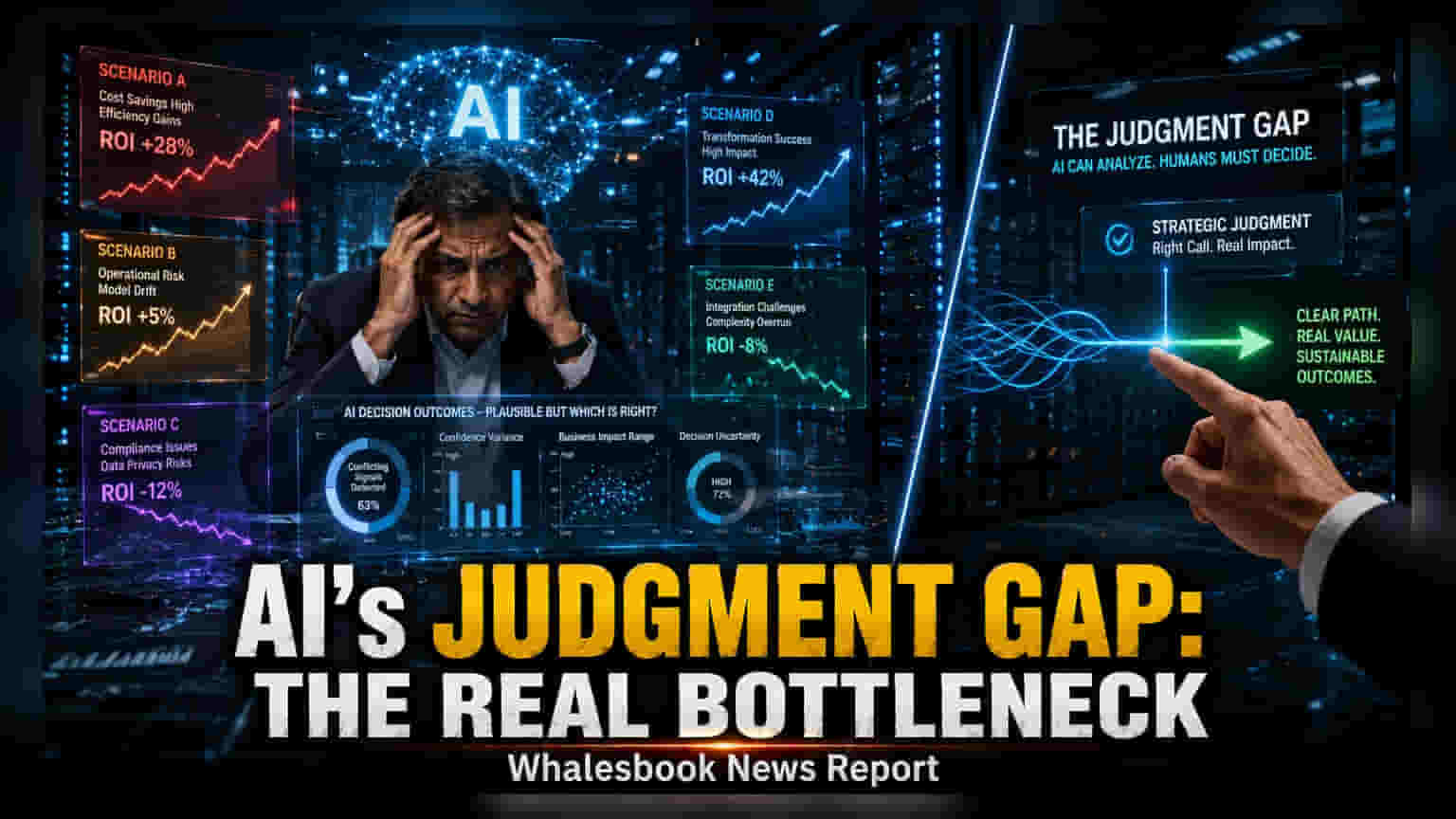
As artificial intelligence automates routine coding tasks, Indian IT service providers are shifting their focus toward high-value strategic roles. The industry's new bottleneck is no longer technical implementation, but the human judgment required to guide AI-driven decision-making. Investors should track how this talent transformation impacts long-term margins and service pricing models in the tech sector.
The business model of Indian IT service providers is undergoing a significant transformation as artificial intelligence adoption hits a critical phase. For years, the industry thrived by providing cost-effective technical execution and software development. However, as AI models become more capable of performing routine coding and data processing, the primary challenge for enterprises is shifting from simply implementing technology to deciding how AI should be used and where it should hold authority.
This shift creates a new scarcity in the market: the ability to provide sound human judgment. While firms have historically focused on expanding technical talent pools, the industry is now racing to develop roles that bridge the gap between complex business operations and advanced AI systems. For instance, major players like Tata Consultancy Services (TCS) have been focusing on developing Forward Deployed Engineers (FDEs). These professionals are tasked not just with writing code, but with acting as mediators who understand both the technical possibilities of AI and the operational realities of a business.
Moving Beyond Technical Execution
For investors, this evolution is a critical monitorable. Historically, the IT services sector’s revenue growth was heavily tied to the number of engineers deployed on projects. As AI increases the efficiency of these engineers, the industry must pivot to a model where value is driven by strategic insight rather than just headcount. The ability to offer 'judgment'—helping clients distinguish between AI outputs that are merely plausible and those that are strategically sound—could become a key differentiator.
Companies that successfully upskill their workforce to perform these high-value strategic roles are likely to defend their profit margins better than those that rely primarily on volume-based billing. If IT firms can transition from being 'tech implementers' to 'strategic AI partners,' they may be able to justify premium pricing despite the deflationary pressure AI puts on traditional software services.
The Challenge of Scaling Talent
Despite the opportunity, there are inherent risks in this transition. Scaling human judgment is significantly more difficult than scaling technical labor. Unlike coding, which can be taught through standardized training, effective decision-making and business intuition often require deep, sector-specific experience. If IT firms fail to bridge this gap, they risk seeing their services commoditized, leading to margin pressure and increased competition from smaller, agile AI-native firms.
Investors should monitor upcoming quarterly commentary and management presentations for details on talent transformation. Specifically, look for data on the revenue contribution from strategic consulting and AI-driven engagements compared to traditional support services. The ability of major IT exporters to retain and train talent for these high-judgment roles will be a primary factor in determining long-term profitability and competitive positioning in an AI-dominated landscape.