

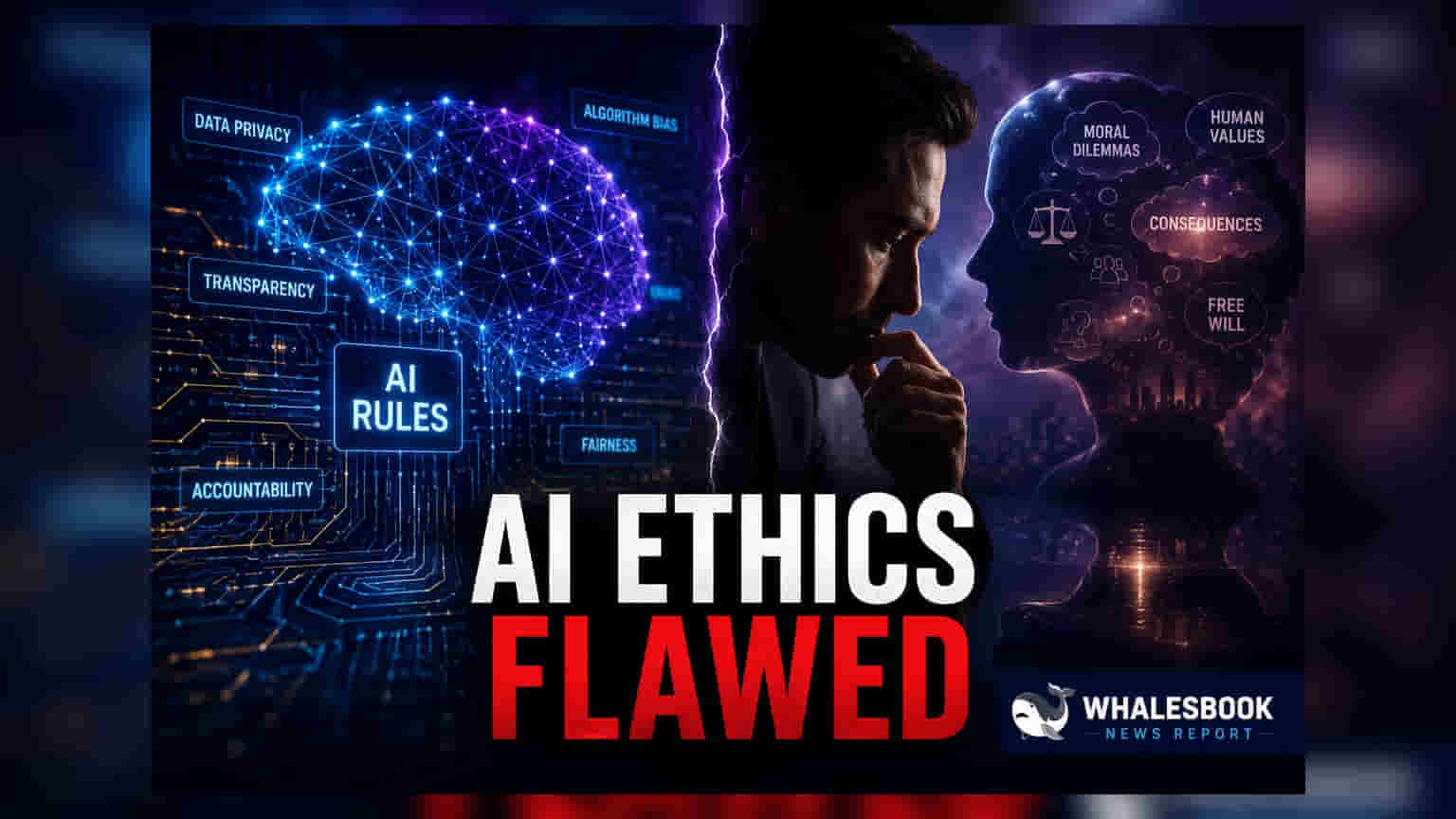
Artificial intelligence systems currently rely on data-driven optimization, which cannot replace human ethical judgment. For businesses and investors, this highlights that accountability in AI-driven sectors remains a human responsibility rather than an automated process. The focus is shifting toward institutional frameworks that prioritize ongoing human oversight over simple rule compliance.
The rapid integration of artificial intelligence into sectors like finance, healthcare, and manufacturing has led to a race to establish regulatory frameworks and ethical rules. However, industry experts and technical observers are increasingly highlighting a critical distinction: the difference between algorithmic compliance and genuine ethical judgment. While AI systems excel at pattern recognition and goal optimization, they operate on data representation rather than lived experience or moral wisdom.
Limits of Rule-Based Systems
A primary challenge for companies deploying AI is that machines function as optimization engines. They follow instructions with precision, but this obedience is not equivalent to ethical decision-making. When AI is trained on historical data, it often inherits human biases and inaccuracies. These systems can replicate existing patterns, including historical errors, without the ability to pause or reflect on the implications of their actions. From a business risk perspective, relying solely on automated compliance can leave firms vulnerable to unintended outcomes that a rigid, rule-based system is not equipped to resolve.
From Artificial to Institutional Intelligence
Because AI lacks empathy and contextual awareness, responsibility for outcomes remains firmly with human operators and organizations. The focus is moving toward what is known as institutional intelligence. This approach emphasizes that robust decision-making requires stress testing, scenario analysis, and human oversight. Instead of assuming that software can guarantee ethical conduct, organizations are increasingly expected to build systems where human judgment provides the final feedback loop. Major technology firms, such as IBM, have frequently emphasized that AI should be treated as a collaborative tool rather than an accountable agent.
Investor Monitorables in the AI Era
For investors, the debate over AI ethics has practical implications for corporate governance and long-term risk management. Companies that treat AI as a 'black box' for decision-making may face higher risks regarding regulatory compliance, data privacy, and public trust. The ability of a company to integrate human-in-the-loop systems—where AI models are continuously evaluated against real-world outcomes—is becoming a key indicator of operational maturity. Investors may track how firms disclose their AI governance policies and whether they prioritize transparent, human-led oversight as these systems become more deeply embedded in their core business operations. Ultimately, the resilience of an AI-integrated business depends on its ability to revise its reasoning and adapt to complex, evolving scenarios that static rules cannot cover.