

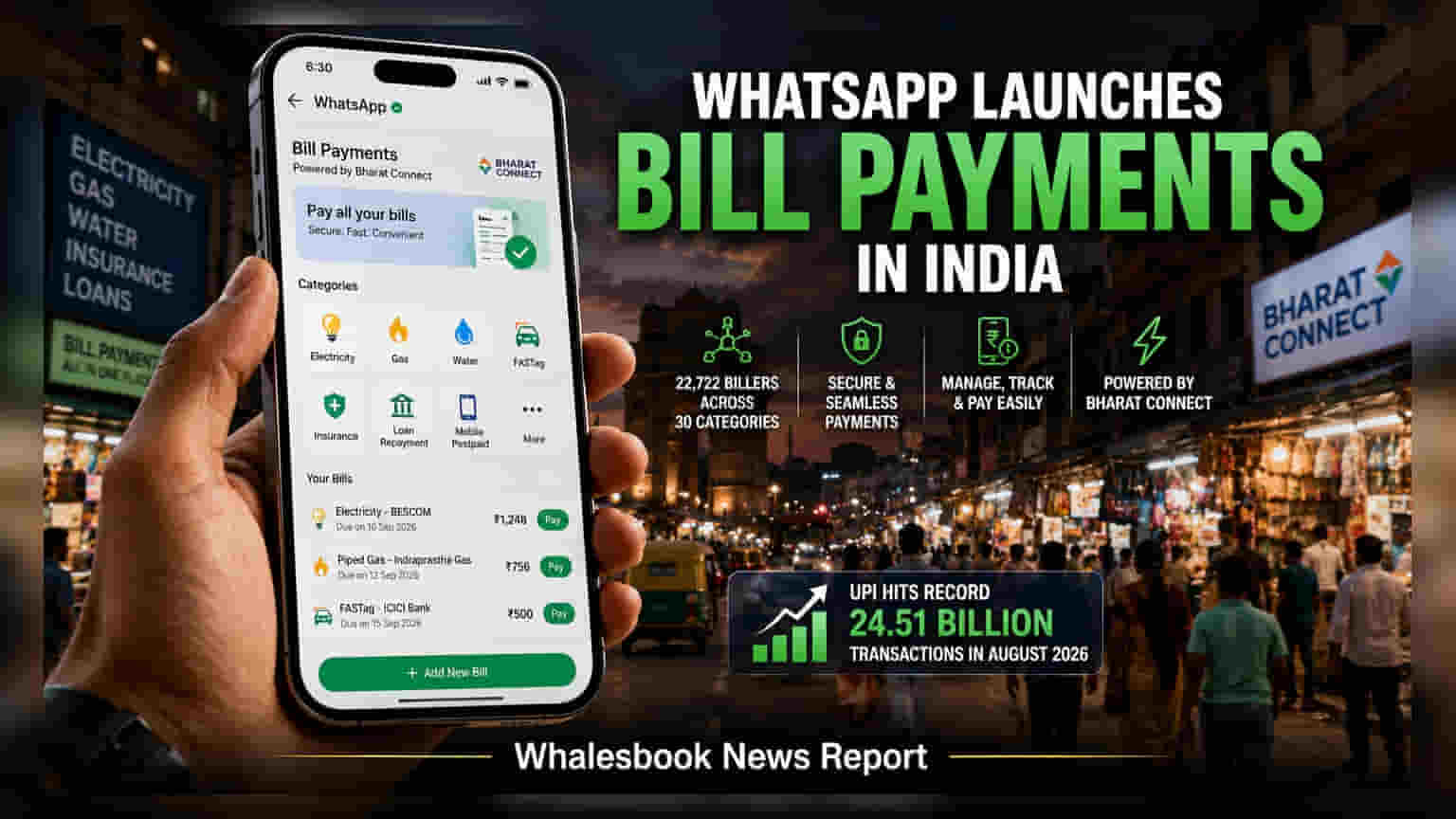
WhatsApp has introduced a native bill payment feature in India, enabling users to pay bills for over 22,700 service providers directly within the app. By integrating with the Bharat Connect network, the platform aims to deepen its financial services ecosystem. This move intensifies competition in India’s digital payments market against dominant players like PhonePe, Google Pay, and Paytm.
WhatsApp has officially expanded its financial services capabilities in India with the launch of a native bill payment feature. Integrated with the Bharat Connect network—formerly known as the Bharat Bill Payment System (BBPS)—the update allows users to discover, manage, and settle payments for utilities such as electricity, gas, water, FASTag, insurance, and loan repayments without leaving the messaging app.
Strategic Push into Payments
The integration offers access to 22,722 billers across 30 categories. Users can access this feature through a dedicated rupee icon on the app's home screen. The system is designed to automate bill fetching, allowing users to store multiple account details and track upcoming payments. This development is part of a broader strategy by Meta, WhatsApp’s parent company, to embed financial services deeper into daily digital interactions, effectively positioning the messaging platform as a 'super-app' for personal and retail management.
Impact on the Digital Payments Landscape
This rollout happens against the backdrop of record-breaking activity on India’s Unified Payments Interface (UPI) network, which recorded 24.51 billion transactions in August 2026. WhatsApp’s entry into utility billing directly challenges established digital payment providers like PhonePe, Google Pay, and Paytm, which currently lead the person-to-merchant payment segment. As the person-to-merchant volume now accounts for a significant majority of total UPI activity, WhatsApp’s existing user base provides it with a ready network for rapid scaling.
Business Model and Financial Context
For Meta shareholders and market observers, this expansion is an extension of the company’s business messaging strategy. Meta has been implementing new pricing models for utility and service messages in late 2026 to improve monetization. However, the company is also managing significant capital expenditure related to global AI infrastructure. While the payments feature aims to increase platform retention and utility, investors often track whether such expansions can offset the pressure on short-term operating margins resulting from heavy tech spending.
Regulatory and Execution Risks
The move into financial services brings inherent risks, particularly regarding regulatory scrutiny. In India, payment services are subject to strict data privacy, user consent, and data localization norms. Regulators have historically been vigilant regarding the integration of financial services within messaging platforms. Additionally, the company faces execution risk in driving widespread user adoption for payments within a platform primarily used for communication. The ultimate success of this feature will depend on how seamlessly it competes with the mature user experience offered by existing specialized payment apps.