

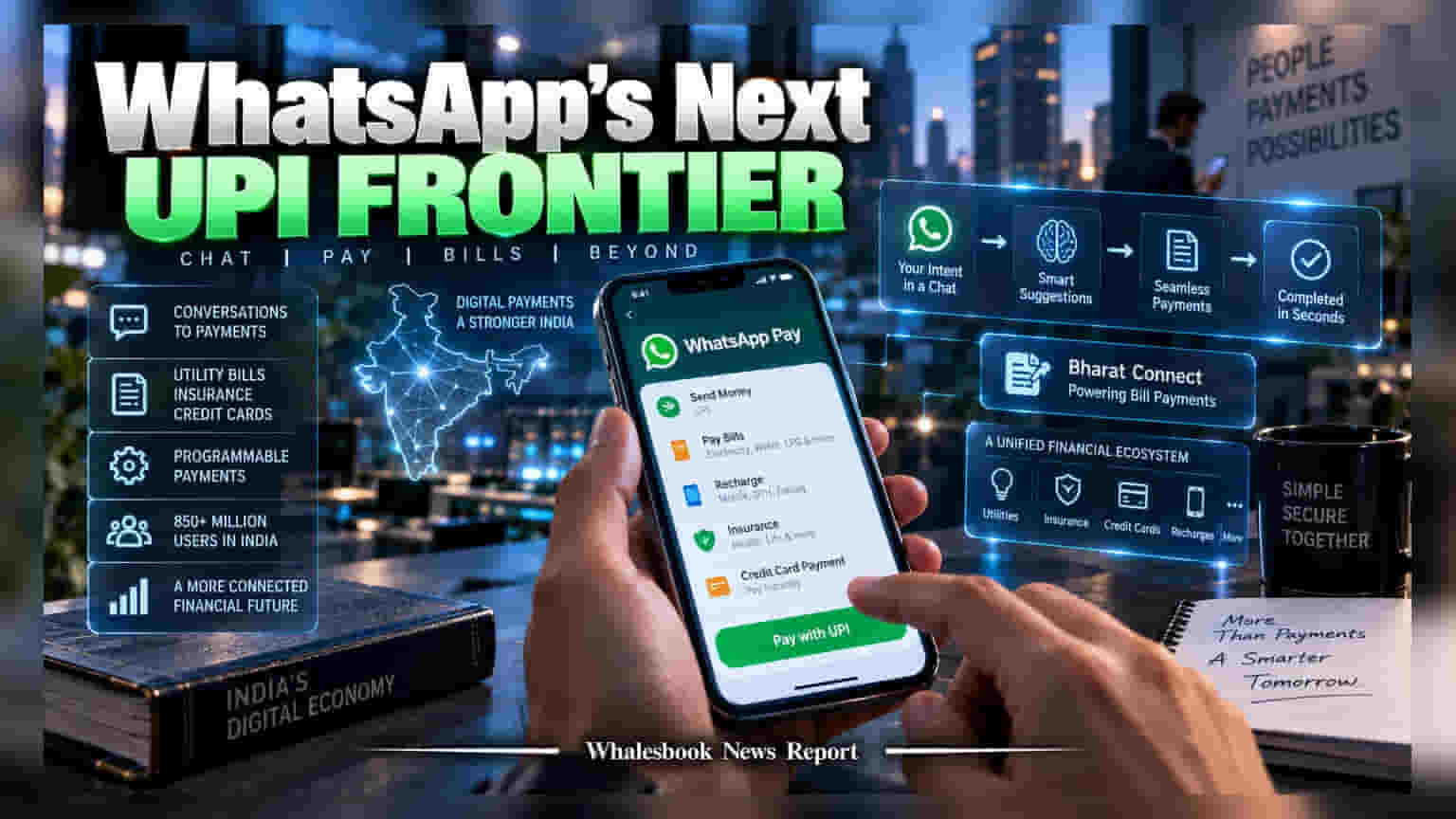
WhatsApp is launching programmable payments to transition from a simple money transfer app into a broader financial utility. Despite a massive user base, the platform currently holds less than 1% of India's UPI market share. Success for Meta will depend on whether this new strategy can increase adoption against entrenched competitors while navigating strict regulatory caps.
WhatsApp is reshaping its fintech strategy in India, moving beyond simple peer-to-peer money transfers to a more sophisticated model known as programmable payments. At the Global Fintech Fest 2026, Meta’s leadership articulated a vision where the messaging platform serves as an interface for complex financial decision-making. This strategy aims to integrate user intent and social context to automate and anticipate transaction requirements.
To support this, WhatsApp is integrating features like native bill payments powered by the Bharat Connect network, formerly known as BBPS. This allows users to pay for utilities, insurance, and credit cards directly within the app. By keeping these financial workflows inside the messaging environment, Meta intends to reduce the friction that often drives users to switch to standalone banking or third-party payment applications.
The strategic shift comes as WhatsApp attempts to turn its massive reach—over 850 million users in India—into meaningful financial adoption. Despite this ubiquity, WhatsApp's UPI market presence remains modest. As of July 2026, WhatsApp Pay processed approximately 167 million transactions worth roughly ₹12,957 crore. This volume makes it the eighth-largest UPI application by transaction count, trailing significantly behind leaders like PhonePe and Google Pay. Currently, the platform holds less than a 1% share of the total UPI market.
For Meta, the challenge lies in converting a user base accustomed to social messaging into regular financial users. The payments sector in India remains highly competitive and is governed by strict regulations, including volume caps set by the National Payments Corporation of India (NPCI) to prevent market oligopolies. These caps limit how quickly any single player can expand its transaction volume.
Furthermore, monetization remains a complex hurdle. While increasing transaction volume is a priority, the low-margin nature of UPI transactions means that high usage does not automatically guarantee significant profitability. Meta does not disclose standalone financial results for WhatsApp's UPI operations in India, as these are part of its broader 'Family of Apps' segment.
Investors and market observers will likely monitor whether these new programmable features can drive higher adoption rates and if the platform can secure a larger slice of the market despite the dominance of incumbents. The key monitorable will be how effectively WhatsApp can navigate the regulatory environment and whether user behavior shifts toward using a messaging app as their primary financial hub.