

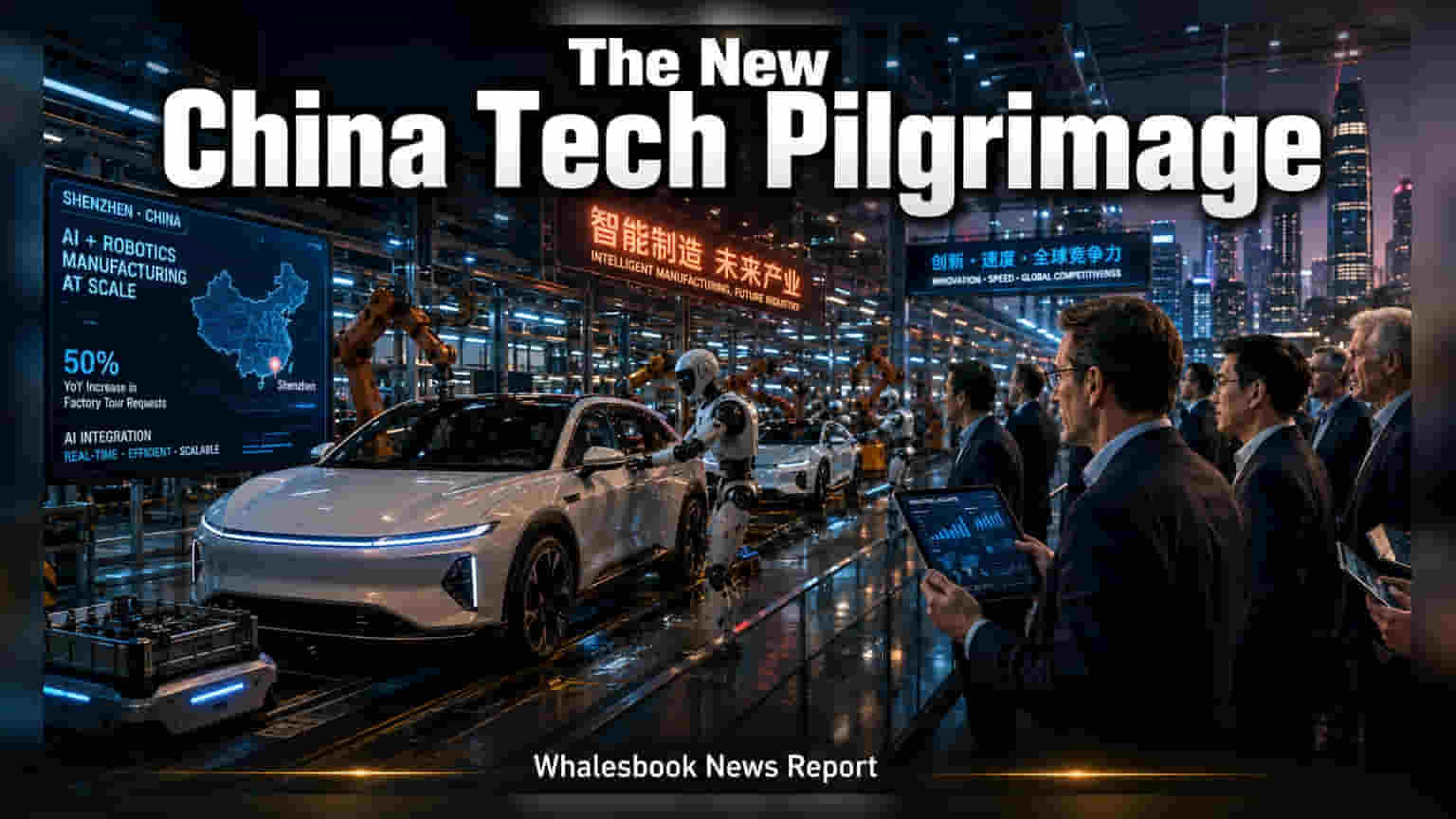
Western technology executives are visiting Chinese manufacturing hubs in increasing numbers, seeking to understand how China scales AI and robotics. This trend reflects a broader attempt by global firms to address innovation gaps while navigating complex supply chain and geopolitical realities.
A noticeable shift is occurring in how global technology companies approach their manufacturing and innovation strategies. Executives and investors from the United States and Europe are traveling to China in record numbers, focusing on advanced industrial centers like Shenzhen to observe firsthand how local firms deploy artificial intelligence and robotics at scale.
The Shift Toward Industrial Scouting
This trend, sometimes described as industrial tourism, involves corporate leaders paying for access to state-of-the-art manufacturing facilities. Agencies facilitating these tours report a 50% year-over-year rise in requests. The core objective is to decode the speed and infrastructure behind China’s hardware production. For many Western firms, the focus has shifted from purely outsourcing production to actively studying the systems that enable Chinese manufacturers to integrate AI into their assembly lines, helping them catch up in areas where they feel their own productivity has stalled.
Why Investors Are Watching
For global investors, this engagement highlights a critical contradiction in the current market. While geopolitical tensions and trade restrictions suggest a move toward decoupling, the practical reality of global tech development remains deeply intertwined. Many robotics and AI-focused firms in the West still depend on Chinese supply chains for hardware components. By visiting these hubs, executives are acknowledging that maintaining a competitive edge often requires working within, or at least observing, the existing manufacturing ecosystem rather than ignoring it.
Strategic Risks and Reality Checks
While the influx of visitors indicates a perceived lead by China in scaling hardware innovation, industry analysts maintain that the competitive landscape is nuanced. Western companies continue to hold a dominant share of global intellectual property and high-value software profits. However, the risk for foreign firms is twofold. First, there is the challenge of intellectual property protection in a market where collaborators can quickly become competitors. Second, heavy reliance on these manufacturing hubs exposes companies to future shifts in trade policy and regulatory changes.
Investors should monitor how these factory-scouting trips translate into tangible business outcomes. The key questions will be whether Western firms can successfully adapt these high-speed manufacturing lessons to their own operations, and whether they can effectively balance this dependence on Chinese infrastructure with the need to protect their proprietary technology and long-term market independence.