

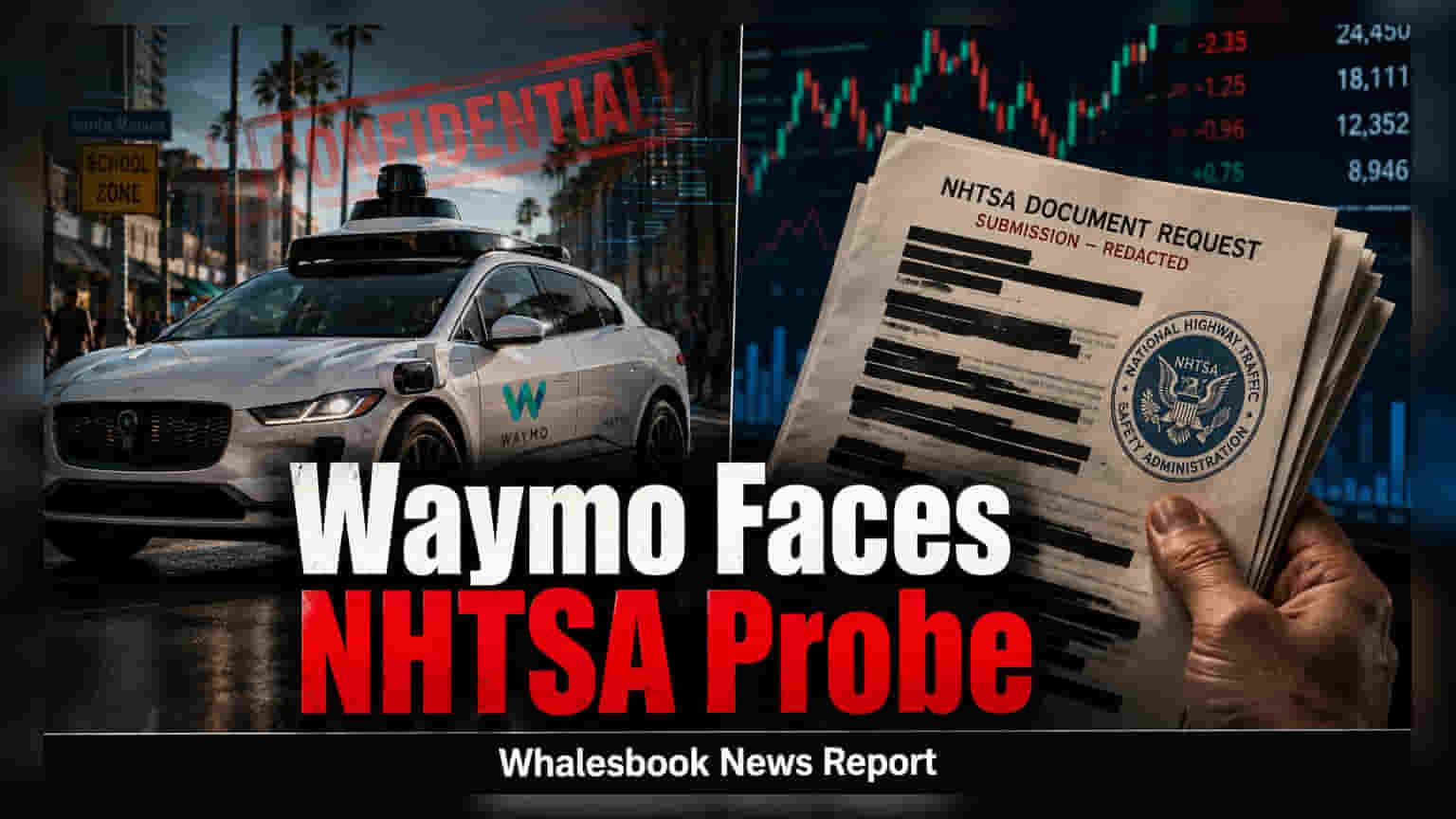
Waymo has completed its document submission to the U.S. National Highway Traffic Safety Administration regarding a January 2026 autonomous vehicle collision. The probe examines the company’s software and safety protocols near school zones. As a subsidiary of Alphabet Inc., Waymo remains under regulatory scrutiny, though the incident's direct financial impact on the parent company remains limited.
Waymo, the autonomous driving technology firm, has submitted the final set of documents to the U.S. National Highway Traffic Safety Administration (NHTSA) regarding a low-speed collision involving one of its robotaxis. The incident, which occurred on January 23, 2026, in Santa Monica, California, involved a vehicle striking a 9-year-old child. The child sustained minor injuries in the event. The agency’s investigation is currently in a preliminary evaluation phase, with the company providing redacted information while citing the need to protect confidential business details.
Regulatory Focus on Safety Protocols
The NHTSA launched this inquiry to understand how Waymo’s autonomous systems handle school zones. The regulator’s request, issued in March 2026, focused on 12 key areas, including documentation of the software systems, the specific protocols the vehicles use to manage speed in areas near schools, and whether other complaints or incidents have occurred in similar environments. The company initially requested and was granted extensions to compile this data, citing the complexity of the information requested. With the submissions now complete, the regulator will review the findings.
Investor and Market Context
For investors, it is important to note that Waymo is a private, wholly-owned subsidiary of Alphabet Inc. There is no independent stock ticker for Waymo. While the company is a significant long-term growth project for Alphabet, it represents only a small portion of the parent firm’s massive revenue base, which is primarily driven by advertising and cloud computing services.
Regulatory investigations of this nature are not uncommon for companies operating in the autonomous vehicle space. However, they serve as a reminder of the compliance hurdles companies face as they scale their technology. The primary risk for the company is not necessarily an immediate financial penalty, but rather the potential for increased regulatory restrictions, mandatory software updates, or reputational challenges that could affect the pace of future expansion in new cities.
What Investors Should Monitor
While the current investigation involves a single incident, the broader focus for the industry is how regulators like the NHTSA and the National Transportation Safety Board (NTSB)—which is conducting a separate review—will shape future safety standards for driverless cars. Investors in the autonomous sector generally watch for signs of operational delays, new safety compliance costs, or any changes in the regulatory environment that could impact the speed at which robotaxi fleets are deployed. The next steps will depend on the findings released by the NHTSA upon the completion of their review.