

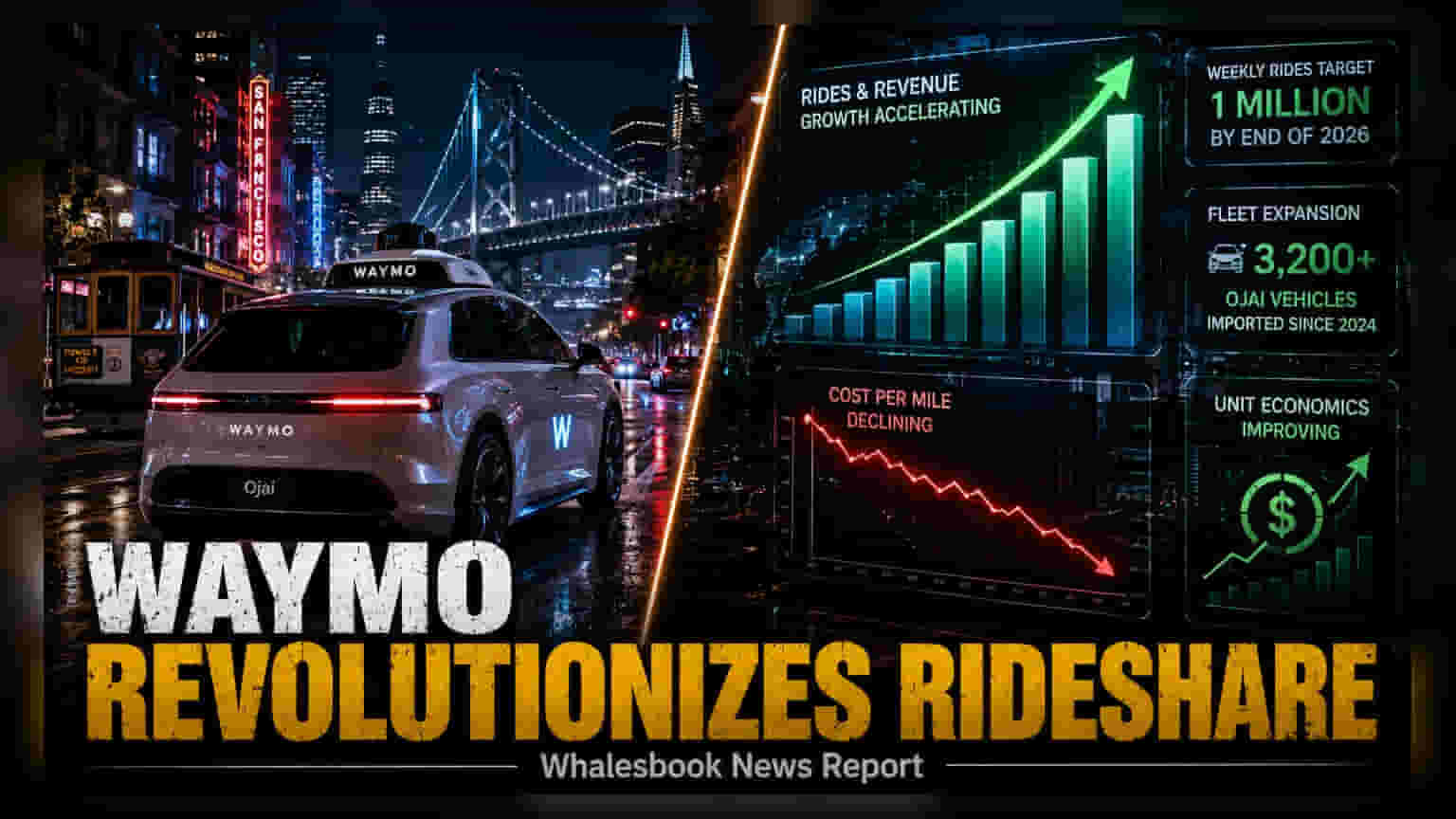
Waymo has officially opened its next-generation Ojai robotaxi service to the public in Los Angeles, Phoenix, and San Francisco. The fleet expansion, utilizing vehicles based on the Zeekr platform, is a key part of the company’s push to reach one million weekly rides by the end of 2026. Investors are now watching how the company manages the impact of high import tariffs on its capital-intensive expansion plans.
Waymo, the autonomous driving subsidiary of Alphabet, has expanded its robotaxi services by making its next-generation Ojai vehicle available to all riders in Los Angeles, Phoenix, and San Francisco. This rollout is a major step in the company's strategy to move beyond retrofitted consumer vehicles to a fleet specifically designed for autonomous transport.
The Ojai robotaxi is built on the SEA-M platform developed by Geely’s electric mobility brand, Zeekr. These vehicles are imported into the United States and retrofitted with Waymo’s sixth-generation autonomous driving hardware at the company's facility in Mesa, Arizona. The vehicles also integrate Google’s Gemini AI, which serves as an in-car assistant, providing a tech-focused experience for passengers.
Scaling Operations and Cost Pressures
Waymo is aggressively expanding its footprint, with plans to reach one million weekly rides by the end of 2026. To support this, the company has imported over 3,200 Ojai vehicles since 2024. However, this aggressive expansion comes with significant financial considerations. The company faces import tariffs of approximately 127.5% on these Chinese-manufactured vehicles, which substantially increases the cost of capital for fleet expansion. Investors are closely monitoring how these high upfront costs and the ongoing expenses of maintaining a complex ride-hailing infrastructure will affect the company's path to long-term profitability.
Following a funding round earlier in 2026 that valued the company at $126 billion, Waymo has access to significant capital, including $16 billion raised to fuel its growth. Despite this strong backing, the business remains in a phase of heavy investment. The primary challenge remains proving that the unit economics of the robotaxi service can overcome the initial costs of hardware, development, and high-tariff imports.
Regulatory and Operational Hurdles
Beyond costs, the expansion is subject to intense regulatory scrutiny. Autonomous driving technology still faces significant questions regarding safety and performance in complex traffic or active construction zones. Waymo has experienced historical recalls and ongoing monitoring by safety regulators. As the fleet size grows, the company must maintain a consistent safety record to secure permits in new markets.
Looking ahead, the company has indicated plans to introduce the Ojai in Denver, Las Vegas, and San Diego later this year. The key monitorable for stakeholders will be whether Waymo can maintain its expansion pace while navigating the high tariff environment and proving that its autonomous technology can scale efficiently without compromising safety or service quality.