

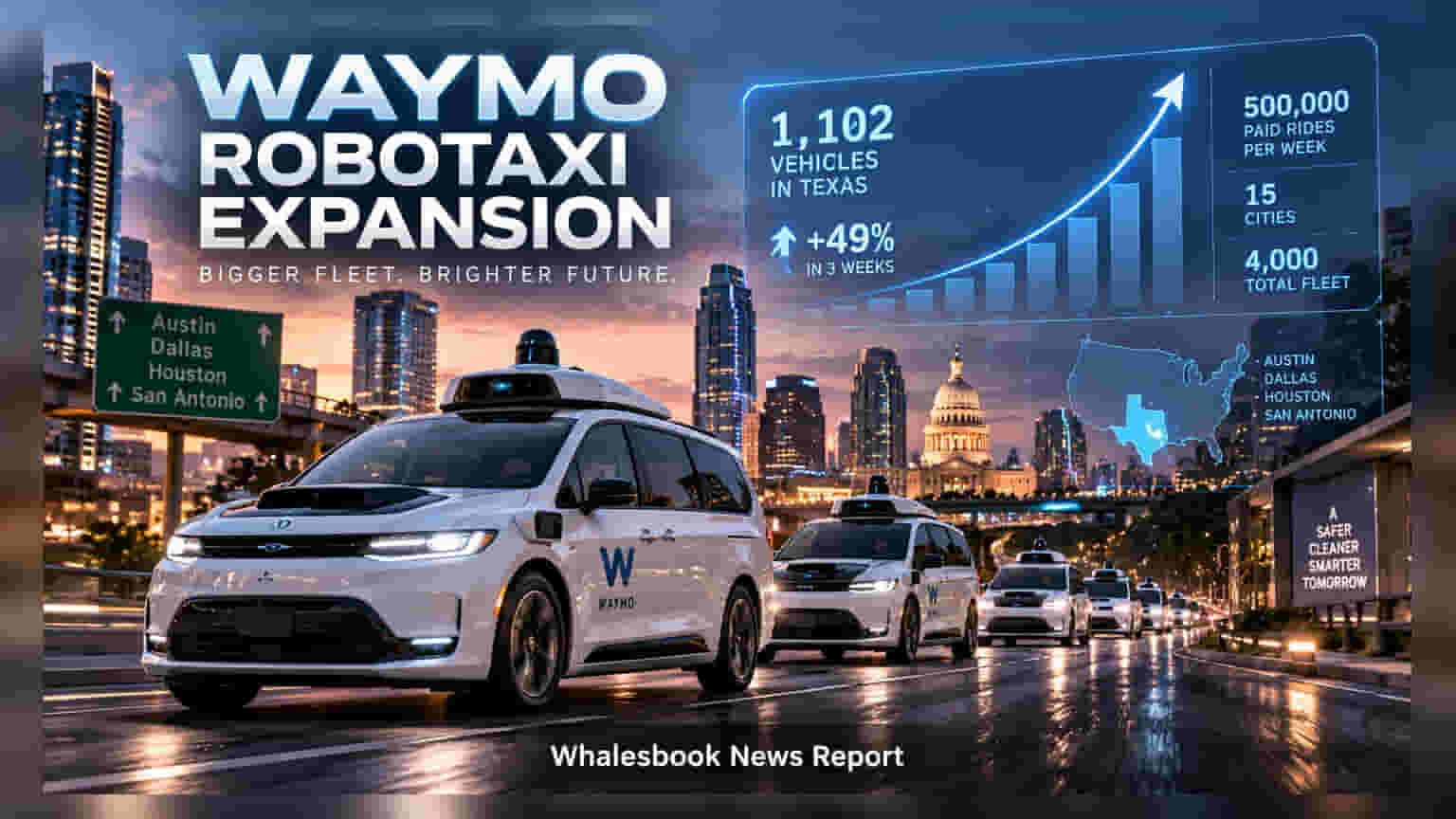
Alphabet-owned Waymo has increased its Texas robotaxi fleet by 49% in three weeks to 1,102 vehicles. The company is using Chinese-built Zeekr minivans to drive growth, accepting higher import tariffs to prioritize market share over immediate profits. Investors are tracking how this heavy capital spending affects Alphabet’s 'Other Bets' segment.
Alphabet’s autonomous driving unit, Waymo, is rapidly scaling its robotaxi operations in Texas. The company recently increased its vehicle count in the state by 49% over a three-week period, bringing the total registered fleet in Texas to 1,102 units. This expansion is part of a larger, global push that has seen the company reach 500,000 paid rides per week across 15 cities, with Texas and California now housing 80% of its total 4,000-vehicle fleet.
To fuel this growth, Waymo is deploying a new custom-modified minivan called the Ojai. These vehicles are based on the Zeekr model, produced by China’s Geely Holding Group. The strategy relies on mass deployment to lower long-term operating costs and improve durability. However, this approach comes with significant trade and regulatory challenges. Because the vehicles are built in China, they are subject to heavy U.S. import tariffs. Despite these added costs, Waymo plans to import 5,100 of these vehicles by the end of the year to support its geographic expansion.
Navigating Regulatory and Tariff Hurdles
The company has adopted a specific supply chain strategy to manage both regulatory and cost pressures. Waymo imports the Ojai as a stripped-down chassis to avoid certain restrictions on connected-car technology. The final autonomous driving suite, which powers the car, is installed domestically at a specialized facility in Arizona. This method allows the company to integrate its proprietary self-driving hardware and Google’s Gemini AI interface locally, ensuring compliance while maintaining its scaling pace.
This aggressive growth strategy is also supported by a commercial partnership with Uber. By leveraging Uber’s ride-hailing network in major Texas hubs like Austin, Dallas, Houston, and San Antonio, Waymo is attempting to reach a higher volume of riders more quickly than it could through its own app alone.
Investor View on Capital Allocation
For investors in Alphabet, Waymo remains a key part of the 'Other Bets' business segment, which typically reports operating losses as the company invests heavily in future technologies. The decision to prioritize market share over immediate profit margins highlights Alphabet’s commitment to establishing a dominant position in the autonomous transportation sector.
However, the move increases the company's capital spending. Investors are likely to track whether the scale achieved by these new vehicles can eventually offset the high costs of manufacturing, import tariffs, and ongoing technology development. As Waymo prepares to test this model in new regions like Florida and Las Vegas, the primary monitorables remain the company's ability to maintain high service quality while managing the regulatory and trade costs associated with its vehicle fleet.