

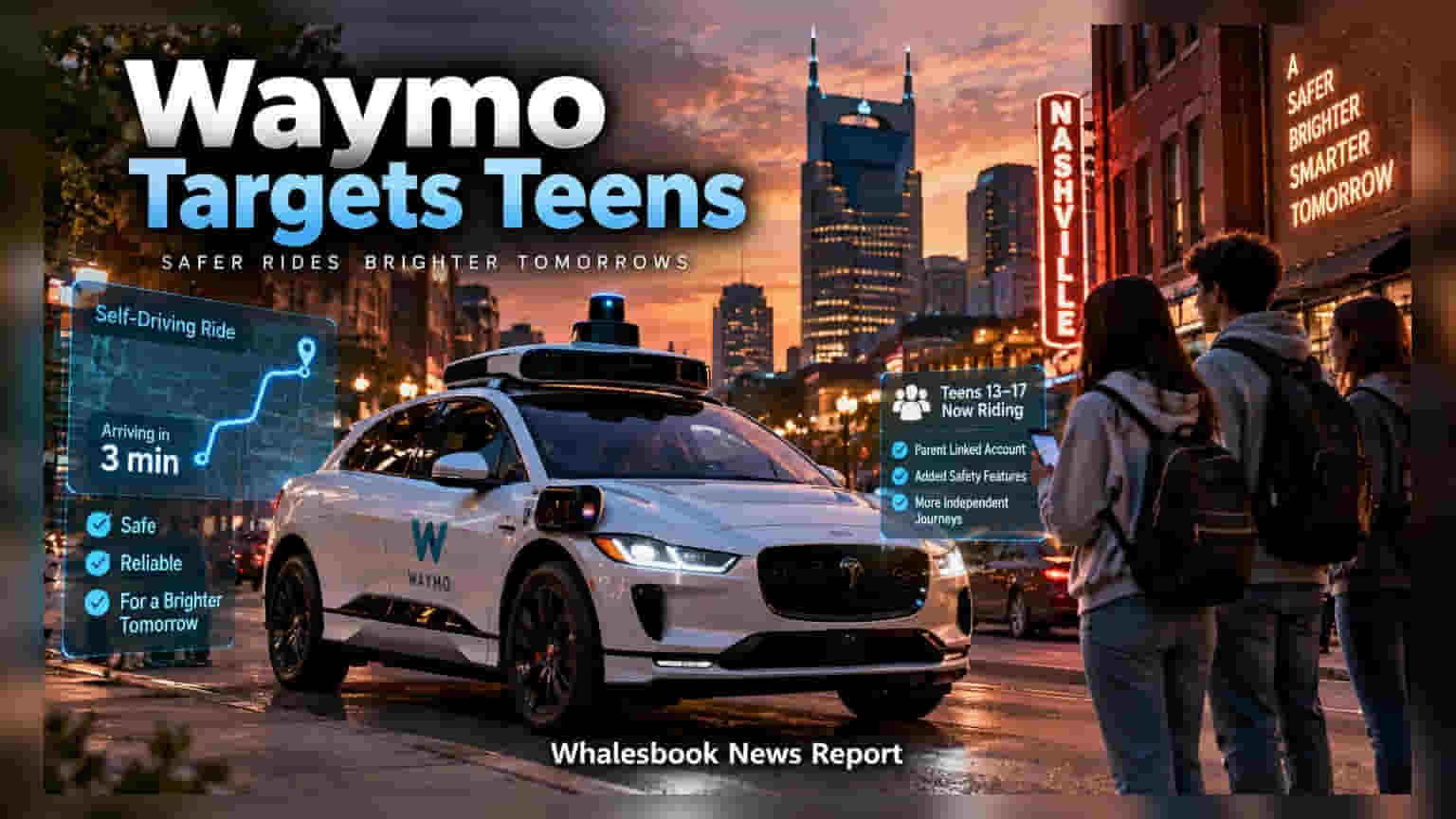
Alphabet-owned Waymo is allowing teenagers in Nashville to use its autonomous ride service through linked parental accounts. This expansion highlights the company's aggressive effort to scale its rider base. While weekly ride volumes are rising rapidly, investors are monitoring regulatory safety scrutiny that remains a significant risk factor for the autonomous vehicle sector.
Alphabet Inc.'s autonomous driving unit, Waymo, is broadening its service in Nashville by allowing teenagers aged 13 to 17 to use its robotaxi platform. To ensure safety and regulatory compliance, teen users must have accounts linked to a parent or guardian. This move marks the second city for the teen-focused service, following a pilot program in Phoenix. For Waymo, this strategy is not just about convenience; it is an effort to capture a younger demographic and build brand loyalty as the company attempts to shift from a technology-testing phase to a commercial-scaling phase.
The expansion arrives during a period of rapid growth for Waymo’s fleet. The company has reported that its weekly paid rides increased from 50,000 in May 2024 to over 500,000. Over the past year, Waymo has entered 12 new cities, including Denver, Las Vegas, and San Diego. This rapid deployment, partly supported by partnerships with platforms like Lyft, is intended to test the operational limits of its autonomous network in diverse urban environments.
For investors, Waymo remains a significant focus within Alphabet’s "Other Bets" segment. While the growth in ride volume is a positive operational indicator, the business model faces high capital spending requirements to maintain, map, and update its autonomous fleet. The company's ability to turn this massive investment into sustainable revenue will depend on its ability to keep expanding into new cities without major regulatory pushback.
Regulatory and safety risks remain the primary monitorables for the autonomous vehicle industry. While Waymo has successfully expanded its operations, the entire sector is under constant observation by the National Highway Traffic Safety Administration (NHTSA) and local authorities regarding safety performance and accident reporting. Unlike some peers, such as GM’s Cruise, which faced significant operational pauses and leadership changes following safety incidents, Waymo has maintained a more consistent trajectory. However, any unexpected incident or regulatory clampdown could slow down the current expansion pace significantly.
Looking ahead, investors should watch for the company's ability to maintain safety records as it scales. The pace of new city launches, the effectiveness of partnerships with third-party ride-hailing apps, and the evolution of the regulatory environment will determine if Waymo can scale profitably. As the company tries to balance rapid growth with public safety, the financial impact on Alphabet's margins will be a key point of interest in upcoming earnings reports.