

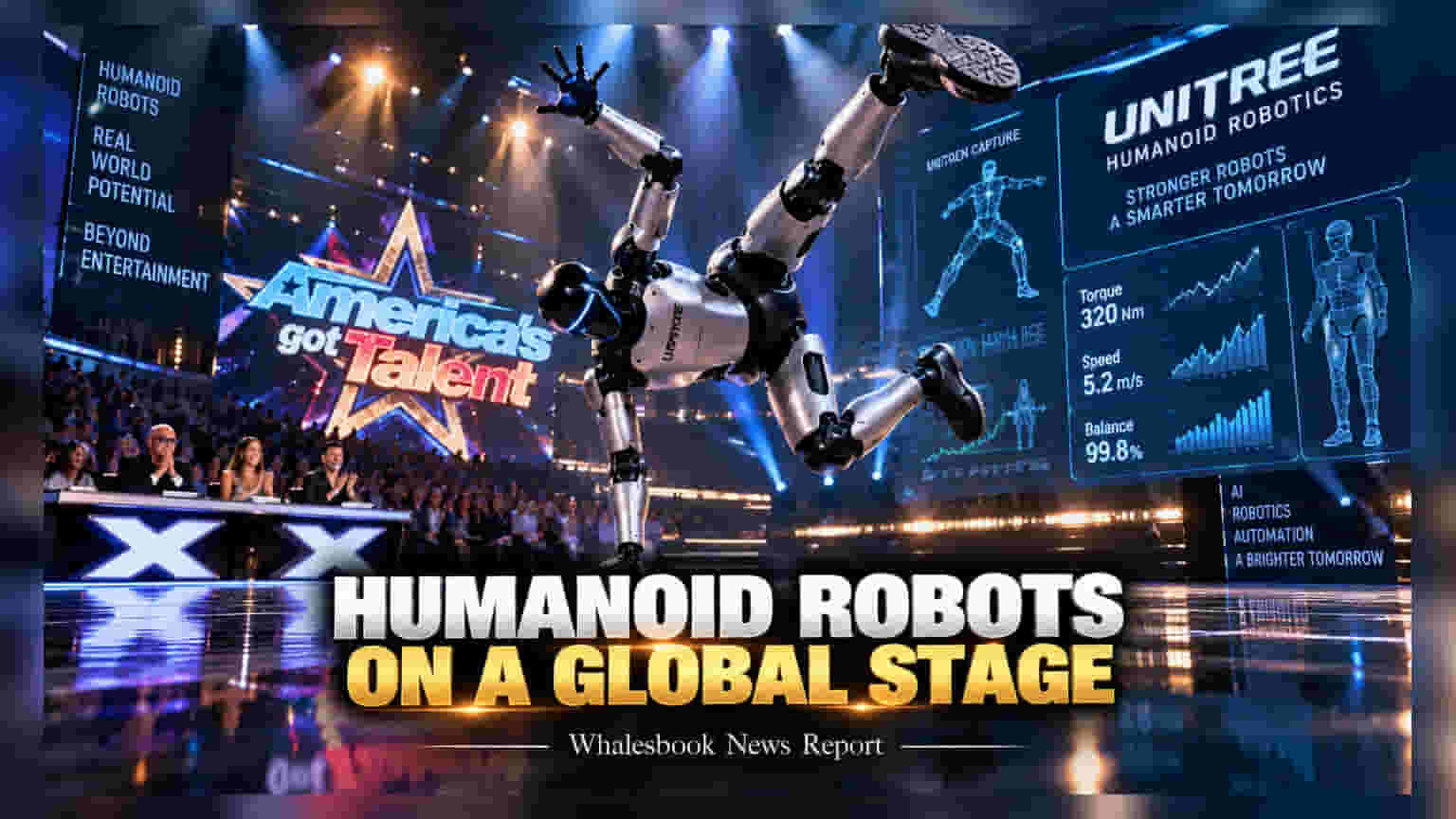
While Unitree’s robots perform on America’s Got Talent, the company’s stock has corrected 50% from its recent peak. Investors are now questioning if these machines can move beyond entertainment and become essential tools for factories or homes.
Unitree’s humanoid robots are currently grabbing headlines on the stage of America's Got Talent, where they perform complex, synchronized dance routines. These machines are a marvel of engineering, programmed to execute intricate movements with precision. However, for investors and the broader robotics sector, there is a clear divide between what these robots can do on stage and what they can achieve in the real world.
Technically, these robots are highly capable of performing repetitive tasks, often referred to as 'power moves.' Choreographers spend days fine-tuning their motions to ensure they stay in sync. Yet, these machines currently lack the ability to adapt to unexpected situations in real-time. Unlike a human who can adjust to a sudden change in music or environment, these robots require rigid scripts. This limitation is a key reason why the industry is still in its early stages of development.
From a financial perspective, the story is one of high expectations followed by significant volatility. Unitree, listed on the Shanghai stock market, saw its share price surge by 629% during its debut in August. This excitement was short-lived, as the stock has since fallen by approximately 50% from that peak. Such price swings are common in emerging technology sectors where investors often rush in based on the novelty of the product before the company has established consistent, long-term revenue streams.
China currently accounts for over 97% of global humanoid robot shipments, according to industry data from the first half of 2026. Financial analysts at Morgan Stanley have estimated the Chinese humanoid robotics market could reach a valuation of $2 billion this year. While these numbers sound impressive, the sector is struggling to find its 'ChatGPT moment'—a breakthrough that would make these robots indispensable in everyday life or industrial production.
The challenge for Unitree and its peers is to prove that their robots are more than just an entertainment spectacle. For investors, the most critical factor is commercial viability. Making a robot dance is vastly different from making a robot that can safely and efficiently work in a warehouse, clean a house, or assist in manufacturing. As of now, the company's ability to transition from a novelty act to a provider of reliable, daily-use tools remains the primary risk and the main test for its future growth. Investors may want to look beyond the viral videos and track whether the company can secure long-term orders for real-world applications and maintain sustainable profit margins.