

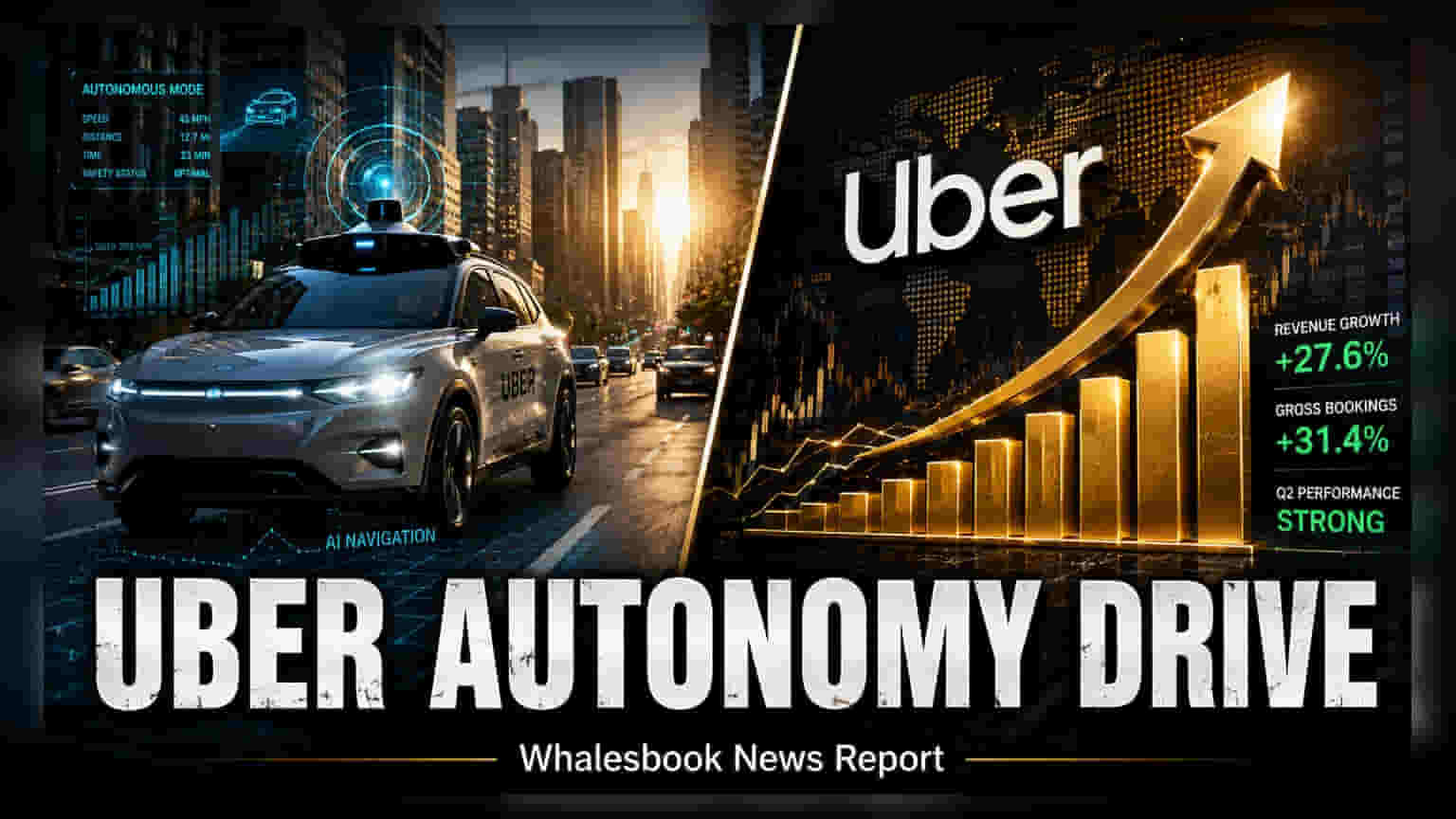
Uber reported strong Q2 2026 gross bookings of $58.02 billion, but shares fell 5.3% as investors weighed concerns over heavy capital spending for its autonomous mobility strategy. The company plans to expand its self-driving network to 15 cities by year-end as part of a $10 billion multi-year investment plan.
Uber Technologies faced a mixed market reaction following its second-quarter 2026 earnings report. While the company posted strong financial growth, the stock price closed 5.29% lower at $68.18 on August 6, 2026. Investors appeared cautious, focusing on the company’s heavy capital spending plans for autonomous vehicles rather than just the quarterly revenue and profit numbers.
In terms of core performance, Uber showed significant growth. Gross bookings reached $58.02 billion for the quarter, a 22% increase compared to the previous year. The company also hit a financial milestone, with trailing twelve-month free cash flow exceeding $10 billion for the first time. Non-GAAP earnings per share rose by 35% to $0.81, reflecting a business that is becoming more efficient in its primary ride-hailing and delivery segments.
However, the primary talking point for the market was Uber’s aggressive pivot toward autonomous mobility. The company is currently operating self-driving services in seven cities and aims to expand this to 15 cities by the end of 2026. To achieve this, Uber has committed to a multi-year investment plan of $10 billion. This strategy involves building a hybrid network that integrates autonomous fleets with its existing pool of human drivers. The company is actively forming partnerships with over 30 entities to secure the necessary technology and hardware for this rollout.
This capital-intensive strategy likely contributed to the negative stock reaction. Investors are weighing whether the long-term benefits of an autonomous fleet justify the high upfront costs and the operational complexity of managing such a network. Additionally, some market participants expressed concern over the company’s forward-looking guidance, which appeared softer than expected, and the potential for decelerating growth in specific segments.
Beyond the autonomous expansion, Uber also announced an agreement to acquire Delivery Hero to help grow its global market footprint. While this move aims to increase scale, it brings its own set of challenges, including execution and integration risks. The company must now manage the integration of new assets while simultaneously scaling its self-driving infrastructure.
Going forward, the key monitorables for shareholders will be the pace of the autonomous network expansion and whether the company can maintain its profit margins while spending heavily on fleet development. Investors will also track how the integration of the Delivery Hero acquisition impacts cash flow and whether the hybrid model of human and autonomous driving can deliver the expected efficiency gains without putting too much pressure on the balance sheet.