

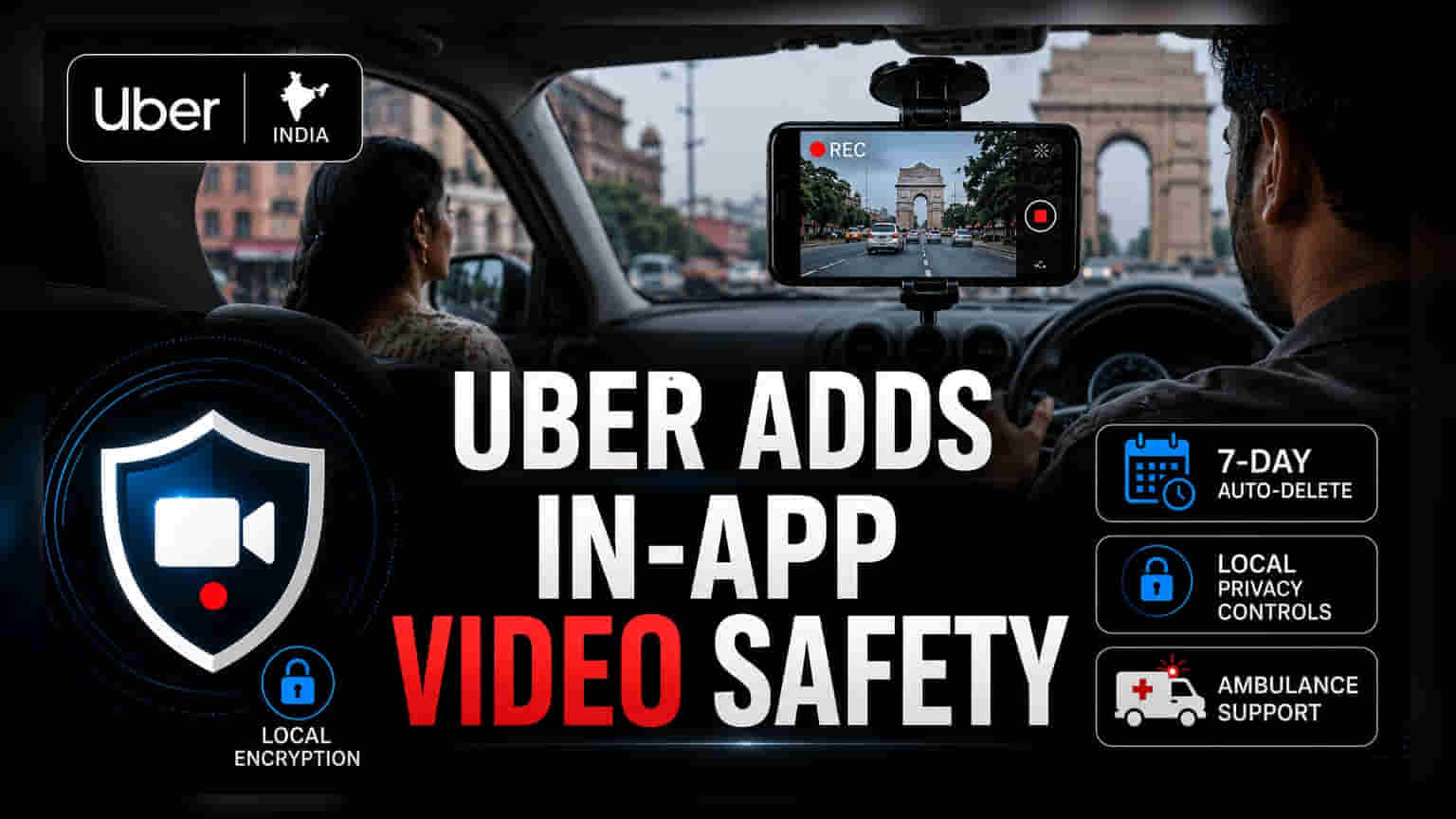
Uber India has introduced an in-app video recording feature for drivers to improve safety during trips. The encrypted footage is stored locally and deleted after seven days if not reported. This update, along with new ambulance and PIN features, reflects a push to improve ride security in a competitive Indian market where trust and safety remain key differentiators for growth.
What Happened
Uber has launched an in-app video recording feature for its drivers in India to enhance safety. The feature allows drivers to record trips using their phone’s camera. To address privacy concerns, the company has clarified that recordings are encrypted and stored locally on the driver's device. These videos are not accessible to Uber or the driver unless they are attached to a formal safety report submitted by the driver. If no report is filed, the data is automatically deleted after seven days.
Privacy and Operational Design
The company has designed the system to act as a deterrent and a tool for incident verification. By keeping the footage local and encrypted, Uber aims to reduce privacy risks for passengers. Riders will be notified if a trip is being recorded, allowing them to make an informed choice before starting the journey. This approach seeks to find a balance between the need for safety documentation and the user's right to privacy, a significant factor in India’s evolving data protection landscape.
Expanded Safety and Emergency Response
Beyond video recording, Uber is introducing additional safety layers. The company has partnered with Dial 4242, a medical logistics provider, to integrate ambulance assistance directly into its safety platform. In the event of an accident, riders and drivers can request emergency medical support through the app’s 24x7 safety line.
Additionally, Uber is implementing functional changes such as restricting manual typing while the vehicle is in motion to ensure driver focus. Riders will also be able to set unique ride PINs for every trip. These additions are part of a broader strategy to standardise safety protocols across the platform.
Business and Competitive Context
The ride-hailing sector in India is highly competitive, with players like Ola and newer EV-focused services like BluSmart constantly vying for market share. In this environment, safety features are not just operational tools but strategic assets. A brand perceived as safer often commands higher user loyalty and lower churn rates, which are critical for business sustainability.
By investing in these technologies, Uber is trying to strengthen its value proposition. For a platform that relies on gig workers and third-party vehicles, building trust through verifiable safety measures is essential to maintaining its user base and navigating the complexities of the Indian regulatory environment.
Potential Risks and Challenges
While these features aim to improve safety, they do introduce new complexities. The effectiveness of the system relies on driver and rider compliance and the technical reliability of the app. Furthermore, privacy advocates often monitor how such platforms handle sensitive data, even with encryption. There is also the risk of potential misuse or technical glitches in the recording process. As the company rolls out these features, it will need to ensure that the implementation remains seamless and compliant with evolving local data storage norms.
What Investors and Users Should Track
The primary monitorables for this update are user and driver adoption rates and the frequency of incident reporting using these new tools. The effectiveness of the ambulance partnership with Dial 4242 will also be a key operational metric. Finally, how the broader market and competitors react to these safety standards will indicate whether this becomes a new industry benchmark for ride-hailing in India.