

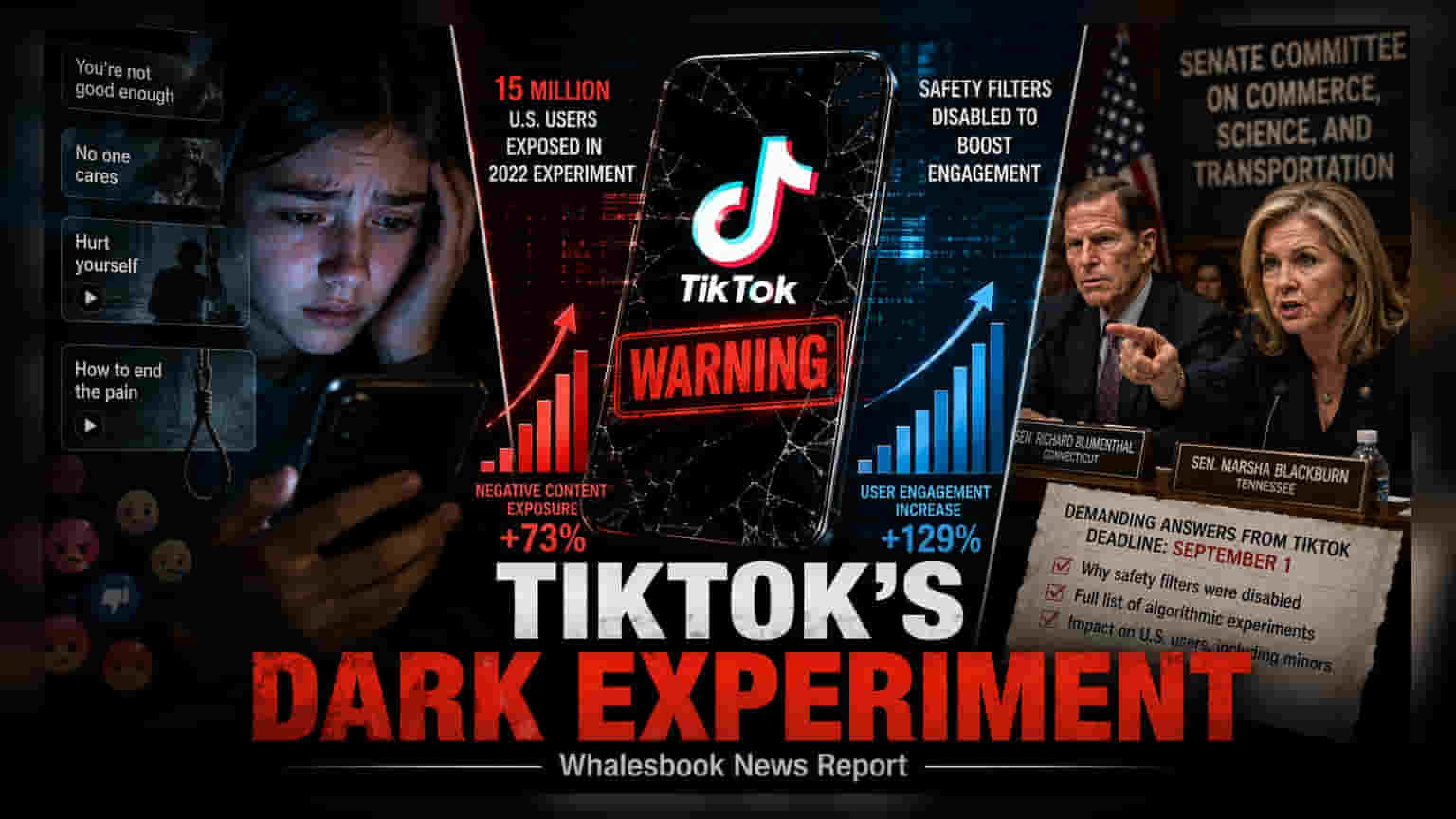
US lawmakers have demanded answers from TikTok regarding a 2022 experiment that withheld safety features from 15 million users. This scrutiny follows allegations of harmful content exposure, highlighting intense regulatory pressure on big tech. For investors, the development shows the increasing oversight of algorithmic engagement models, which is a critical risk factor for global social media and digital platform companies.
US Senators Marsha Blackburn and Richard Blumenthal have issued a formal demand for transparency from TikTok leadership regarding an algorithmic experiment conducted in 2022. The lawmakers have set a September 1 deadline for the company's executives to explain why safety features were reportedly disabled for approximately 15 million American users during this trial.
The controversy centers on an internal experiment designed to measure the impact of safety filters on user engagement. The senators have criticized this move, noting that a control group of users—including minors—was subjected to content without the protection of these filters. The investigation gained urgency following reports of a 16-year-old user who was allegedly exposed to distressing content, including material related to self-harm, while part of this group.
While TikTok is a subsidiary of the private firm ByteDance and is not a publicly traded stock, the probe is highly relevant for investors in the technology and social media sectors. Global regulators are increasingly examining how algorithms curate content and prioritize user engagement over safety. Companies that rely heavily on automated content feeds now face heightened scrutiny, potential fines, and the risk of forced changes to their operational models.
For Indian investors, this event serves as a reminder of the evolving regulatory environment for digital platforms. TikTok has been banned in India since 2020 due to data privacy and national security concerns. The current US developments show that even in markets where such platforms operate, they face significant political and legal pressure.
This situation reveals the governance risks associated with large technology companies. When operational decisions—such as disabling safety features for data gathering—are prioritized over user protection, it can lead to severe reputational damage and regulatory intervention. Investors in other tech platforms should watch for similar patterns of regulatory inquiries, as these can impact market valuation and operating freedom.
The immediate next step is the September 1 deadline, by which TikTok must provide a detailed response. The senators are specifically seeking a full list of all algorithmic experiments that delayed or suspended safety protocols in the U.S., a move that could reveal further details about the company's internal data practices.