

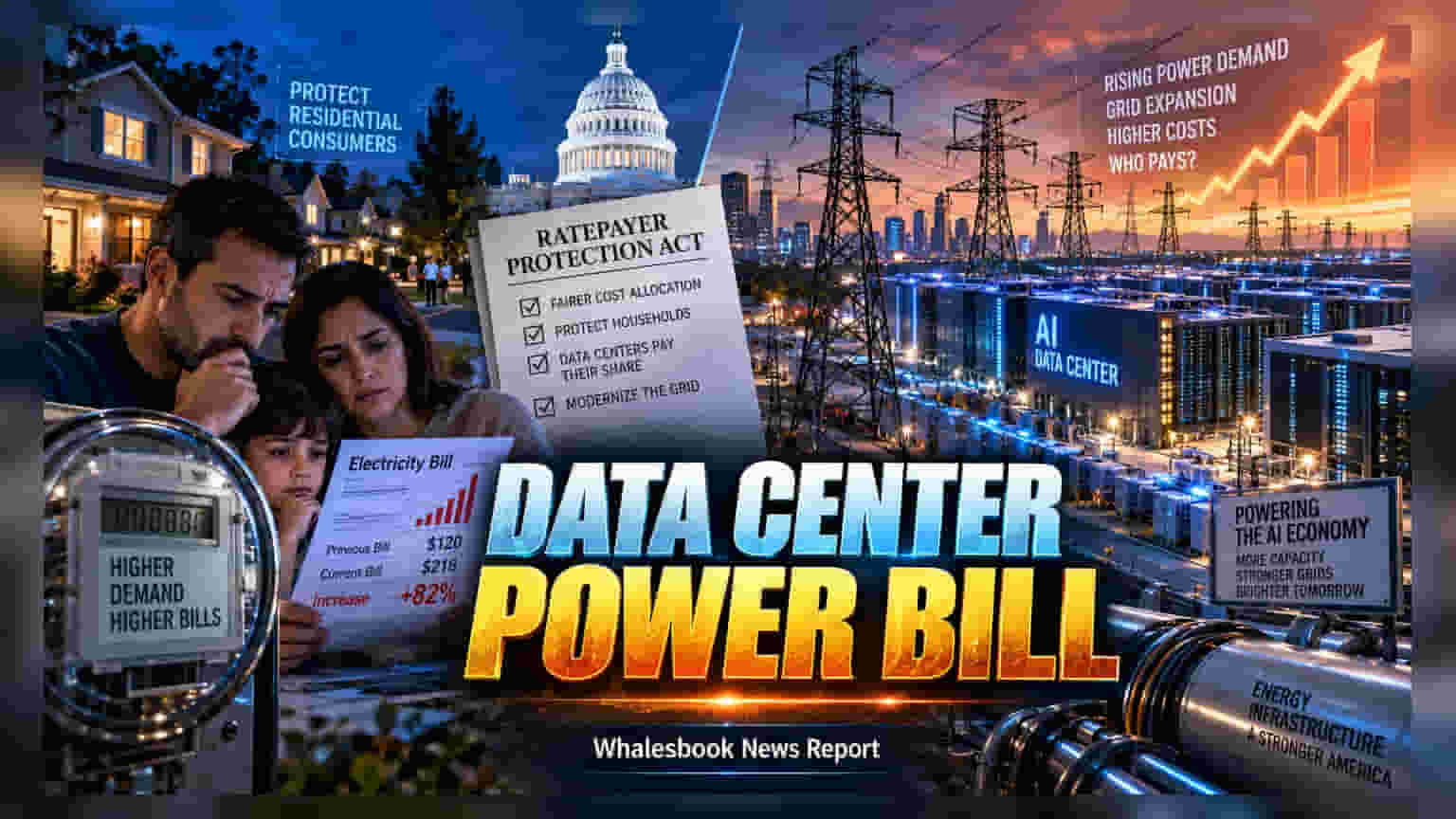
U.S. President Donald Trump is pushing for Senate approval of the Ratepayer Protection Act, which aims to make large data centers pay for power infrastructure upgrades. The bill, already passed by the House, seeks to shield households from rising electricity costs caused by AI expansion. Investors should watch for potential margin pressure on tech companies and shifts in how utilities manage high-demand power infrastructure.
U.S. President Donald Trump has initiated discussions with Senate Majority Leader John Thune to advance the Ratepayer Protection Act. The bill, which passed the House of Representatives with a significant 417-3 majority earlier this week, is designed to protect residential electricity consumers from the rising costs associated with building power infrastructure for massive artificial intelligence data centers.
At the heart of the legislation is the rapid surge in electricity demand from AI infrastructure. As tech companies build large-scale data centers to support AI models, local power grids often require expensive upgrades to handle the load. Currently, these costs are frequently spread across all electricity users, including residential households. The proposed law would require state utility regulators to conduct formal evaluations to determine if large-scale data centers—the primary drivers of this new demand—should shoulder the incremental costs of grid expansion.
The investor focus on this bill centers on how it could alter the operating expense structure for major technology firms. If large data center operators are forced to pay for their own grid upgrades, it could create a new layer of costs for them. While major tech companies have massive cash reserves, any increase in the cost of electricity—a primary input for AI operations—could impact long-term profit margins. Conversely, utility companies might benefit if they gain the regulatory backing to charge these large consumers for infrastructure improvements, rather than absorbing costs or needing to seek rate hikes from public utility commissions.
While the bill has strong support in the House, it faces hurdles in the Senate. A recent attempt to fast-track the legislation through unanimous consent was blocked by Senator Martin Heinrich. Critics argue that the current language relies too much on voluntary cooperation from state regulators and data center developers, suggesting that stronger enforcement mechanisms are needed to actually protect consumers from price hikes. The bill must now navigate the standard legislative process, where tech industry lobbying is expected to be intense.
For investors following the global data center theme, this bill serves as a critical case study. The push for data centers in India by groups like Reliance and Adani, along with global players, is also driving massive power demand. While this is a U.S.-specific legislative move, the underlying tension between AI power consumption and public electricity pricing is a growing global challenge. If this policy approach gains traction, it could influence how utility regulators in other major markets manage power contracts and infrastructure funding for high-consumption industrial users.
Investors should monitor the Senate's next steps, including any changes to the bill's language, and the response from major tech companies that operate these large data centers. The long-term impact on AI infrastructure costs and utility pricing models will remain a key factor to watch as the industry scales.