 Whalesbook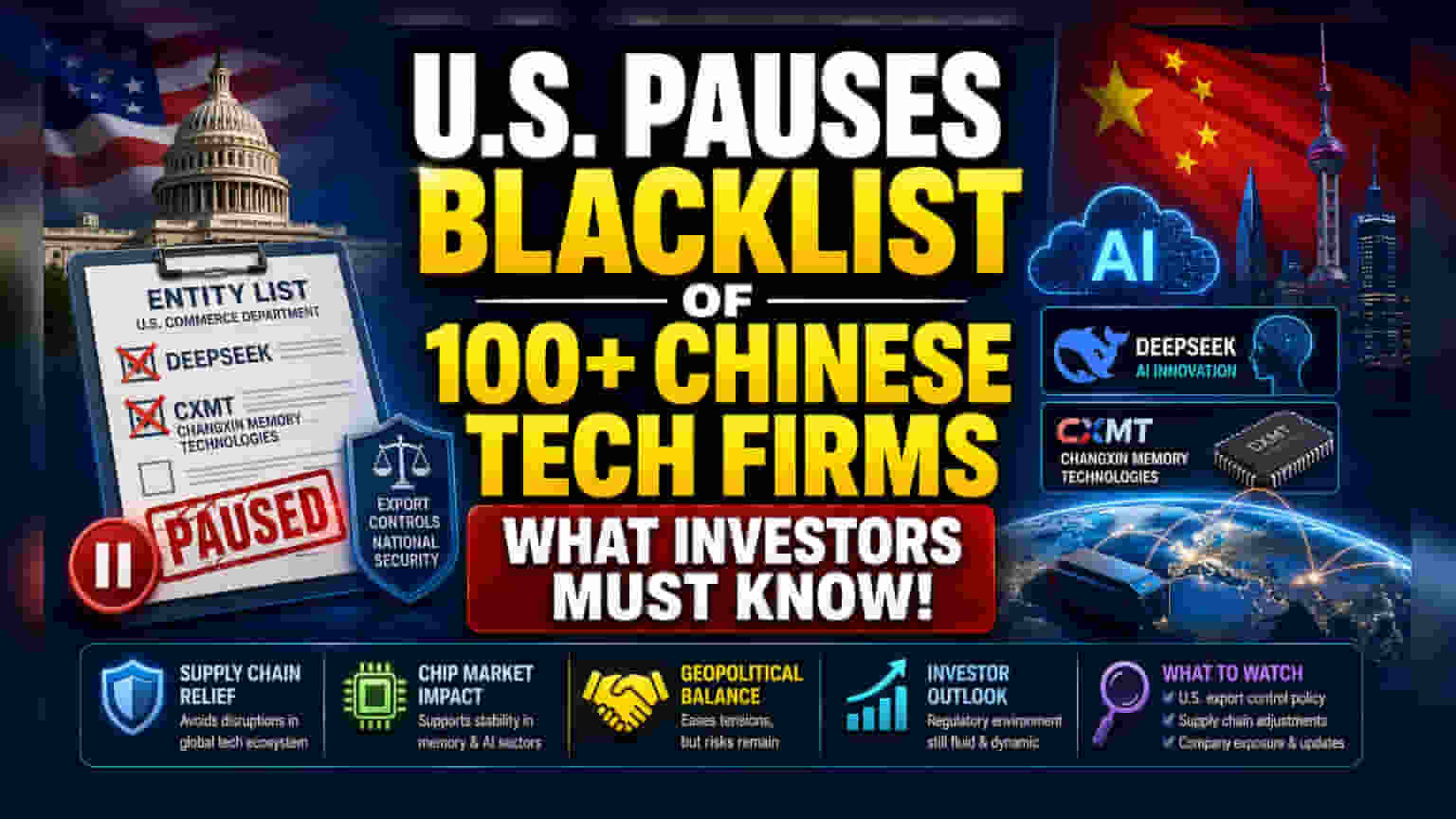


The United States has decided to pause adding Chinese AI firm DeepSeek and memory chipmaker CXMT to its trade blacklist. For investors, this decision is significant as it avoids immediate disruption to the global semiconductor supply chain and AI development race. The move indicates a temporary effort to cool diplomatic tensions, though export control risks for Chinese tech companies remain high.
What Happened
The United States government has paused plans to add over 100 Chinese companies, including artificial intelligence firm DeepSeek and memory chip manufacturer ChangXin Memory Technologies (CXMT), to its trade blacklist. This list, formally known as the Entity List, is a regulatory tool managed by the Commerce Department that restricts American companies from exporting advanced software, technology, and equipment to listed entities without a special license.
The decision to hold back on these additions is reported to be an effort to prevent further escalation of diplomatic tensions between Washington and Beijing. Agencies had previously identified these companies as entities of concern due to alleged links with China’s intelligence and military operations, as well as concerns regarding the protection of American intellectual property.
Why This Matters For Investors
For the global technology sector, this decision provides temporary relief from potential supply chain shocks. When a company is placed on the Entity List, it is effectively cut off from critical American inputs, such as chip design software and semiconductor manufacturing equipment. Because the chip and AI industries rely heavily on a global network of specialized suppliers, a sudden blacklist of major players like CXMT could have triggered supply disruptions and increased costs for global tech firms.
Investors are watching this space because the global chip market is highly interconnected. Any restriction on Chinese manufacturers forces a shift in production, which can impact pricing, availability, and the competitive landscape for non-Chinese players who compete in the same memory and AI sectors.
The Semiconductor And AI Landscape
The inclusion of companies like CXMT and DeepSeek in these discussions highlights the ongoing competition in core technologies. CXMT is a major Chinese player in the memory chip industry, competing in the broader market alongside established global leaders like Samsung, Micron Technology, and SK Hynix. Access to US-origin manufacturing tools is vital for these companies to maintain their production capabilities and move to more advanced chip designs.
Similarly, in the AI space, firms like DeepSeek have been under scrutiny due to their rapid development of AI models. Major US companies like OpenAI and Anthropic have raised concerns about how these Chinese developers might be using their technology or replicating their capabilities. By pausing the blacklist, the US is balancing the goal of protecting its competitive advantage in AI with the practical goal of managing international trade relations.
How Investors May Read This
Investors often look at trade policy as a proxy for geopolitical risk. The pause in blacklisting suggests that, for the moment, policymakers are prioritizing stability over immediate escalation. However, this does not mean the regulatory pressure is gone. The US government maintains a range of tools, including tariffs and export controls, which are frequently used to manage national security risks.
Market participants often view such decisions as a sign that the trade environment remains complex and subject to change. While the immediate threat to these Chinese firms has been paused, the broader trend of increased scrutiny on technology transfers between the US and China is likely to continue. Investors may expect periodic updates on these policies as the US evaluates the impact on its domestic tech companies and global security interests.
What Investors Should Track
Going forward, the key monitorable for investors is the US Commerce Department’s future stance on export controls. Any shift in policy, whether towards stricter enforcement or further cooperation, will directly impact the competitive balance in the semiconductor and AI sectors.
Investors may also track how global chip companies adjust their supply chains in response to the evolving regulatory environment. Continued monitoring of management commentary from major US and international tech firms regarding their exposure to Chinese markets and the regulatory risks associated with these entities will remain essential for understanding the long-term impact on profitability and market share.