

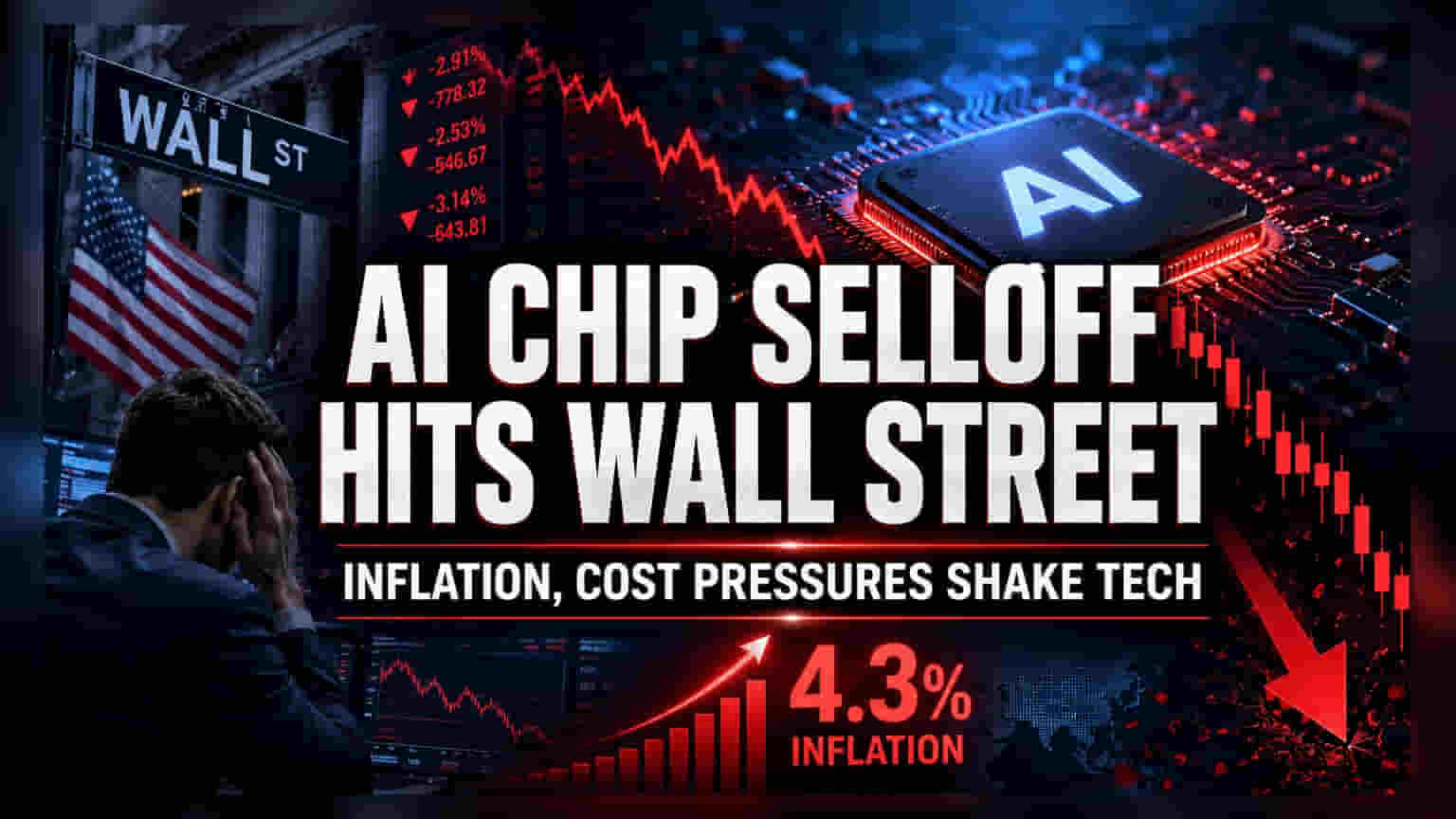
US stock markets ended the week on a weak note as AI-linked chip shares faced renewed selling pressure. Investors are increasingly concerned about the long-term profitability of massive AI data center investments and rising hardware costs. Meanwhile, fresh inflation data has sparked fears about potential interest rate adjustments, adding to market volatility.
What Happened
Wall Street closed the week with losses as investor sentiment soured over the artificial intelligence and semiconductor sector. The PHLX Semiconductor Index, a key gauge for chipmakers, fell 5.3% in the latest session, capping off a difficult week for tech stocks. Major indices, including the S&P 500 and the Nasdaq, also finished the week in the red, with the S&P 500 declining 2.05% and the Nasdaq losing 4.7% over the last five trading days.
The AI Profitability Reality Check
For months, the massive capital spending on AI infrastructure was viewed as a major growth driver. However, market sentiment is shifting as investors start to question the timeline for returns. The core concern is whether the current, extremely high levels of spending on data centers will translate into actual profit for companies in the near term. This skepticism is leading to volatility, as any sign that companies might miss elevated earnings expectations causes investors to pull back.
Inflation and Cost Pressures
Beyond the specific AI chip concerns, the broader economy is facing renewed pressure. Inflation data released this week indicated that prices in the US rose above 4%. This development has brought concerns about interest rates back to the forefront.
Supply chain issues have also resurfaced. Companies are reporting higher costs for memory and storage chips, which is forcing some to raise prices for end-user hardware, as seen with Apple’s recent move to adjust prices for its iPad and MacBook lines. This cost pressure is rippling through the tech sector, making it harder for firms to maintain their profit margins.
Why This Matters for Investors
While this volatility is concentrated in US markets, it holds significance for global investors. The US tech sector is a major driver of global equity performance. If American companies pull back on tech spending due to rising costs or lower profit expectations, it can impact demand for IT services globally, including those provided by large Indian firms. Additionally, sticky inflation in the US often influences global central bank policies and foreign investment flows, which can impact emerging markets like India.
What Investors Should Monitor
Investors may want to track upcoming quarterly results, specifically looking for management commentary on whether AI investments are beginning to generate sustainable revenue. Additionally, market participants will likely keep an eye on US Federal Reserve statements regarding inflation and future interest rate policy. Any signs that cost pressures are easing or that AI-driven revenue growth is becoming more predictable will be key indicators for a potential market stabilization.