

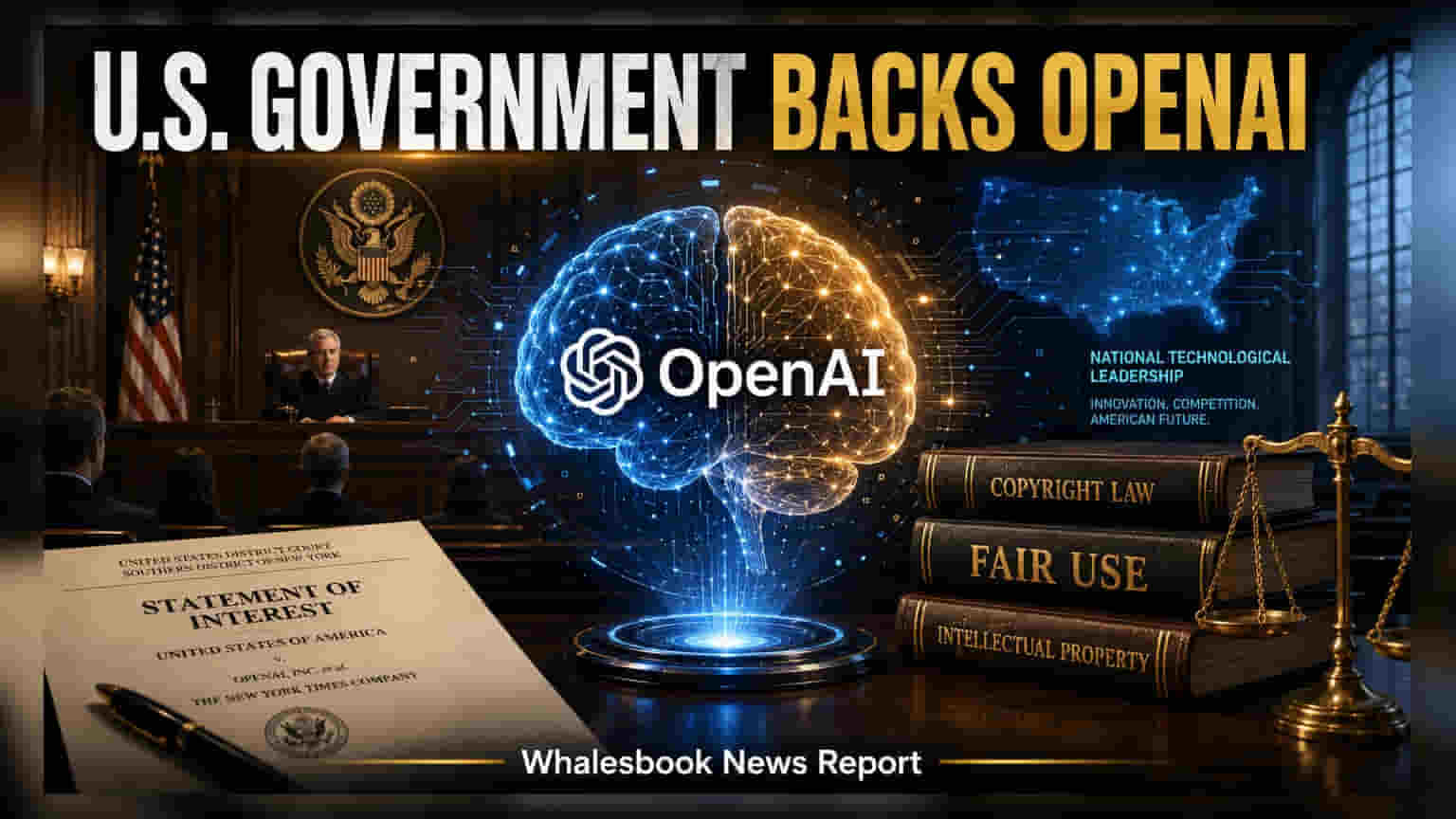
The U.S. government has filed a legal brief supporting OpenAI in its ongoing copyright lawsuit against The New York Times, arguing that training AI models on public data qualifies as fair use. While OpenAI is a private company, this case sets a crucial global precedent for AI regulation. The outcome will influence the operational flexibility and long-term business models of major tech companies worldwide, directly impacting investor sentiment in the broader artificial intelligence sector.
The U.S. government has formally intervened in the high-stakes legal battle between OpenAI and The New York Times, filing a statement of interest in the U.S. District Court. By siding with the AI developer, the administration has signaled that prioritizing national technological leadership is a policy goal that may outweigh strict interpretations of copyright law when it comes to training artificial intelligence models.
At the center of this dispute is the legal concept of fair use. OpenAI and other AI developers argue that ingesting massive amounts of copyrighted material—such as books, articles, and media—is a transformative process. They claim their systems learn patterns and logic rather than copying content, which is essential for scientific and economic progress. The government’s recent filing supports this perspective, warning that applying restrictive copyright rules to AI training could act as a barrier to global competitiveness.
Why This Matters for Investors
OpenAI is currently a private company and is not listed on public stock exchanges like the NSE or BSE. However, this legal outcome carries significant weight for the global technology sector. Many public companies that investors follow, including major tech giants like Microsoft, Google, and Meta, are heavily invested in generative AI. A court ruling that reinforces the fair use defense could protect these companies from massive legal liabilities and potential operational shutdowns. Conversely, a loss could force AI firms to seek costly licensing deals for data, significantly raising their cost of doing business and potentially squeezing profit margins across the industry.
Financial and Operational Risks
Investors monitoring the AI sector should remain aware of the high capital intensity involved in this space. OpenAI, like many of its peers, operates with significant cash burn as it pours billions into computing infrastructure and research. This business model relies heavily on consistent external funding and future profitability, which could be threatened if legal outcomes force a change in how they source training data. The sector is currently characterized by intense competition, with rivals such as Anthropic and Google actively vying for market share. Any regulatory or legal hurdle that slows down development or forces a shift in strategy could impact the competitive standing of these firms.
Future Monitorables
While this filing is not a binding judicial ruling, it provides a powerful narrative that judges often consider in cases of national interest. The next important steps involve the court’s decision on whether to accept this argument as part of the legal proceedings. Investors should track future court rulings on fair use, as these will define the operating boundaries for AI companies. Additionally, any changes in federal regulatory policies regarding data usage will be a critical indicator of the long-term risk profile for the broader artificial intelligence industry.