

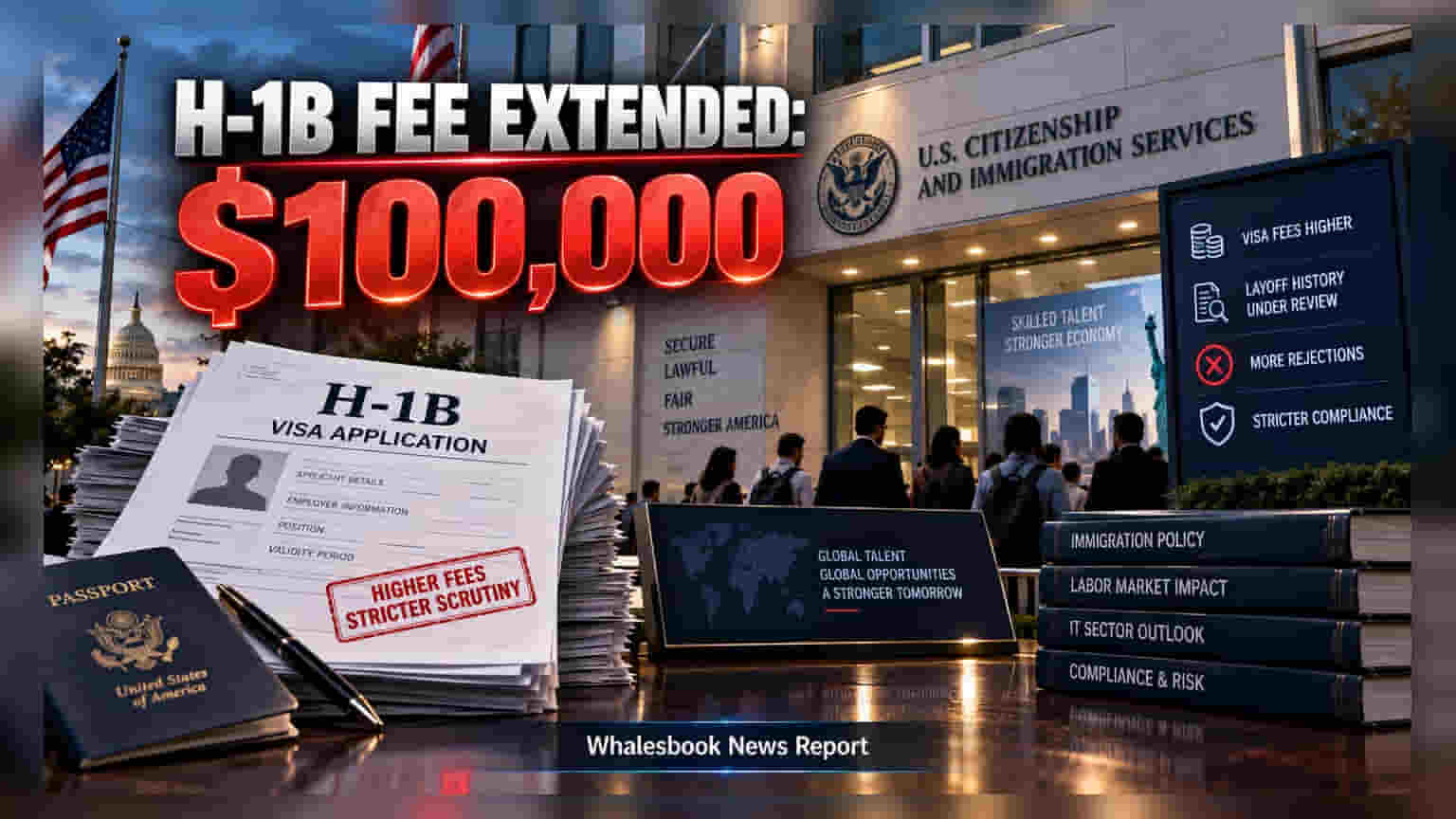
The U.S. government has extended the $100,000 H-1B visa fee for another year to discourage foreign labor reliance. The policy now includes strict scrutiny of companies that have laid off American workers. For Indian IT firms, this increases operational costs and pressure to accelerate local hiring in the U.S. market.
The United States has extended the $100,000 fee on H-1B visa sponsorships for an additional year. This move continues the administration's effort to limit the use of foreign temporary workers, particularly by large IT outsourcing companies. Official U.S. government data indicates that this fee, introduced last year, has already led to a 92 percent decline in H-1B registrations from major outsourcing firms.
Beyond the high cost, the policy now includes a new layer of regulatory scrutiny. The U.S. administration has mandated that the Secretary of State, the Secretary of Labor, and the Secretary of Homeland Security must evaluate the layoff history of any company applying for new visas. If an IT firm has recently laid off American workers or plans to do so in similar roles, their H-1B applications will face a higher probability of rejection. This is intended to stop firms from using the H-1B program to replace domestic staff with international employees.
For Indian information technology companies, these rules create significant business challenges. Most large Indian IT exporters, such as Tata Consultancy Services, Infosys, Wipro, HCL Technologies, and Tech Mahindra, rely on the H-1B program to service their U.S. clients. The combination of high visa fees and stricter oversight on hiring practices threatens to increase costs and disrupt existing operational models. Investors should note that the financial impact is two-fold: direct costs from the fee hike and the secondary cost of shifting toward higher-cost local hiring in the United States to ensure business continuity.
Legal and regulatory hurdles are also mounting. The original fee increase is currently being challenged in two federal courts, creating uncertainty for companies operating under these rules. Furthermore, the U.S. Department of Labor has received a mandate to audit past labor condition applications to identify potential misuse by third-party placement agencies. While the policy excludes students already in the U.S. and those seeking visa renewals, the broader regulatory environment remains restrictive.
Investors in the Indian IT sector should track how companies adjust their profit margins in response to these ongoing visa costs. Key areas to monitor include management commentary on local hiring plans, the pace of shifting work to local U.S. teams, and any further updates on the ongoing legal challenges in U.S. courts. The long-term impact on profitability will likely depend on how effectively these firms can pass on increased costs to clients or manage their dependency on foreign visas.