 Whalesbook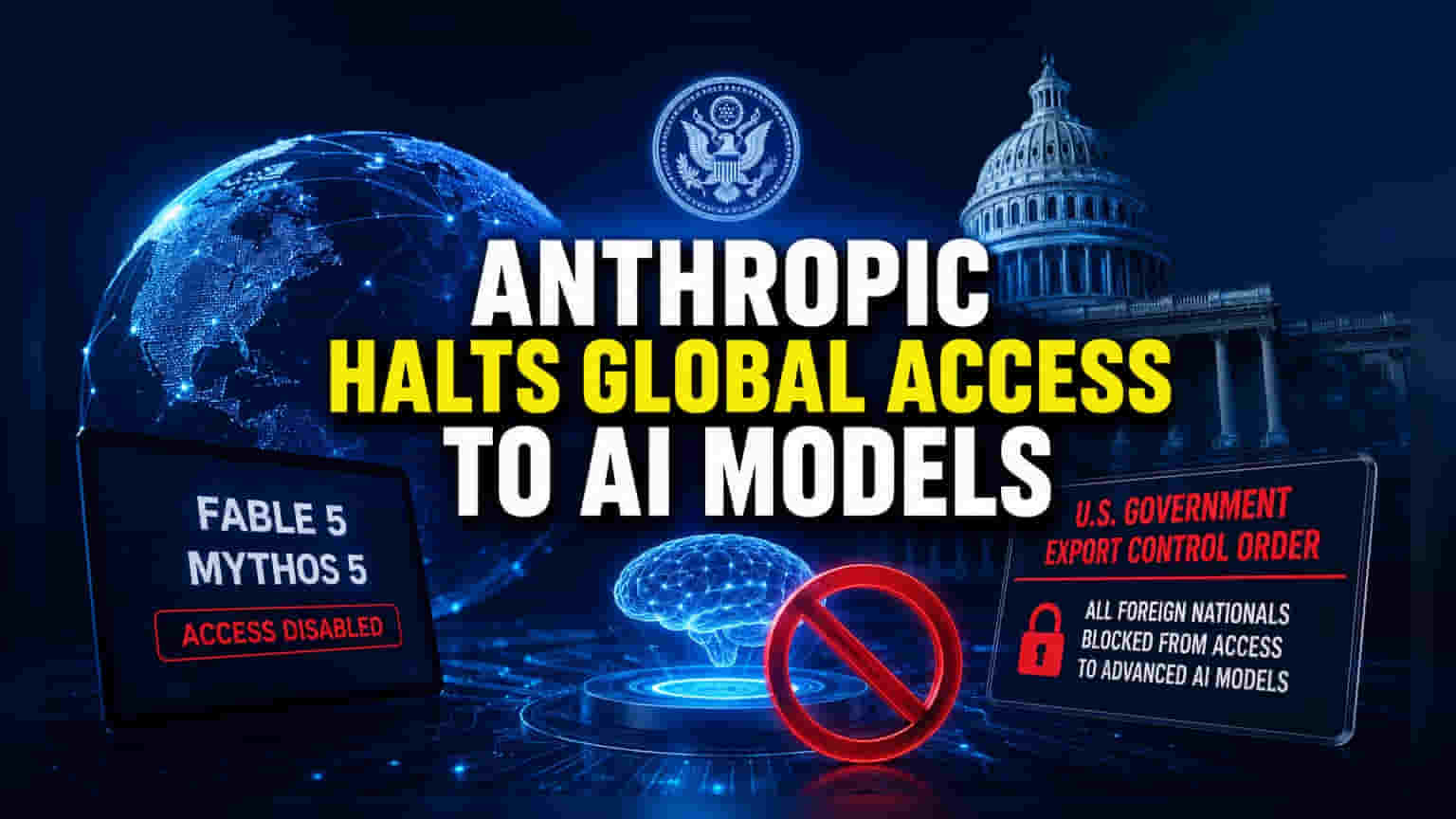


The U.S. government has ordered Anthropic to suspend access to its Fable 5 and Mythos 5 AI models for foreign nationals, citing national security concerns. This move forces the company to disable these systems for all customers to ensure compliance. For tech investors, this event highlights the increasing regulatory and geopolitical risks surrounding the development and export of advanced artificial intelligence technologies.
What Happened
Anthropic, a prominent U.S.-based artificial intelligence firm, has been forced to pause access to its advanced AI models, Fable 5 and Mythos 5. This follows a directive from the U.S. government citing national security. The export control order requires the company to block all foreign nationals from accessing these models, regardless of where they are located. To ensure it remains in compliance with this government requirement, Anthropic has had to disable the models for its entire customer base globally. The company has publicly stated that it believes the directive is a misunderstanding and is currently working with authorities to resolve the matter.
Why This Matters For Investors
This event highlights a critical shift in how governments view artificial intelligence. For years, export controls—the rules that limit what technologies can be sold or shared with foreign entities—were primarily focused on hardware, such as semiconductor chips. This directive signals that AI models themselves are now being treated as strategic assets similar to advanced computing hardware.
For investors in the broader technology sector, this sets a significant precedent. It suggests that companies developing highly advanced AI models may face similar regulatory hurdles. If AI becomes subject to strict export control regimes, it could complicate business models for tech firms that rely on global talent, international cloud partnerships, or a diverse client base across borders. It essentially introduces a new layer of 'regulatory risk' that was previously less prominent in the software and AI service industry.
The Regulatory Environment
Artificial intelligence is increasingly being viewed through the lens of national security. Governments are becoming more concerned about who has access to high-capability AI, fearing potential misuse or the advancement of foreign geopolitical rivals. This situation mirrors previous government actions taken in the semiconductor industry, where specific companies were barred from selling high-end chips to certain markets.
While Anthropic is a private company, the ripple effects of such policies can impact public tech companies that integrate these models into their products or services. If access to these powerful AI tools becomes restricted based on nationality or location, it could disrupt supply chains, enterprise software deployments, and joint development projects between international firms.
How Investors May Read This
Investors are likely to monitor how quickly this situation is resolved. If the suspension is short-lived, it may be viewed as a one-off regulatory friction. However, if such directives become more common, it could lead to higher compliance costs for AI firms. Companies may need to invest more in legal and regulatory infrastructure to navigate these complex export laws. Additionally, businesses that depend heavily on a single AI provider may begin to evaluate the risks of such dependencies, potentially accelerating the move toward localized or 'sovereign' AI infrastructure, where countries or companies build and control their own models to avoid foreign regulatory interference.
What Investors Should Track
Moving forward, the key monitorable is the duration and scope of this restriction. Investors should watch for official statements from the U.S. Department of Commerce or similar regulatory bodies regarding the rules for AI exports. It will also be important to see if other AI firms face similar directives. For companies with significant international operations, the ability to navigate these cross-border data and model access regulations will become a crucial part of their operational health.