

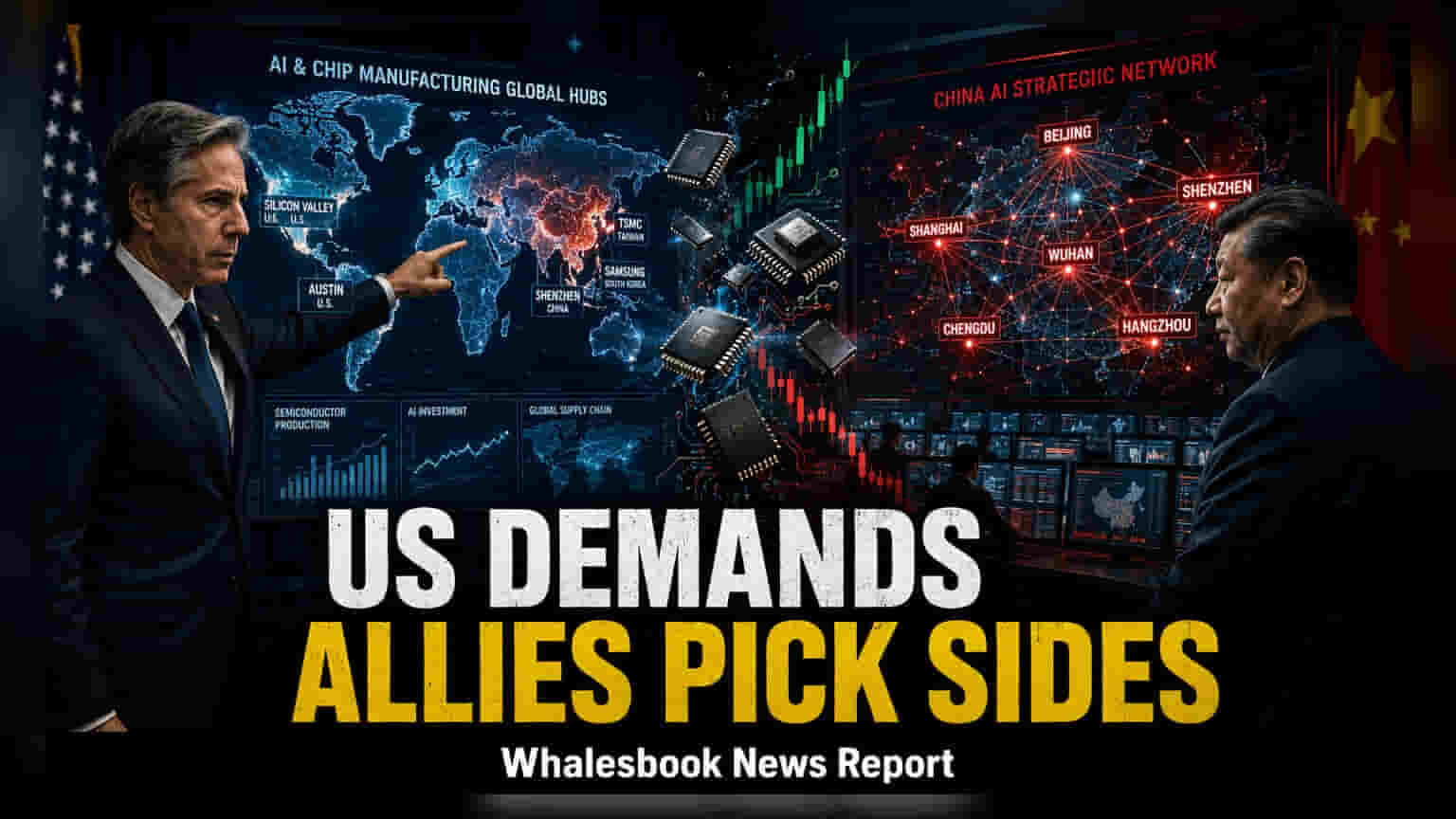
The United States is pressuring partner nations to choose between its Pax Silica AI coalition and China’s newly formed WAICO initiative. This diplomatic ultimatum creates significant risk for global tech supply chains, as nations failing to align with U.S.-led standards could lose access to critical AI infrastructure, semiconductors, and essential mineral resources.
The United States is setting a new, firm boundary in the global artificial intelligence race. The U.S. State Department is preparing to issue a warning to dozens of countries, signaling that they must choose between the American-led Pax Silica initiative and China’s competing World Artificial Intelligence Cooperation Organization (WAICO). A draft letter indicates that nations participating in both frameworks could face exclusion from U.S.-led initiatives, effectively forcing countries to pick sides in a growing technological divide.
This shift centers on two distinct approaches to AI and hardware infrastructure. Pax Silica, which was launched in December 2025, is a strategic effort to secure supply chains for semiconductors and critical minerals, aiming to reduce dependence on Chinese infrastructure. On the other hand, the China-led WAICO was established in Shanghai in July 2026 with a focus on open-weight AI development and deeper partnerships with nations in the Global South.
The tension has already begun to affect specific countries. Kazakhstan has been identified as a key point of friction because of its membership in both groups. For the U.S., the logic is that the two frameworks have conflicting expectations, making dual participation impossible. India, which officially joined the Pax Silica coalition in February 2026, is now part of the group of nations navigating these tightening diplomatic requirements.
For investors and global technology companies, this ultimatum points to the risk of supply chain fragmentation. If the world divides into two separate technological ecosystems, it could force companies to manage different sets of standards, software, and hardware components. This potential "bifurcation" or splitting of the tech world may lead to increased compliance costs, restricted access to essential AI chips, and supply chain delays for companies that operate across both regions.
The broader investor concern is how this pressure will impact the semiconductor and AI hardware sectors. If trade policies become more restrictive to enforce these coalitions, companies that rely on a global flow of components may face new hurdles in procurement. Furthermore, the exclusion of countries from U.S. initiatives could stall domestic AI and hardware development in those regions, impacting long-term growth prospects for tech providers.
The key monitorables for investors in the coming months will be new trade policies, export restrictions on advanced AI hardware, and how major tech companies adjust their cross-border operations to stay compliant with these shifting geopolitical alignments. Any announcements regarding specific trade barriers or new licensing requirements will be critical for understanding how this competition will affect global tech costs and product availability.