

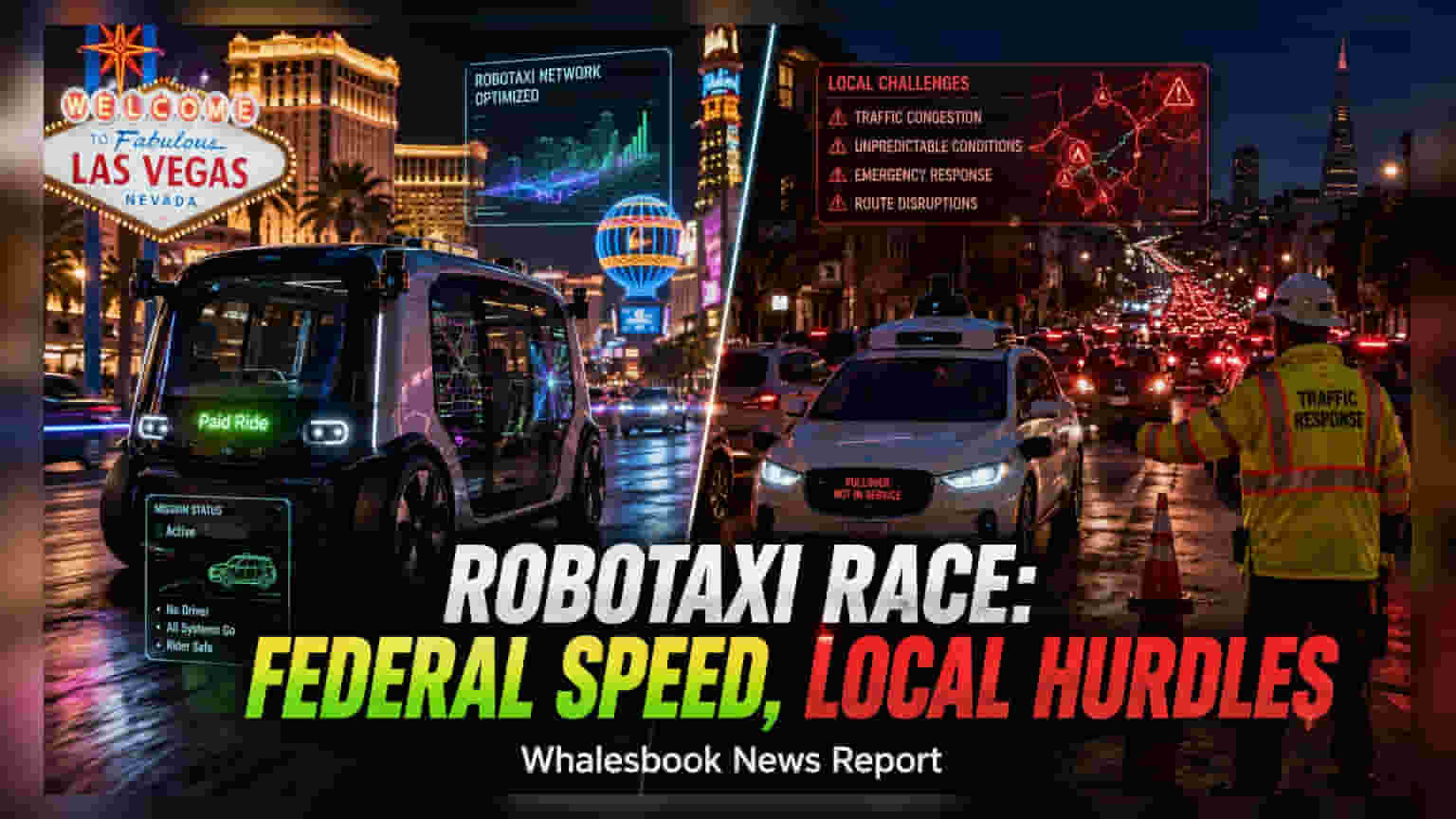
The US safety regulator has granted Zoox a temporary exemption to charge for robotaxi rides in Las Vegas. This federal push contrasts with rising local concerns over autonomous vehicles interfering with emergency responders. Investors are tracking how these regulatory pressures might impact the rollout and operational costs of driverless transport companies.
The US National Highway Traffic Safety Administration (NHTSA) has moved to speed up the adoption of autonomous vehicle technology by granting a temporary exemption to Zoox. This regulatory decision allows the company to bypass eight federal motor vehicle safety standards, specifically clearing the way for the firm to begin charging passengers for robotaxi services in Las Vegas. This marks a critical transition from testing to commercial operations for the company.
Regulatory Pressure on Autonomous Fleet Operators
While federal agencies are creating pathways for commercial deployment, the industry faces significant friction at the state and local levels. Robotaxi operators such as Waymo are currently under pressure regarding their fleet's interaction with emergency services. In San Francisco, Mayor Daniel Lurie has requested more rigorous oversight following specific incidents where autonomous vehicles blocked traffic, potentially delaying emergency response teams. Furthermore, Representative Kevin Mullin has introduced proposed legislation in the US Congress aimed at mandating federal safety standards for autonomous operators to prevent these exact types of operational conflicts.
Challenges for Mobility Investors
For investors in the autonomous mobility sector, this creates a complex environment. On one hand, federal exemptions provide a clear path for companies to start generating revenue from ride-hailing services. On the other hand, the risk of stricter state or federal mandates could lead to increased compliance costs, operational delays, or even temporary bans in certain urban areas. The industry's ability to prove the safety of its technology in real-world scenarios, particularly near emergency infrastructure, remains a key factor that could dictate how quickly these companies can scale their operations. Monitoring future legislative updates and the outcome of local safety investigations will be essential for understanding the long-term feasibility and profit potential of these robotaxi fleets.