 Whalesbook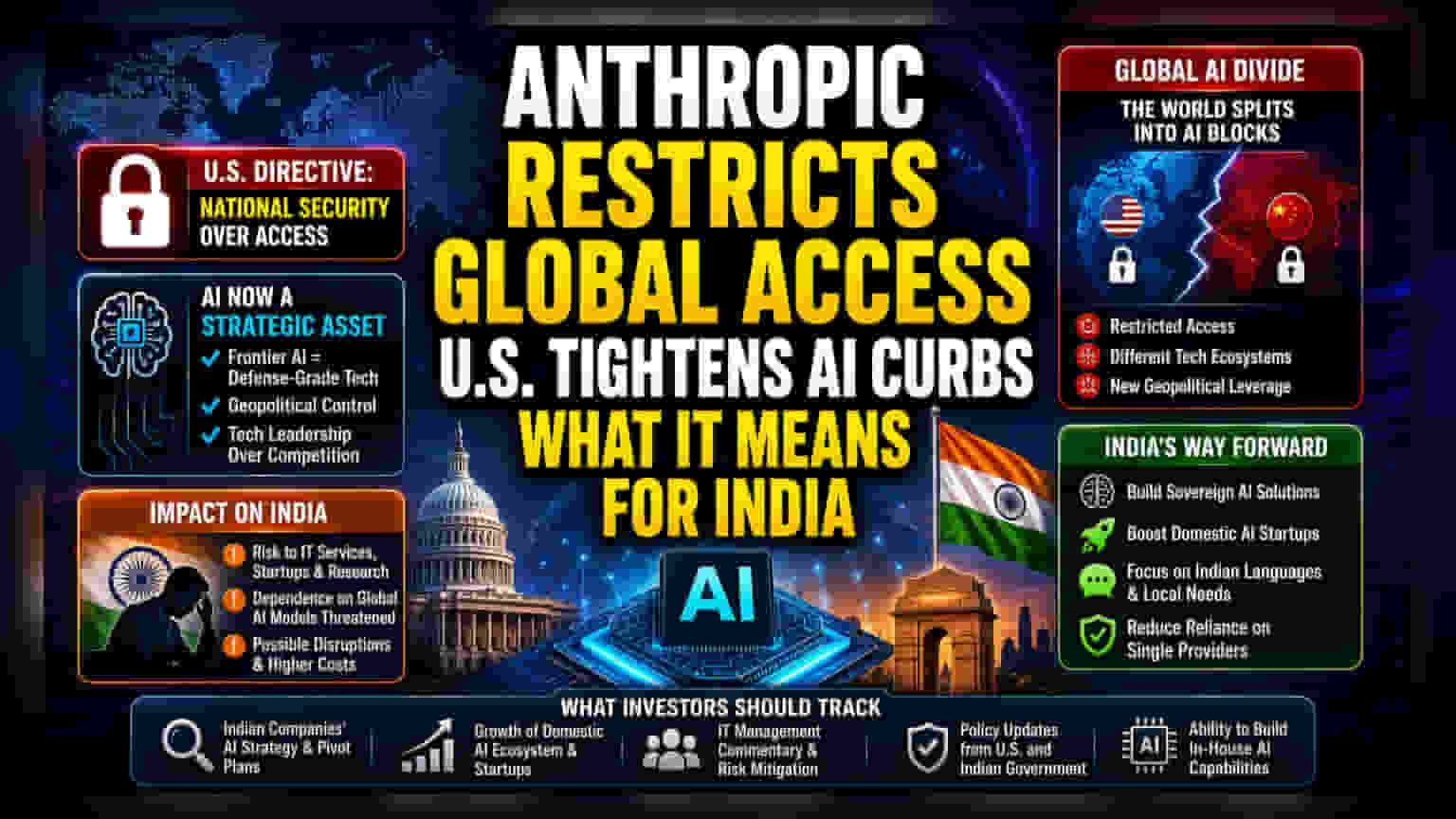


New US government directives are restricting international access to advanced AI models from firms like Anthropic, citing national security concerns. This move classifies powerful AI as a strategic asset, similar to defense technology. For Indian investors, this creates new challenges for companies and startups that rely heavily on US-based AI tools, while highlighting the growing importance of sovereign and domestic AI solutions.
What Happened
Anthropic, a major player in the global artificial intelligence space, has started restricting international access to its most advanced AI models. This change comes directly from directives issued by the United States government, which cited national security as the primary reason for the limitation. By categorizing frontier AI technology as a strategic asset, the US is tightening control over who can use these powerful tools. This is a significant shift in how AI is managed, moving it from a general-purpose commercial product to a restricted technology subject to geopolitical oversight.
AI as a Strategic Asset
For many years, the global tech industry operated on the assumption that AI innovation would be open and easily accessible to global users. The recent policy update from the US changes this perspective. Advanced AI is now being treated as a defense-grade technology. This means that access is no longer just a business decision but a matter of national interest. The US government is focused on maintaining a technological lead in the ongoing global competition, particularly with China. As both superpowers continue to view AI dominance as critical to their national security, the ability to control and restrict access to these tools has become a key lever of power.
Impact on the Indian Tech Sector
This development holds important implications for India, a country that has been a significant user of global AI models. Many Indian IT services companies, startups, and research institutions have been integrating these high-level AI tools into their workflows to improve productivity and innovation. If access to these top-tier models becomes restricted or unreliable due to US government policy, it could disrupt operations for businesses that depend on them. Indian firms may need to reconsider their dependence on single-provider AI solutions and explore alternatives to ensure business continuity.
The Risk of Technological Fragmentation
Beyond immediate business disruption, this move signals a broader trend toward technological fragmentation. The world may soon be divided into different "AI blocks," where countries have access to different sets of technologies based on their geopolitical alignments. For Indian investors, this highlights a new type of risk. Companies that build their entire business model on top of third-party, US-based AI platforms now face the risk of being cut off if regulations change or if access is tightened further. This vulnerability could pressure the margins of companies that do not have backup strategies or the ability to switch to different providers quickly.
What Investors Should Track Next
Investors may want to monitor how Indian companies respond to these restrictions. One key area to watch is the growth and adoption of domestic or sovereign AI solutions. The shift toward building AI models specifically designed for Indian languages and requirements, such as those developed by domestic startups and research bodies, could become more valuable. Investors should also observe the commentary from Indian IT management regarding their AI strategy and their ability to pivot if reliance on specific US-based models becomes difficult. The ability to build internal capabilities, rather than relying solely on foreign providers, may become a key factor in determining long-term stability for technology-driven businesses.