

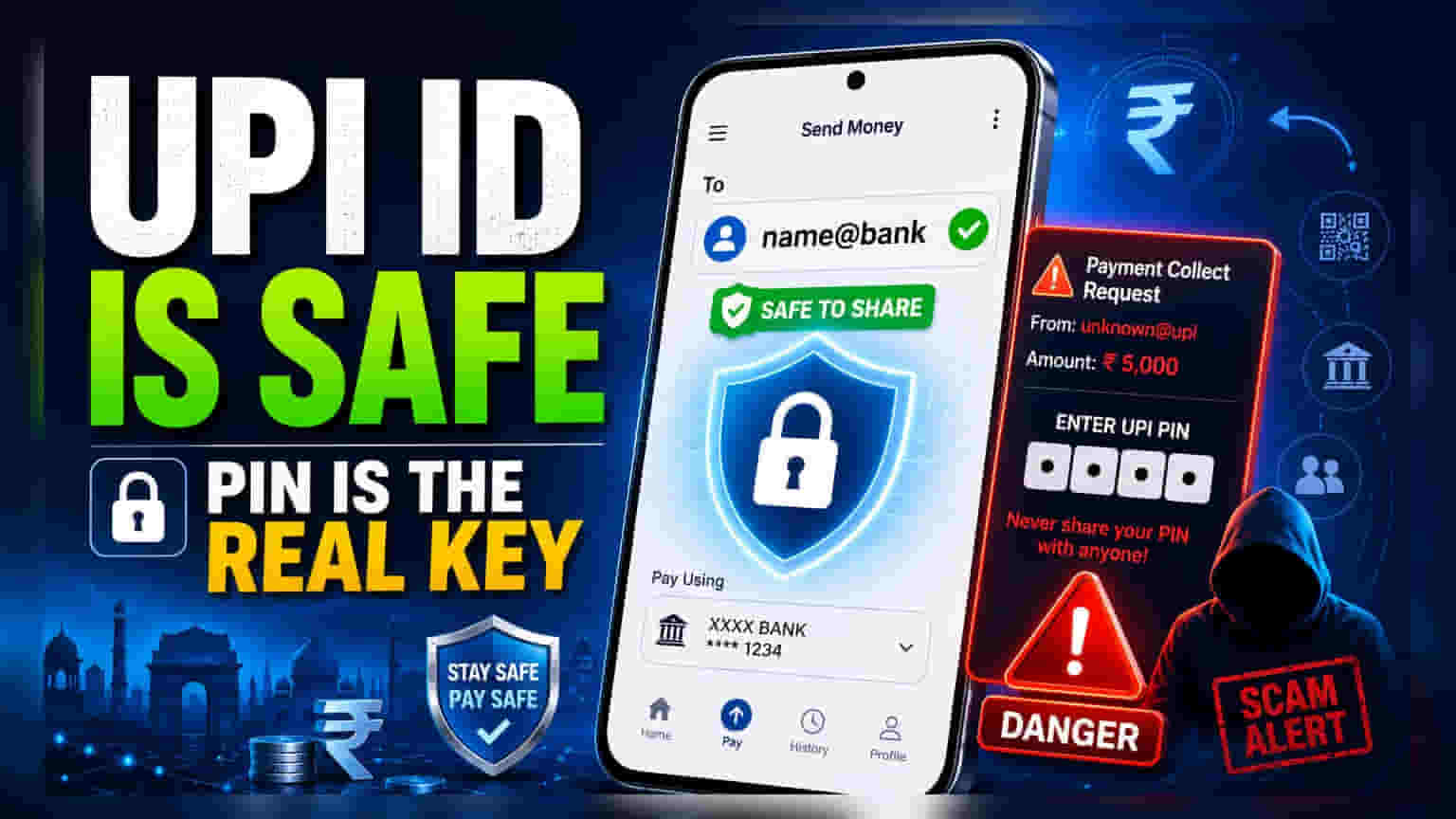
Sharing a UPI ID is harmless as it acts like an email address for receiving money. However, the UPI PIN is the critical security key for authorizing payments and should never be shared. Most digital payment frauds stem from social engineering, such as unsolicited payment requests, rather than flaws in the UPI system itself.
What Happened
There is a common misunderstanding among users regarding the safety of sharing UPI (Unified Payments Interface) IDs. Many people worry that revealing their UPI ID—often a simple handle like name@bank—can expose their bank accounts to unauthorized access. However, industry data and security protocols confirm that sharing a UPI ID is safe. The UPI system is designed for secure, instantaneous money transfers, and the architecture of the system is robust. The primary vulnerability in the digital payment ecosystem is not the technology itself, but the human error caused by a lack of awareness regarding how payment requests work.
UPI ID vs. UPI PIN
To understand digital safety, one must distinguish between the UPI ID and the UPI PIN. A UPI ID functions much like an email address or a physical address. It is purely a destination identifier. If someone has your UPI ID, they can only send money to you; they cannot use it to withdraw money or access your bank account details.
Conversely, the UPI PIN is the actual "key" to your account. It serves as the digital authorization mechanism for any debit transaction. The system is built so that no money can leave an account without the user entering this PIN. Because the PIN is the only way to verify and execute an outgoing payment, it is the single most important security credential. Keeping this secret is essential for maintaining control over one's funds.
Why Fraud Happens In A Secure System
While the UPI platform is secure, "social engineering" remains the most common method for financial fraud. Scammers do not usually hack the system; they hack human behavior. A common tactic involves sending an unsolicited "collect" request to a user. When the user approves this request and enters their UPI PIN, they are effectively authorizing a payment from their own account to the scammer.
Other risks include phishing scams, where users are tricked into clicking malicious links, or sharing sensitive information via screen-sharing apps. In these instances, the scammer manipulates the user into revealing their UPI PIN or authorizing a payment they did not intend to make. These incidents are a result of user negligence rather than a security breach of the UPI infrastructure managed by the National Payments Corporation of India (NPCI).
Understanding The Broader Digital Ecosystem
For investors and market observers, the security of the UPI ecosystem is vital because it drives the adoption of digital payments in India. Public trust is the engine of this growth. When users feel safe, transaction volumes increase, benefiting banks, payment aggregators, and fintech companies.
The industry faces a continuous challenge: educating millions of new digital users about these basic security protocols. As the sector matures, the focus is shifting toward stricter regulatory compliance and better user interface designs that make it harder to fall for these traps.
What Investors And Users Should Track
Moving forward, the key monitorable for the digital payments sector is the ongoing effort to improve consumer awareness. Investors should watch for:
- Continued regulatory focus on fraud prevention mechanisms by the RBI and NPCI.
- Innovations in transaction authorization that further reduce the risk of user error.
- The growth of digital payment adoption among Tier-2 and Tier-3 cities, which relies heavily on maintaining a high-trust environment.
For individual users, the most effective defense remains simple: never share your UPI PIN, never enter a PIN to receive money, and verify every payment request before clicking 'approve'.