

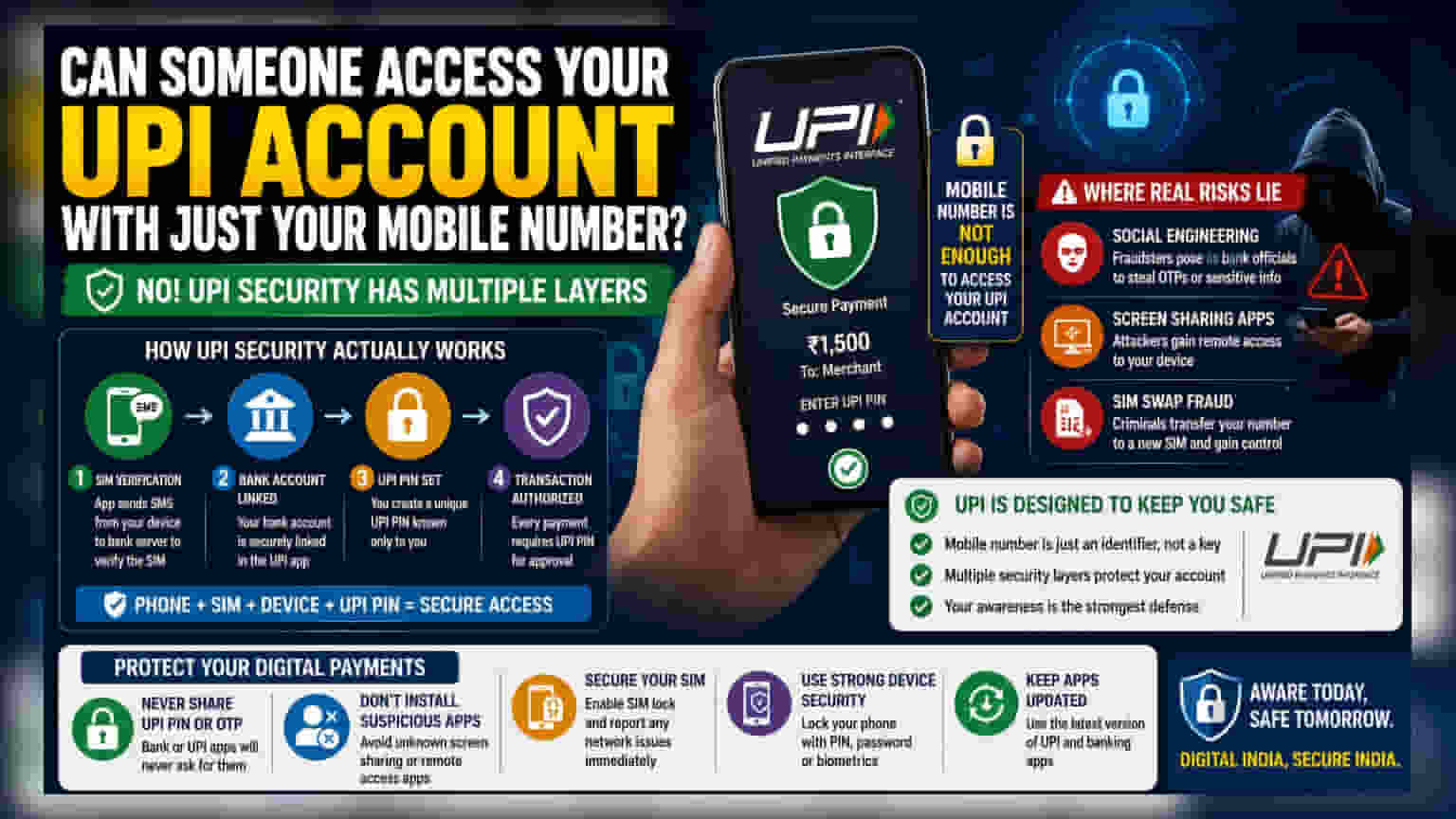
Concerns regarding UPI security often overlook the system's multi-layered protection design. A mobile number alone cannot authorize transactions because the platform requires device-specific SIM binding, bank verification, and a secret UPI PIN. While unauthorized access via phone number is not possible, users must remain vigilant against social engineering scams and SIM swap fraud that attempt to compromise these security layers.
What Happened
Recent discussions have highlighted concerns among users about whether a mobile number alone is sufficient to access or compromise a Unified Payments Interface (UPI) account. With the rapid growth of digital payments in India, these security questions are common. However, the architecture of the UPI system is built with several mandatory safety layers that prevent unauthorized access using just a mobile number. Understanding these layers is important for anyone using digital payment apps, as the risk is rarely about the phone number itself, but rather about the methods used to trick users into bypassing these built-in protections.
How UPI Security Actually Works
When a user sets up a UPI application, the system does not rely on the phone number in isolation. The registration process begins with an automated verification step where the app sends an SMS from the user's device to the bank’s servers. This confirms that the person is in physical possession of the SIM card linked to the bank account.
Once the device is verified, the user must link their bank account and create a unique UPI Personal Identification Number (PIN). This PIN acts as the final gatekeeper for every transaction. Even if someone obtains your mobile number, they cannot initiate a transaction without access to the physical SIM, the device that sent the verification SMS, and the private PIN known only to the user. This design ensures that the phone number serves as an identifier rather than a key.
Where Real Risks Lie
While the UPI system is technologically robust, it is not immune to fraud. The most significant risks do not come from hackers accessing accounts via a phone number. Instead, fraud typically involves social engineering—where criminals trick users into revealing sensitive information.
Common tactics include impersonating bank officials to solicit One-Time Passwords (OTPs) or asking users to install screen-sharing applications that give attackers remote control over the device. Another serious risk is SIM swap fraud. In this scenario, criminals manage to convince a telecom provider to transfer a victim's mobile number to a new SIM card. If they succeed, they can gain control over the verification process for many services, including banking apps. This is why protecting the physical security of your SIM and your personal credentials is the most effective defense.
Protecting Your Digital Assets
Maintaining the security of digital payments requires proactive habits. Users should treat their UPI PIN and OTPs as strictly private, never sharing them with anyone, regardless of the caller's claims. Official representatives from banks or payment platforms will never ask for a PIN or OTP.
Additionally, if your mobile network suddenly disconnects or the SIM stops working unexpectedly, you should immediately contact your telecom provider. This can be a sign of a SIM swap attempt. Keeping your mobile banking apps updated and using biometric or password protection on your smartphone adds another layer of defense. These simple, consistent practices are the best way to ensure your digital transactions remain safe.