

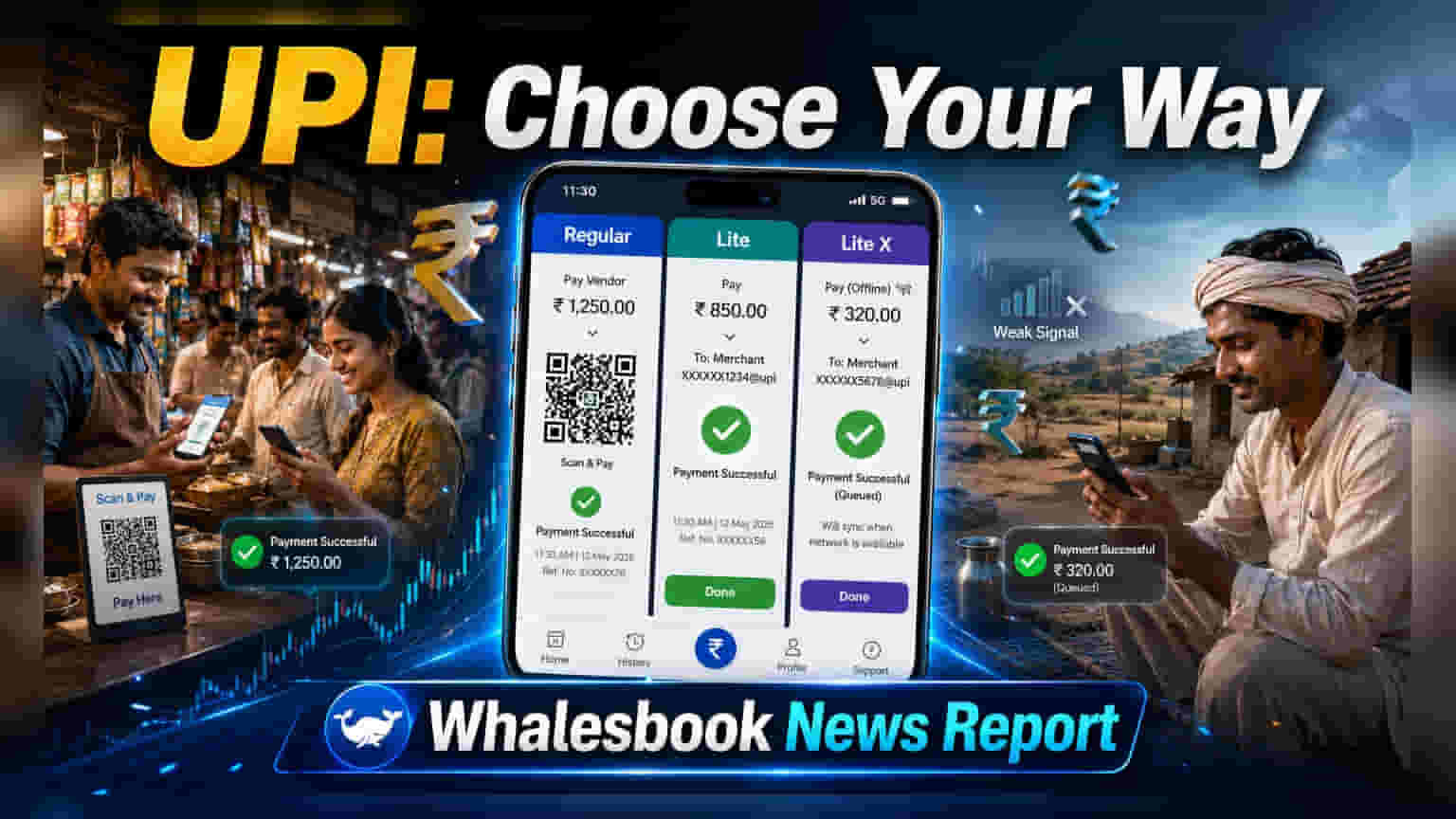
The National Payments Corporation of India (NPCI) has diversified the Unified Payments Interface (UPI) into three modes: standard UPI, UPI Lite, and UPI Lite X. These features allow users to choose between direct bank transactions, pre-loaded wallets for small payments, and offline capability. Understanding these tools helps users manage daily transactions more efficiently while navigating common connectivity challenges.
The Unified Payments Interface, known as UPI, has evolved from a single-platform payment system into a multi-tiered ecosystem designed to handle different transaction needs. While the core UPI system continues to serve as the primary method for most financial transfers by connecting directly to a user's bank account, the addition of UPI Lite and UPI Lite X provides specialized alternatives for specific use cases.
UPI Lite for Faster Small Payments
UPI Lite is designed primarily for low-value, high-frequency transactions. Instead of requiring a PIN for every small purchase at a local shop or for transit services, users can pre-load a set amount of funds into an on-device balance. Because these payments are processed against this pre-loaded balance rather than hitting the bank’s central server for every single request, the transaction speed is significantly faster. This reduces the load on bank core banking systems during peak hours and minimizes the chance of failed transactions caused by temporary bank server downtime.
UPI Lite X and Offline Connectivity
UPI Lite X addresses the limitation of internet dependency. It enables users to complete payments even when mobile data or Wi-Fi is unavailable. This is particularly useful for users traveling in remote areas, in crowded locations where mobile networks are congested, or during unexpected internet outages. The mechanism relies on specific device-level technology to securely store and transmit payment instructions, which are then settled once the device regains connectivity. It is important to note that the availability of this feature depends on support from the user's specific bank and the payment application being used.
Strategic Impact on Digital Payments
The expansion into these tiered payment modes represents a broader strategy to increase the adoption of digital payments for very small ticket sizes that were previously dominated by cash. By lowering the friction associated with PIN entry and internet connectivity, the system encourages wider usage across diverse demographics. For the Indian financial ecosystem, this reduces the cash-handling cost for merchants and streamlines the digital payment journey for consumers. As the ecosystem matures, the focus for users will be to manage these different wallets effectively, ensuring they keep sufficient balances in Lite accounts while using the primary UPI link for larger, more critical financial commitments.