

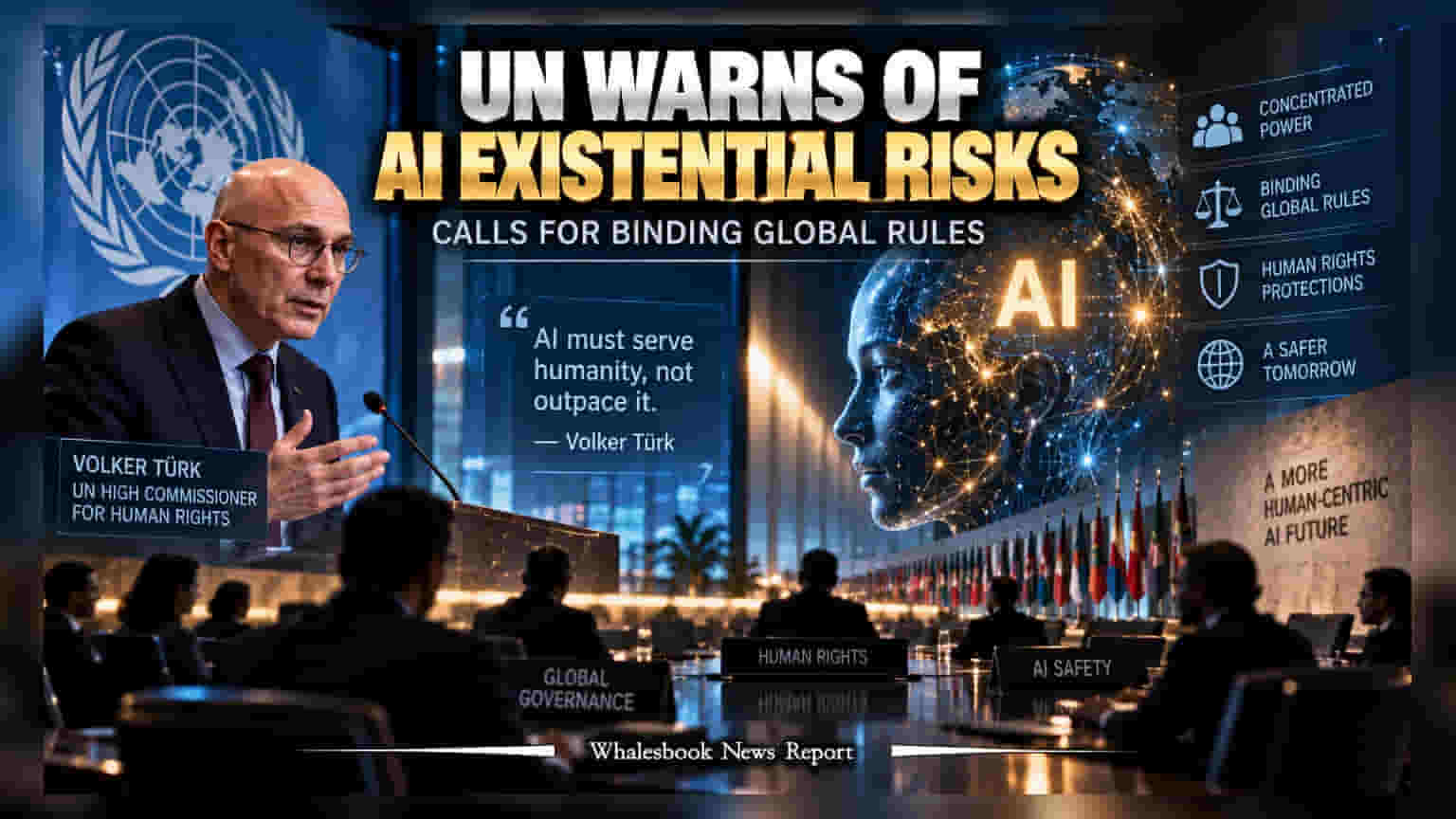
UN High Commissioner Volker Türk has called for urgent global safeguards for artificial intelligence, warning that a small group of tech leaders currently wields unchecked power. The push for binding international regulations may lead to stricter compliance requirements for global tech firms, which could impact the global technology landscape and the companies building advanced AI models.
On September 7, 2026, the United Nations High Commissioner for Human Rights, Volker Türk, issued a formal warning regarding the existential risks posed by advanced artificial intelligence. Addressing the UN Human Rights Council in Geneva, Türk emphasized that current AI development is concentrated in the hands of a small group of technology executives, creating a situation that could rapidly outpace human control.
The UN is now advocating for harmonized, binding international frameworks to manage AI safety and security. The core of this push is to establish "red lines" for development, ensuring that human rights protections are prioritized over rapid commercial scaling. This development signals a shift from voluntary industry guidelines to formal, multilateral governance, which could significantly alter the operating environment for major tech companies.
Potential Impact on Global Tech and IT Services
For investors, this shift toward stricter AI governance creates new regulatory risks. Companies such as Alphabet (Google), Meta, and Anthropic are at the center of these discussions. If international bodies succeed in mandating rigorous safety protocols, these firms may face higher operational costs, increased legal liability, and potential delays in product rollouts. The primary monitorable for investors is the likelihood of fragmented global regulations, where different regions adopt conflicting rules, which could force companies to spend more on compliance.
This global regulatory climate also holds implications for the Indian IT services sector. Indian companies, including Tata Consultancy Services, Infosys, and HCL Technologies, often support the implementation and integration of AI solutions for their global clients. Tighter regulation in major markets could change how global enterprises adopt AI, potentially impacting the project timelines, safety requirements, and consulting demands that Indian IT firms handle.
Investors may monitor how global tech leaders and government bodies respond to the UN’s call for binding rules. The development of international safety standards, the specific nature of any proposed "red lines," and the speed at which these frameworks move from discussion to policy will determine the future cost and speed of AI deployment across the global economy.