

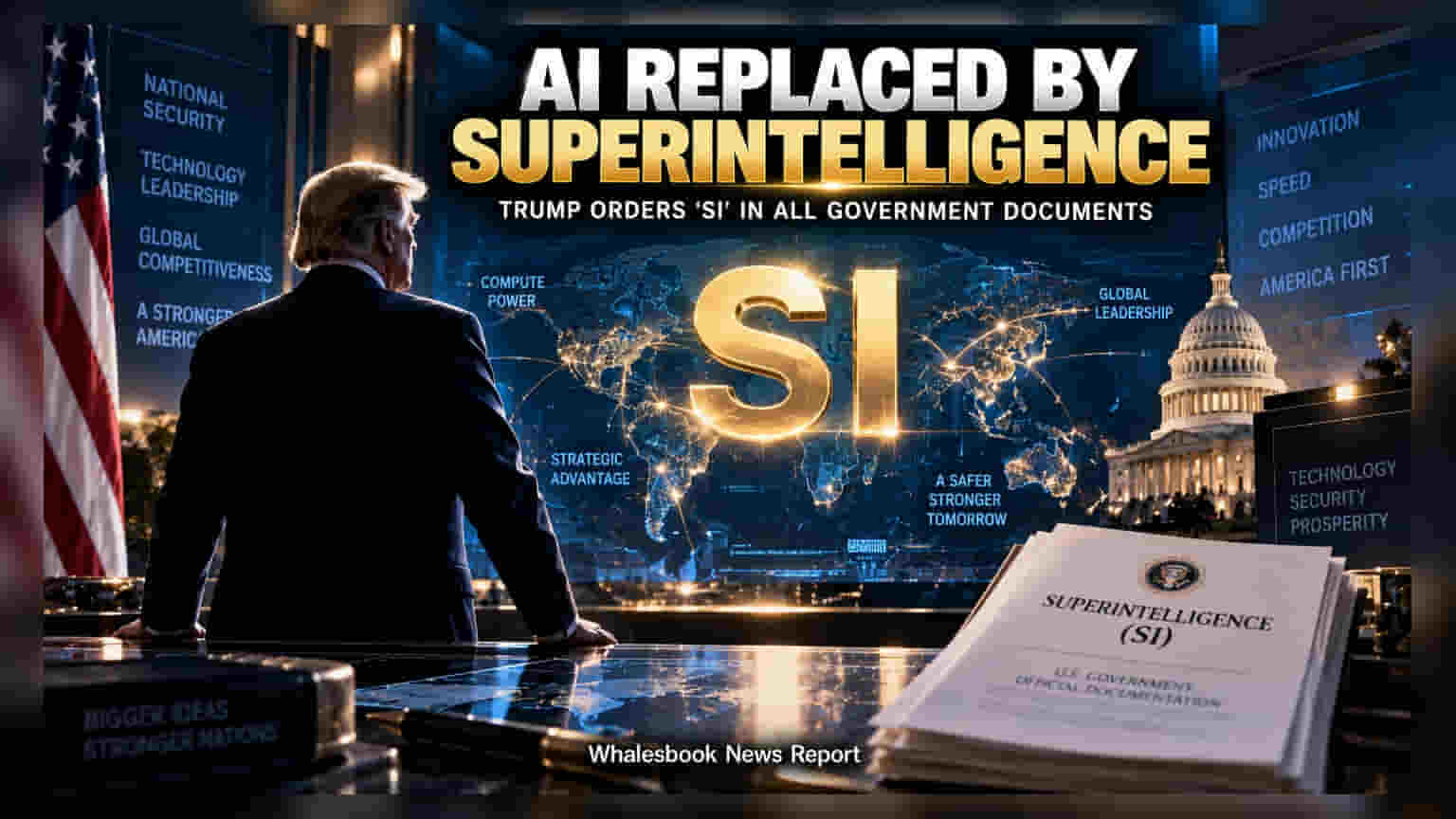
US President Donald Trump has renamed Artificial Intelligence (AI) to 'Superintelligence' (SI) in federal records. The policy prioritizes rapid development over regulatory caution to maintain a lead over China. This pivot may impact the tech sector by speeding up product releases, though it introduces new risks related to global trade and safety compliance.
US President Donald Trump has officially mandated that the term 'Artificial Intelligence' be replaced by 'Superintelligence' (SI) across all US government documentation. This policy shift, announced at the United Nations General Assembly, is intended to highlight the strategic importance of advanced computing power, which the administration now positions as a critical pillar of national security.
The rebranding signifies a decisive move toward a speed-first approach in technology policy. For investors, this implies a potential reduction in government-imposed barriers that previously aimed to slow down development for safety testing. While this could accelerate the release of new technologies and drive higher capital spending among cloud and hardware companies, it also shifts the burden of safety and compliance directly onto the private sector.
The policy explicitly aims to maintain US supremacy over China in the technology sector. This narrative often precedes stricter trade policies, which can affect supply chains for semiconductor and hardware manufacturers. Companies with heavy reliance on global supply chains or significant revenue exposure to China may face increased scrutiny or trade-related hurdles.
For investors in the technology sector, the focus remains on companies scaling up high-end computing infrastructure. The push for 'Superintelligence' suggests that the US government will likely continue to support large-scale infrastructure projects. However, the departure from the previous emphasis on strict regulation could lead to unpredictable legal or safety challenges. Investors should monitor how tech giants manage the pressure to innovate quickly against the potential for regulatory friction or trade-related disruptions.