

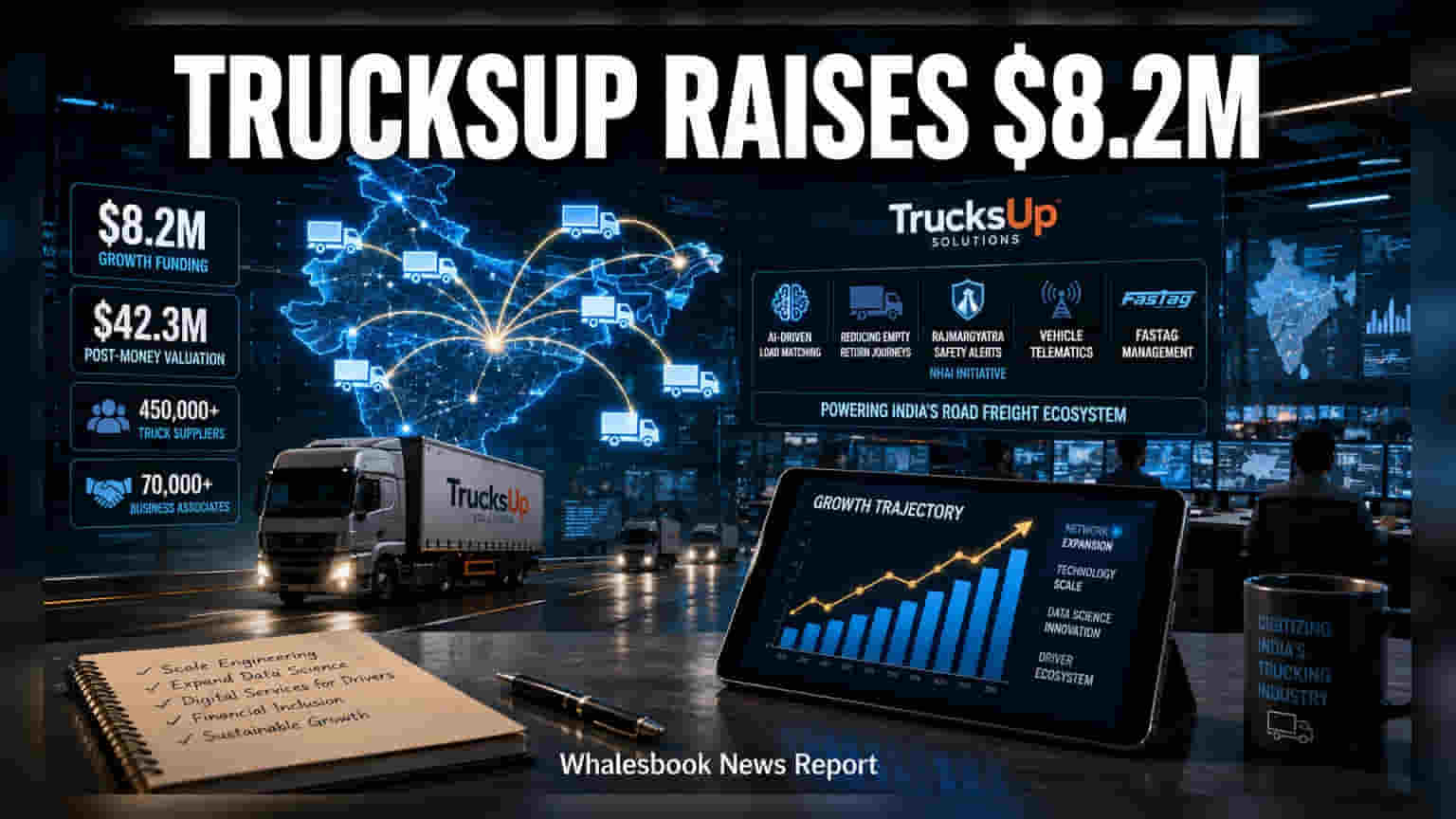
Digital freight platform TrucksUp has raised $8.2 million to expand its AI-powered logistics technology. The firm, a subsidiary of the listed company Ritco Logistics, aims to scale its network of over 450,000 truck suppliers. This development highlights the ongoing effort to digitize India's fragmented road transportation sector.
TrucksUp Solutions has successfully raised $8.2 million (approximately ₹78 crore) in a recent round of growth funding. This capital injection brings the post-money valuation of the digital logistics platform to roughly $42.3 million. As a subsidiary of the NSE-listed Ritco Logistics, TrucksUp is positioning itself as a key player in the effort to bring technology to India’s traditional, highly fragmented road freight market.
The funds will primarily support the company’s efforts to scale its engineering capabilities and expand its data science team. TrucksUp operates an AI-driven platform designed to improve how freight is matched with available trucks, which is intended to reduce inefficiencies such as empty return journeys. The company currently supports a network that includes more than 450,000 truck suppliers and over 70,000 business associates.
Beyond basic load matching, the company is integrating additional digital services for commercial drivers. This includes the integration of the Rajmargyatra service, an initiative supported by the National Highways Authority of India, which offers drivers safety alerts related to road and weather conditions. Additionally, the platform provides access to services like vehicle telematics and FASTag management, aiming to become an all-in-one ecosystem for fleet owners.
Financial inclusion is another pillar of the company's growth strategy. TrucksUp has partnered with Shriram Finance to offer vehicle and business loans to fleet owners, particularly targeting those in Tier 2 and Tier 3 cities. By combining logistics technology with capital access, the company hopes to secure a stronger hold on the market.
For investors monitoring this space, the success of such platforms depends on several factors. A primary challenge is the nature of the Indian trucking industry, which remains largely manual and highly fragmented. Digitizing this sector requires high adoption rates among traditional truck operators who may be accustomed to offline processes. Success will also depend on the company's ability to manage its capital efficiently while scaling its technology and maintaining the performance of its AI-driven matching algorithms.
Moving forward, the key monitorable for stakeholders will be the platform's ability to increase the actual usage of these digital tools by its network of suppliers. Investors will likely look for updates on how the company manages the balance between aggressive expansion and operational sustainability in a sector that is sensitive to macroeconomic factors like fuel price fluctuations and overall freight demand.