

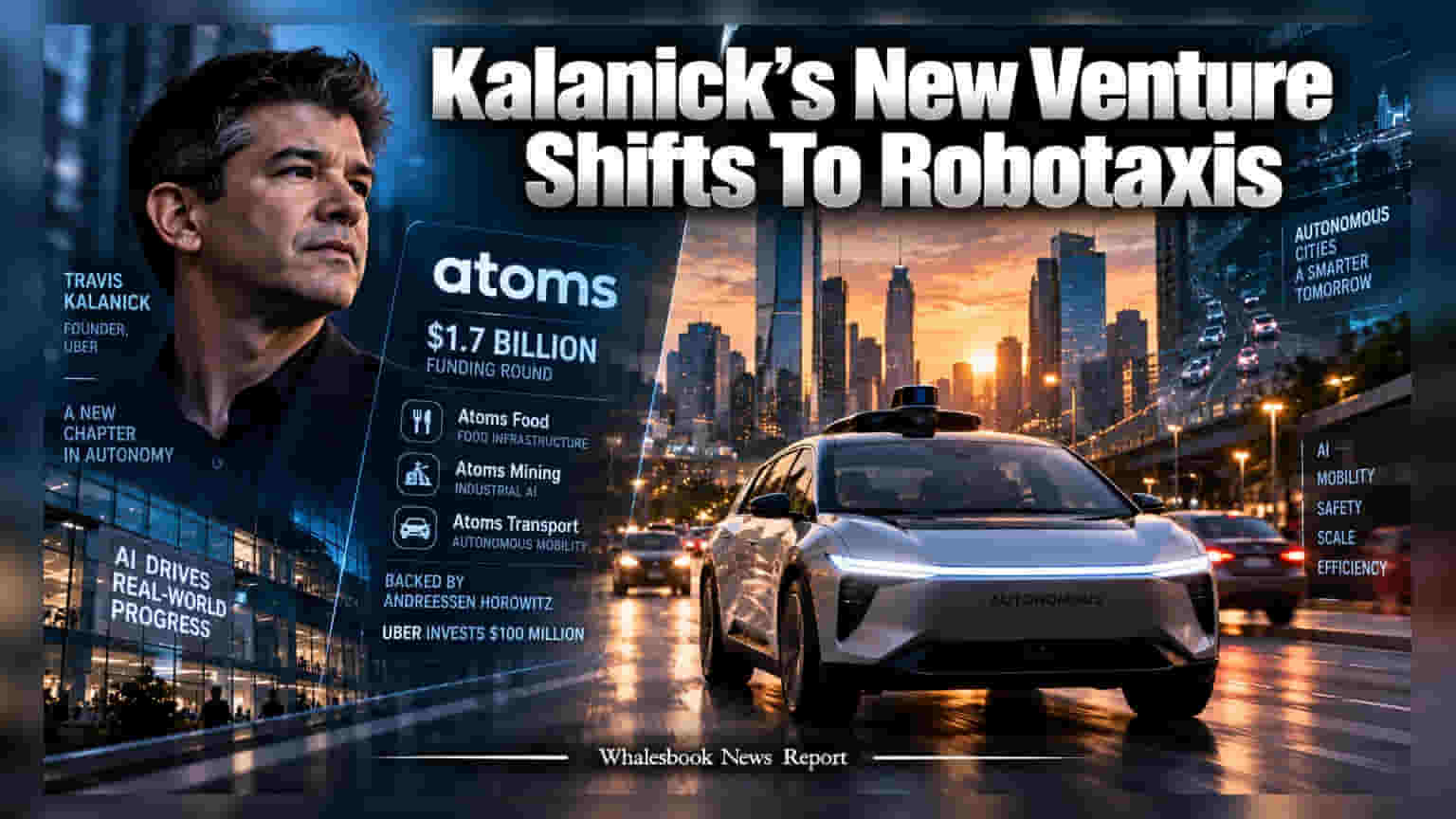
Travis Kalanick’s venture, Atoms—formerly known as City Storage Systems—has secured $1.7 billion in funding to focus on autonomous technology and industrial AI. While the company is private and not listed on public exchanges, the move marks a significant shift in the autonomous vehicle sector. With Uber as a strategic backer, the company is now integrating technologies from its acquisition of the mining-tech firm, Pronto.
Travis Kalanick, the founder of Uber, is reshaping his venture company, Atoms, to focus on the autonomous technology and industrial artificial intelligence sectors. The company, formerly known as City Storage Systems, recently completed a $1.7 billion funding round led by the venture capital firm Andreessen Horowitz. While Atoms is a private company and not listed on the NSE or BSE, this development provides important insights into the rapidly evolving autonomous vehicle landscape.
The pivot marks a significant change in direction for the firm, which was previously recognized for its cloud kitchen operations. Atoms has reorganized its structure into three divisions: Atoms Food, Atoms Mining, and Atoms Transport. To accelerate its entry into the autonomous space, the company acquired Pronto, a firm specializing in autonomous mining and transport technology led by former Uber executive Anthony Levandowski.
Uber’s involvement in this funding round is a notable strategic move. The ride-hailing giant contributed $100 million to the $1.7 billion round. This investment suggests that Uber prefers to secure access to autonomous technology through partnerships and investments in specialized firms, rather than attempting to develop every component of its future fleet in-house. This strategy is common among large tech platforms that need to stay competitive without the full burden of internal research and development.
The move into autonomous transport carries significant risks. The industry faces substantial regulatory hurdles, as governments worldwide continue to debate safety standards and liability for self-driving vehicles. Furthermore, the company must prove that it can scale its industrial hardware effectively while competing against well-funded incumbents. Investors in the broader transport and technology sectors may follow how these partnerships influence future ride-hailing costs and efficiency. Additionally, the company's past leadership controversies and the technical difficulty of achieving reliable autonomous operation remain key monitorables.
The next important phase for the company will be its ability to integrate its technology with ride-hailing platforms and prove the commercial viability of its autonomous systems in real-world settings.