

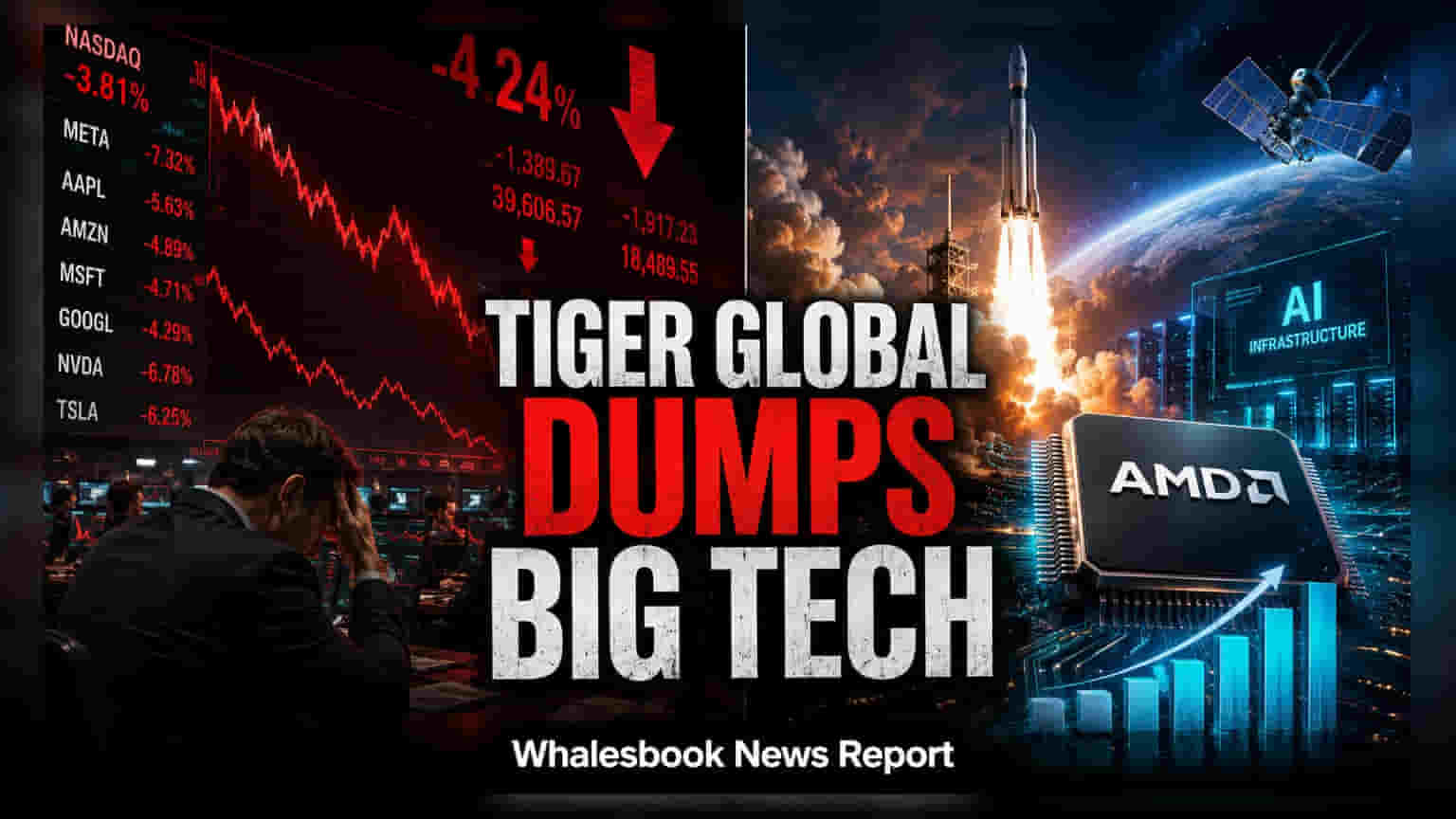
Tiger Global Management significantly reduced its exposure to major tech stocks like Alphabet and Broadcom while starting new positions in chipmaker AMD and SpaceX in the second quarter of 2026. The portfolio shift highlights a strategic move away from established mega-cap tech companies toward specialized AI infrastructure and hardware firms.
Tiger Global Management has significantly altered its investment portfolio in the second quarter of 2026, according to recent filings with the US Securities and Exchange Commission. The prominent investment firm has moved to reduce its exposure to several well-known technology giants, signaling a potential shift in sentiment regarding the valuations and growth trajectories of major US tech companies.
Scaling Back from Big Tech
The firm's latest 13F filing shows a broad reduction across its largest holdings. Alphabet, a long-time core position for many institutional investors, saw a reduction of approximately 45%, with holdings falling to 5.81 million shares by the end of June. Similarly, Tiger Global cut its stake in Broadcom by 51%, leaving it with 1.75 million shares. Other major names, including Nvidia, Microsoft, Meta Platforms, and Amazon, also saw their positions trimmed. Notably, the firm completely exited its investment in Netflix during the quarter.
New Bets on Chips and Infrastructure
While reducing its exposure to some of the market's largest players, Tiger Global initiated new investments in specialized technology sectors. The firm added 674,727 shares of Advanced Micro Devices (AMD) to its portfolio, valued at roughly $392 million, and acquired a 375,000-share position in SpaceX, valued at approximately $64 million. Additionally, the firm nearly tripled its existing stake in Intel, increasing its holdings to 4.25 million shares from 1.64 million in the previous quarter.
These adjustments suggest a strategic rotation toward hardware-focused companies and firms operating within the AI infrastructure space. By shifting capital, the firm appears to be reallocating resources into areas it believes may offer more distinct growth potential compared to the broader, often more expensive, mega-cap tech stocks.
What Investors Should Consider
This portfolio rotation comes with specific risks that investors often monitor. Rotations into more specialized sectors like chip manufacturing and space technology can expose a portfolio to higher volatility. For companies like AMD and Intel, profitability remains tied to competitive pressures in the semiconductor market, where rapid technological changes can quickly alter market share.
Similarly, while SpaceX has reported significant revenue expansion, it faces complex execution risks related to achieving massive AI and space-related revenue targets over the next few years. Furthermore, as a company operating in capital-intensive industries, any shift in macroeconomic conditions or a slowdown in tech infrastructure spending could impact these firms differently than established software-focused tech giants.
Investors typically look at these SEC filings to understand the changing conviction levels of major institutional managers. While this filing provides a snapshot of the firm's position as of June 30, 2026, it does not account for any trades made since that date. The long-term performance of these new investments will depend heavily on the company's ability to navigate competitive markets and meet high operational expectations.