

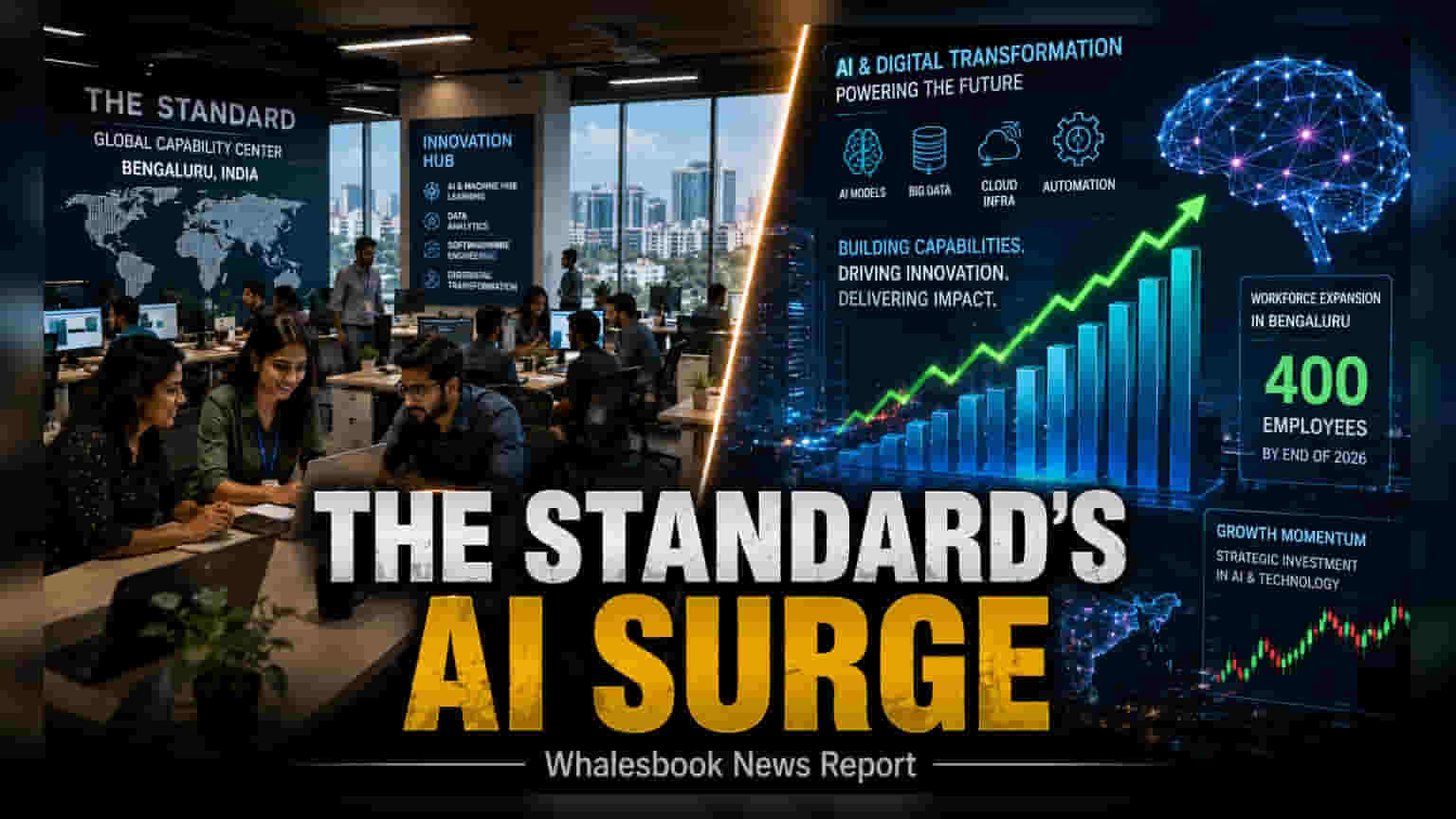
US-based financial services firm The Standard is scaling its Bengaluru hub to 400 employees by the end of 2026. The center focuses on artificial intelligence and software engineering, marking a strategic shift from outsourcing to in-house innovation. This expansion aims to accelerate product development and retain critical expertise by reducing reliance on external vendors.
The Standard, a US-based financial services company, is aggressively expanding its Global Capability Center (GCC) in Bengaluru. The firm plans to increase its local workforce to approximately 400 employees by the end of 2026. This move follows a period of rapid organizational change, including the acquisition of the Employer Voluntary Benefits business from Allstate, which helped seed the initial India team with about 175 employees.
The Bengaluru office, which officially opened its permanent facility in April 2026, is serving a different purpose than traditional back-office centers. Management has explicitly designated the site as an innovation hub. Rather than handling routine maintenance or back-end administrative tasks, the team is tasked with core work in artificial intelligence, data analytics, software engineering, and digital transformation. This setup is part of a larger push by the firm to modernize its technology infrastructure.
A key aspect of this strategy is a deliberate pivot toward insourcing. The company is moving away from a heavy reliance on third-party vendors for its digital and AI initiatives. By bringing these capabilities in-house, the firm aims to retain institutional knowledge, reduce the time lag inherent in explaining complex business requirements to external partners, and maintain direct control over its intellectual capital. This operational shift suggests that the firm views deep technical expertise as a competitive advantage that must be managed internally.
While the expansion offers strategic benefits, it also introduces specific execution risks. Building and scaling an innovation-led team requires attracting high-quality talent in a competitive market for AI and software professionals. The firm faces the challenge of successfully integrating these new teams with existing US-based operations while ensuring that the high-value mandate—avoiding back-end maintenance—remains intact. Additionally, the transition from a partner-led model to internal execution creates a period of operational complexity, as the company must build its own project management and security frameworks from scratch rather than relying on established vendor systems.
Because The Standard is a private entity, its financial performance is not reflected in public stock markets. However, the expansion is part of a wider trend among global financial services firms that are transforming their Indian offices from cost-saving units into centers for strategic technical development. The success of this model will depend on the company's ability to maintain the quality of output as the team scales, navigate local regulatory requirements, and deliver measurable improvements in product innovation.