

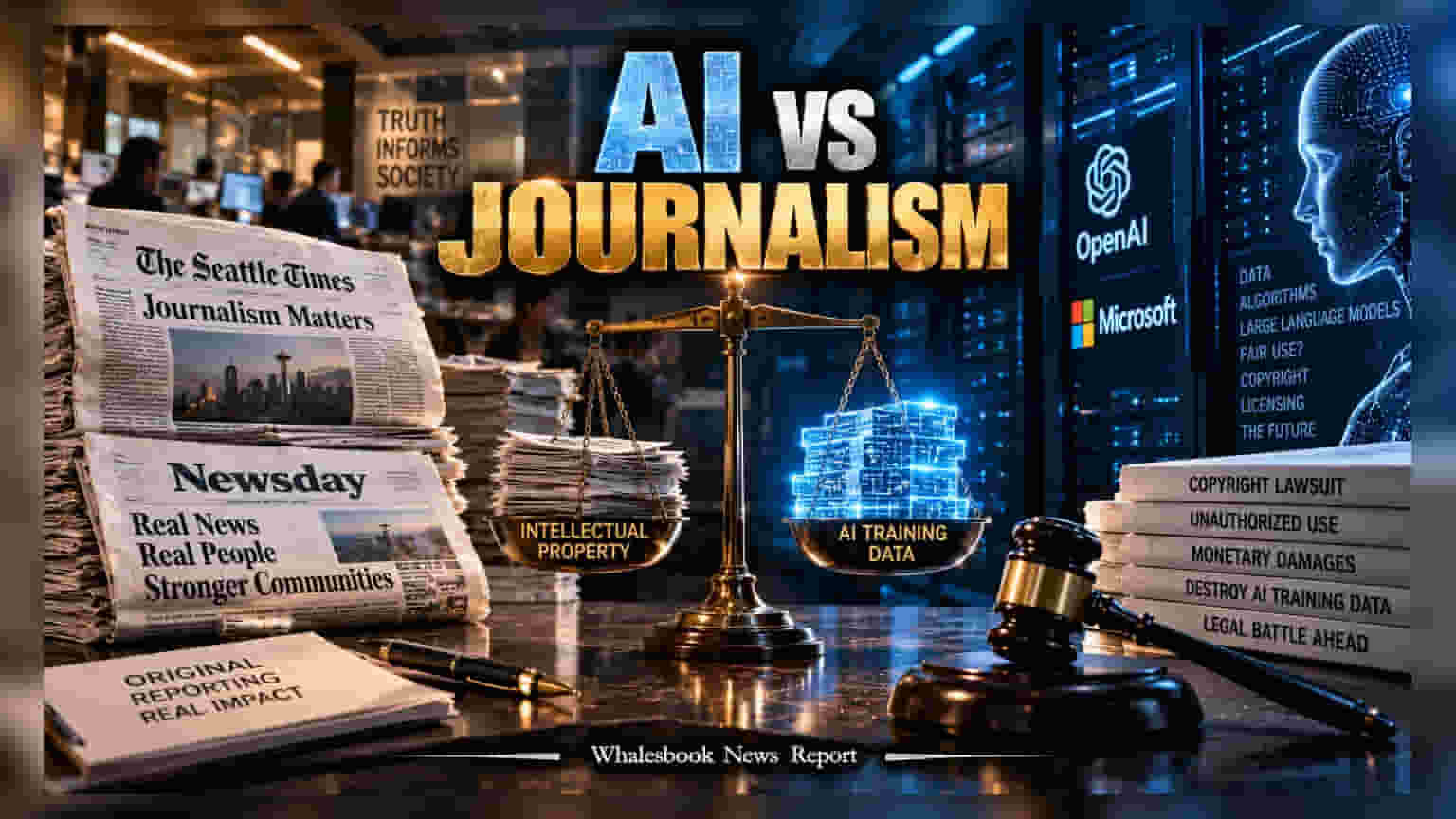
The Seattle Times and Newsday have filed a copyright infringement lawsuit against OpenAI and Microsoft, alleging unauthorized use of their journalism to train AI models. This legal action highlights growing pressure on tech companies to compensate publishers, a development that could impact the future cost and operation of generative AI services.
The Seattle Times and Newsday have launched a copyright infringement lawsuit against OpenAI and Microsoft in the U.S. District Court for the Southern District of New York. The two publishers allege that the tech companies scraped their websites, often bypassing paywalls, to train generative AI models like ChatGPT and Copilot without permission or compensation.
In their filing, the newspapers claim that the AI models are not only using their original reporting but in some cases reproducing it verbatim. The plaintiffs are seeking monetary damages and have asked the court to order the destruction of AI training datasets and models that were built using their copyrighted content. This case joins a series of similar legal challenges by other media organizations against major technology firms over the use of intellectual property.
This dispute stands out due to the previous business ties between the parties. Microsoft and OpenAI had previously collaborated with these media groups, including co-funding a $10 million AI fellowship program in 2024. This transition from partners to legal adversaries underscores a deeper conflict within the industry. Publishers who once viewed technology partnerships as a path toward digital growth now increasingly view generative AI as an existential threat to their business model, as it extracts value from their reporting without providing a return to the creators.
For investors and the broader technology sector, this case serves as a test for the 'fair use' argument that AI companies frequently use to defend their data scraping practices. OpenAI has maintained that its model training relies on publicly available data and falls under fair use protections. Microsoft has expressed surprise at the lawsuit but noted that it remains open to finding solutions.
If the courts rule against the tech companies, it could force a significant shift in the economics of the AI industry. Currently, AI firms operate under the assumption that they can use a vast range of public data for free. A court-mandated move toward a licensing-based model, where AI companies must pay publishers for the data used in training, would likely increase long-term operational costs for these firms. Furthermore, a strict ruling could theoretically require the destruction of existing models, which would cause major technical and financial disruption.
Investors should monitor how these legal battles progress, as they will likely set precedents for how AI companies interact with content creators. The industry is looking for clarity on whether future growth will be fueled by free data scraping or by paid licensing agreements, a decision that will directly impact the future profit margins and business sustainability of AI developers.