

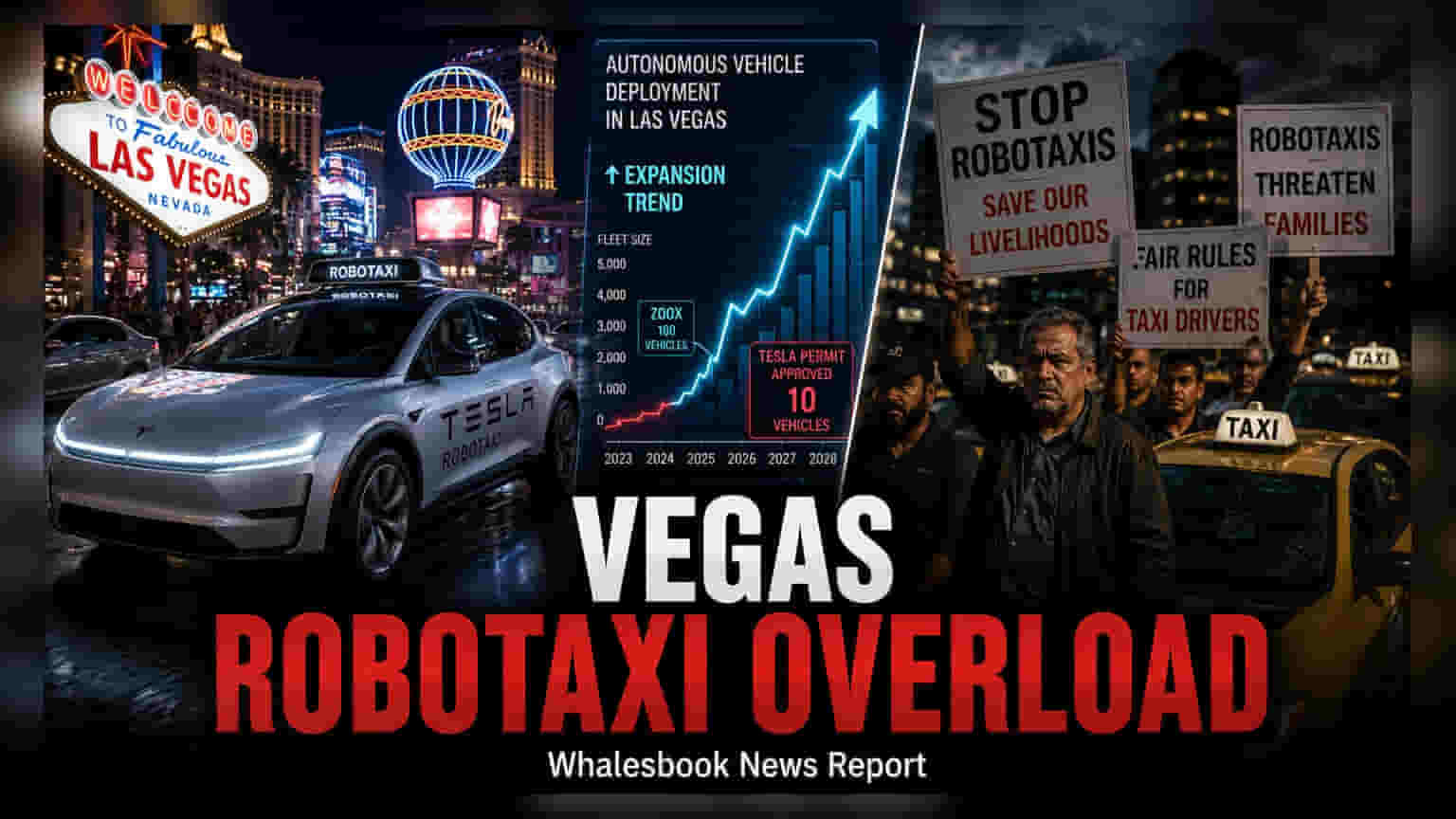
The Nevada Transportation Authority has issued a highly restricted permit for Tesla’s robotaxi operations, limiting the fleet to 10 vehicles rather than the 5,000 requested. This development underscores the significant regulatory hurdles facing autonomous vehicle deployments. Investors should note that strict constraints, including speed limits and required human supervision, limit the current commercial scalability for self-driving fleets in the region.
The Nevada Transportation Authority has granted Tesla an Autonomous Vehicle Network Company (AVNC) permit that is significantly more restrictive than industry expectations. While there were reports of a massive rollout, the approved permit allows for a maximum of 10 vehicles, far below the 5,000 robotaxis Tesla had requested for operations in Clark County. This decision serves as a key indicator of the cautious approach regulators are taking toward autonomous vehicle integration in high-traffic urban areas.
Operational Constraints on Fleet Scaling
The permit comes with specific operational requirements that limit the immediate commercial potential of these vehicles. Unlike a fully autonomous deployment, the Nevada regulator has mandated that the vehicles operate with appropriate human supervision. Additionally, operations are geographically restricted to the Las Vegas Strip corridor, with a maximum speed limit of 45 mph. The permit also explicitly prohibits robotaxi services from accessing airport facilities, which are typically high-demand zones for ride-hailing services.
These constraints highlight a broader trend where regulatory bodies are prioritizing safety and traffic management over the rapid scaling of autonomous fleets. For investors, this creates a clear distinction between the company’s stated expansion goals and the actual pace of legal, on-road authorization. The regulatory friction suggests that the transition to fully driverless, large-scale networks will likely be an incremental process rather than a sudden market shift.
Competitive Landscape in Nevada
The environment for autonomous vehicles in Nevada is becoming increasingly competitive, but with varying levels of authorization. While Tesla works within these restricted permit conditions, other players have established different footprints. For instance, Amazon-owned Zoox currently holds an AVNC permit that authorizes up to 100 vehicles in the region and has already begun charging for commercial rides. This places competitors with existing, less-restricted permits in a stronger position to capture the early market for autonomous ride-hailing in Las Vegas.
Investors may monitor how these companies manage the gap between technology readiness and regulatory approval. The primary challenge for the sector remains the bottleneck caused by software validation and safety demonstrations required by state authorities. As regulatory approvals continue to be handled on a case-by-case basis, the ability to secure larger permits—rather than just the number of vehicles produced—will likely be a key differentiator for companies in the autonomous space.