

Tencent has unveiled Hy4, a new open-source AI model designed for specialized tasks like software engineering and financial research. By integrating Hy4 into its enterprise tools, the company aims to boost adoption in a crowded AI market. Investors may track whether this strategy helps drive enterprise revenue amid high research and development costs.
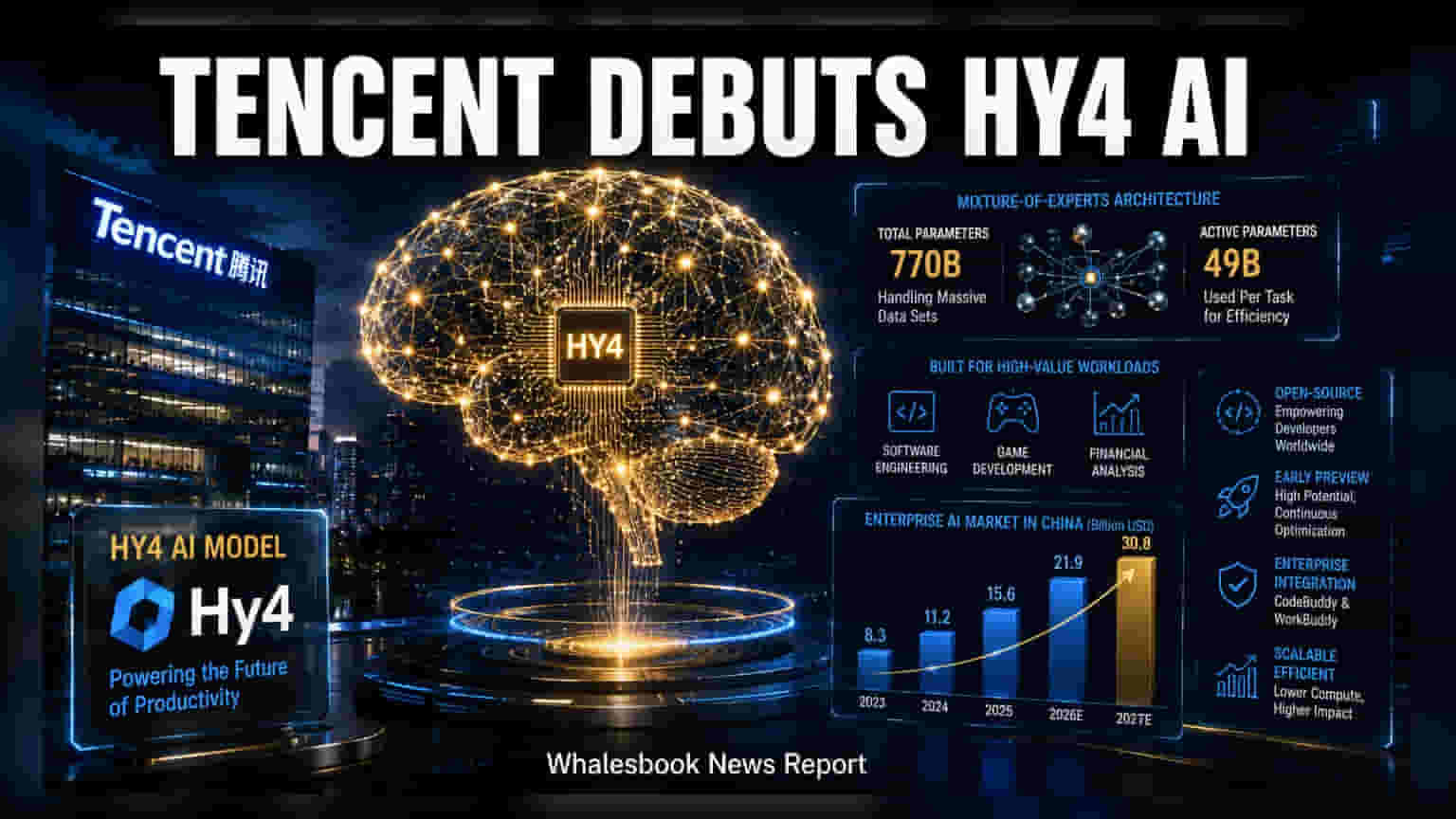
Tencent has officially released its new artificial intelligence model, Hy4, marking a strategic move to strengthen its position in the productivity and enterprise software sector. The model, released in a preview version on August 28, 2026, uses a 'mixture-of-experts' architecture. This design allows the model to handle massive data sets—totalling 770 billion parameters—while only using a small, active portion of 49 billion parameters for each task. This approach aims to balance high performance with computational efficiency, helping the company manage complex workloads like software engineering, game development, and financial analysis more affordably.
The company is embedding Hy4 directly into its existing enterprise platforms, specifically CodeBuddy and WorkBuddy. By making the model open-source, Tencent is attempting to encourage wider use among developers, which could help refine the technology faster through community feedback. This strategy is also a competitive play in China’s rapidly growing AI market, where the company must compete against established models like GLM and Kimi.
While the technology offers significant promise, the project faces clear challenges. As an early-stage preview, the model has shown potential for latency—or delays—when handling highly complex queries. Reports also indicate that the model currently tends toward 'excessive self-verification,' a feature that helps with accuracy but can slow down response speeds. For Tencent, these are technical hurdles that will likely need adjustment as the company aims for broader enterprise integration.
From a business perspective, the development of such large-scale AI models involves substantial capital spending. Maintaining a competitive edge in AI requires continuous investment in research and development, which can impact profit margins if the technology does not lead to significant revenue from enterprise clients. Furthermore, the company continues to operate within a sector defined by intense competition and evolving regulatory scrutiny in China, both of which remain key factors for long-term valuation.
For investors and market observers, the next steps for Tencent will be to demonstrate the practical value of Hy4 in real-world enterprise settings. Key things to monitor include the speed of developer adoption, the ability of the company to reduce latency in future updates, and whether these AI capabilities lead to higher subscription revenue for its enterprise software platforms like CodeBuddy.