

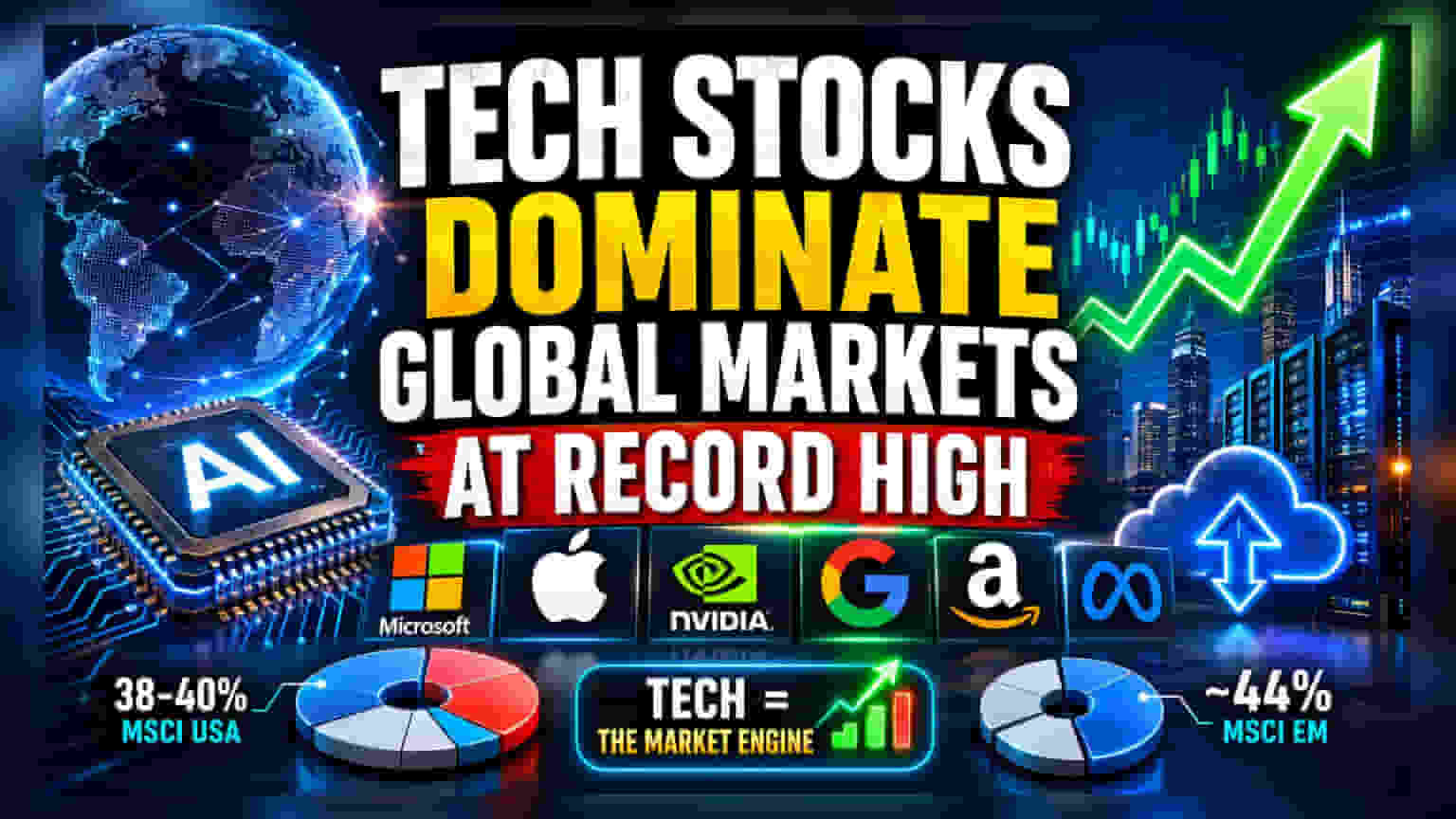
Technology stocks now account for nearly 40% of the MSCI USA Index and 44% of the MSCI Emerging Markets Index. Driven by the AI boom, this historic concentration impacts both equity and corporate bond markets, prompting investors to rethink portfolio diversification as a few giants wield unprecedented influence.
What Happened
The technology sector has reached a historic level of influence in global financial markets. As of mid-2026, information technology stocks account for roughly 38% to 40% of the MSCI USA Index and have surged to approximately 44% of the MSCI Emerging Markets Index. This dominance has more than doubled in emerging markets since 2022, primarily fueled by the semiconductor boom and the rapid expansion of digital infrastructure. Major players, particularly in the semiconductor and cloud computing segments, have seen their market capitalizations drive the performance of these broader benchmarks, effectively making the tech sector the primary engine of global equity returns.
Why It Matters For Investors
For many investors, broad market indexes like the S&P 500 or the MSCI EM Index are viewed as a way to own a diverse cross-section of the economy. However, the current tech concentration means that these indexes are now heavily sensitive to the fortunes of a small handful of companies. When a single sector makes up nearly half of an index, the traditional benefits of diversification are reduced. If tech stocks experience a downturn—due to regulatory challenges, supply chain disruptions, or shifting investor sentiment—the impact on the broader market will be significantly amplified. Investors are effectively making a concentrated bet on the continued success of the AI infrastructure cycle.
The Shift In Bond Markets
Tech dominance is no longer limited to equity markets; it is actively reshaping the corporate bond market. To fund massive investments in data centers, graphics processing units (GPUs), and power infrastructure, tech "hyperscalers" (including major cloud and AI firms) have become prolific borrowers. Investment-grade bond issuance by technology companies has seen a sharp increase, reaching record levels of 18% to 20% of the total market in recent years. While these firms generally maintain strong balance sheets, the sheer volume of new long-dated debt being issued to fund AI-related projects is a notable structural change in the fixed-income landscape.
The Concentration Risk
Market analysts note that the reliance on a narrow set of companies presents a unique risk. The current market rally is largely tied to the "AI story." This creates a potential vulnerability: if the expected revenue growth from AI fails to materialize or slows down, the high valuations of these tech leaders could face downward pressure. Furthermore, geopolitical risks, particularly those affecting semiconductor supply chains in regions like Taiwan and South Korea, directly influence the performance of emerging market indexes, which are now heavily tilted toward these specific geographies.
What To Watch Next
Investors should monitor the sustainability of capital expenditure by these large tech companies. The key monitorable is whether AI infrastructure spending translates into consistent, long-term profit growth that justifies the high valuations. Additionally, watch for potential regulatory scrutiny of the dominant tech firms, as their influence on both index performance and critical digital infrastructure grows. Any pivot in central bank interest rate policies will also affect the cost of debt for these heavy borrowers, potentially influencing how aggressively they continue to fund their AI expansion projects.