

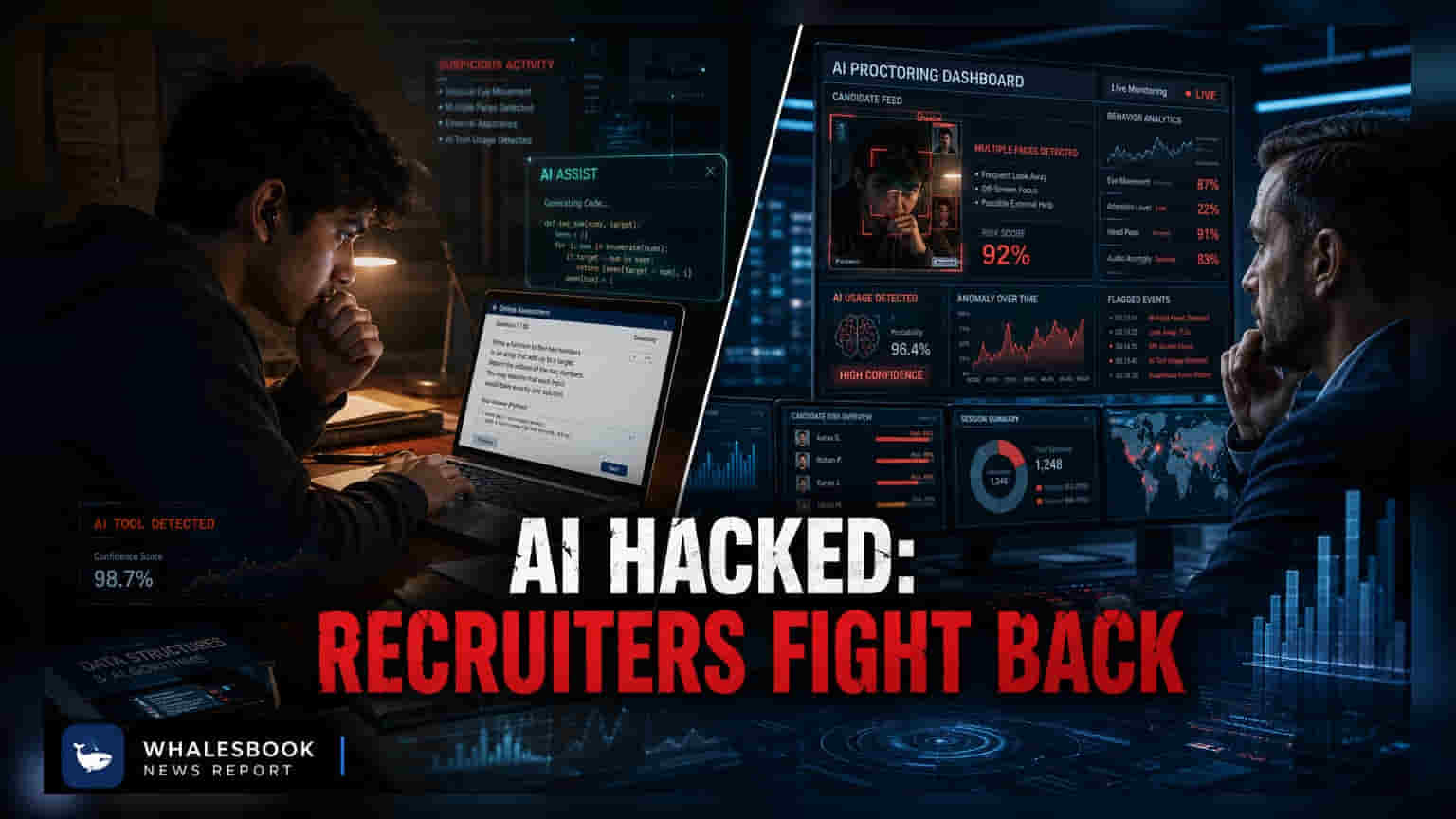
Indian technology firms are intensifying efforts to combat campus hiring fraud as AI tools enable proxy candidates and 'ghost coders.' Recruiters are shifting toward advanced AI-based proctoring and mandatory live follow-up interviews to verify candidate integrity. This move comes as nearly two-thirds of technical assessments now require proctoring to protect hiring quality.
What Happened
Campus recruitment in the Indian technology sector is facing a wave of sophisticated malpractice. Hiring managers report that candidates are increasingly using artificial intelligence, hidden wearable devices, and remote desktop software to bypass traditional coding assessments. The emergence of "ghost coders"—individuals who remotely complete tests on behalf of applicants—and organized "interview-as-a-service" networks have forced companies to rethink how they evaluate entry-level talent. By July 2026, the industry saw a significant rise in the adoption of proctored assessments, with nearly 77% of companies utilizing these systems to maintain the integrity of their hiring pipelines.
Why The Hiring Process Is Changing
The core problem lies in the design of traditional technical tests. Most conventional coding platforms focus solely on the final answer, which allows candidates to use AI to generate code submissions without understanding the underlying logic. Industry experts note that standard browser-based assessments are no longer sufficient to detect off-camera assistance or virtual machines used to hide secondary AI sessions. Because these methods can bypass static testing, recruiters are now prioritizing a more holistic approach that combines automated monitoring with manual human verification.
The Shift Toward AI Proctoring
To address these risks, tech firms are increasingly integrating advanced proctoring solutions. Tools provided by platforms such as Talview, Mercer Mettl, HackerEarth, and HackerRank are being deployed to monitor webcam feeds, screen activity, and audio for suspicious behavior. According to industry data, these platforms are flagging approximately 30% to 35% of assessment sessions for suspicious activity. This surge in monitoring reflects the growing concern among firms that reliance on unproctored tests can lead to poor hiring decisions and long-term skill gaps in their engineering teams.
The Role Of Live Verification
Technology platforms have found that automated software alone may not be enough to stop highly organized cheating. As a result, the industry is increasingly moving toward mandatory short, live follow-up interviews. In these sessions, candidates are required to explain the logic behind their code in real time. Experience suggests that many candidates who rely on AI-generated solutions are unable to articulate their methodology, allowing recruiters to identify those who did not independently produce their work. This human-centric approach is becoming a standard layer of defense alongside technical monitoring.
What Investors Should Track
The move toward more rigorous hiring processes impacts the operating costs and recruitment efficiency of major tech companies. Investors may monitor how effectively these firms integrate these new tools without significantly increasing the time or money spent on hiring. The ability to filter out fraudulent candidates early in the process remains crucial for maintaining long-term productivity and innovation within technology-focused organizations. Key developments to watch include the evolution of assessment platforms and whether companies can successfully balance strict security with a smooth candidate experience.