

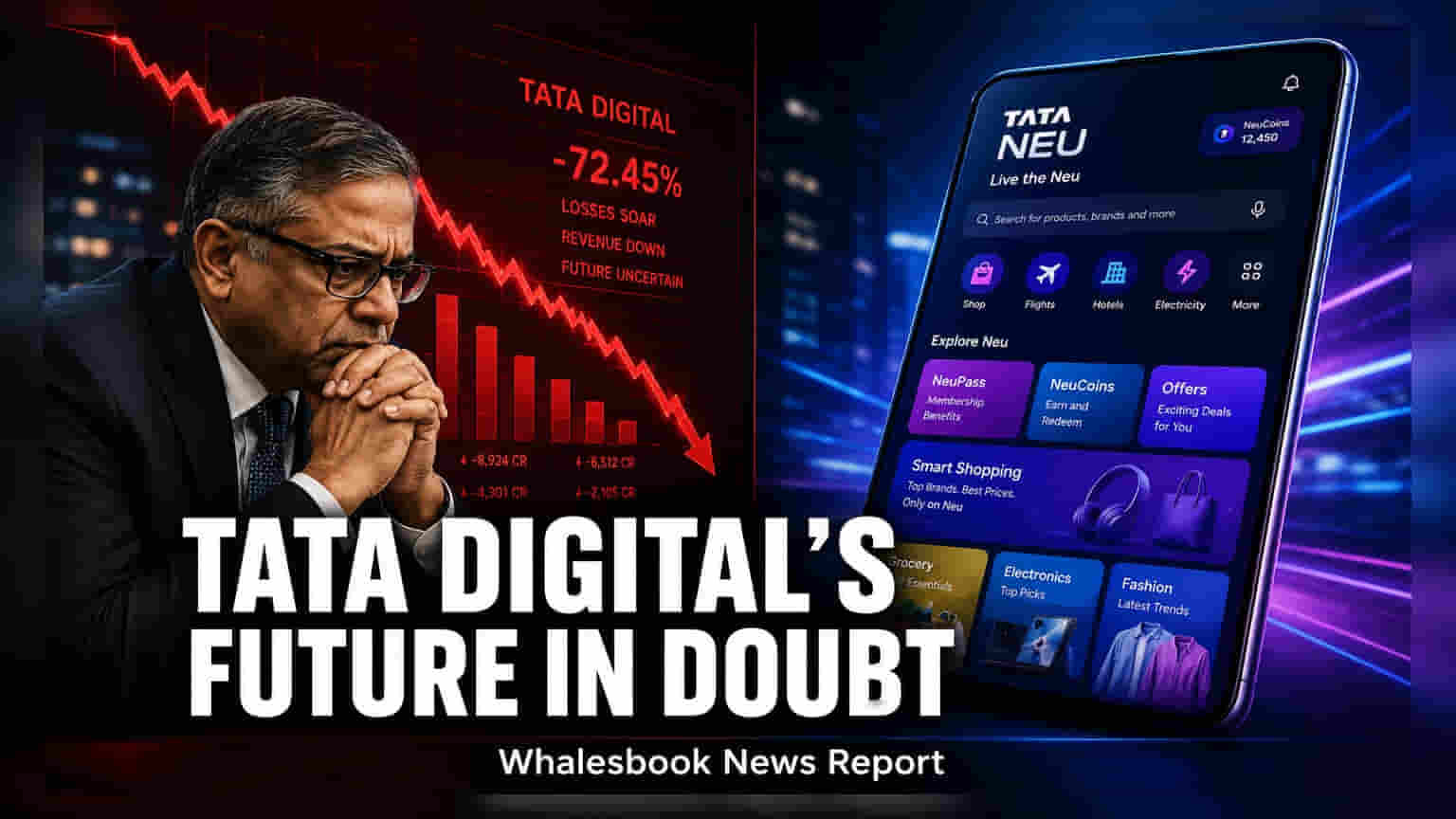
N Chandrasekaran will not seek a new term as Tata Sons Chairman when his contract ends in February 2027. His exit has intensified the spotlight on Tata Digital, which reported widening losses of Rs 4,974 crore in FY26. With the group facing leadership uncertainty, investors are evaluating the future strategy and potential restructuring of the digital unit.
Tata Sons Chairman N Chandrasekaran announced he will not seek reappointment when his current term concludes on February 20, 2027. This decision follows a six-month period of board-level discussions regarding his tenure extension. The announcement was followed by a sharp reaction in the stock market on August 12, 2026, with Tata Group listed companies seeing a combined loss of over Rs 68,000 crore in market value.
Tata Digital, which was a central pillar of Mr. Chandrasekaran's expansion strategy, is now facing intense investor scrutiny. The unit, which houses consumer brands including BigBasket, Croma, and Tata 1mg, has struggled to achieve profitability despite significant capital investment. For the fiscal year ending March 2026, Tata Digital reported a consolidated net loss of Rs 4,974 crore, widening from Rs 4,610 crore in the previous year.
While the division managed to grow its revenue by approximately 12% to reach Rs 35,990 crore, the business model faces significant pressure from aggressive competition, particularly in the quick-commerce segment. BigBasket, a key asset within the digital portfolio, reported a standalone loss of Rs 3,073 crore for FY26. The recurring leadership changes within the digital arm and the challenge of gaining market share against established digital rivals have led to questions about the unit’s long-term sustainability.
With the upcoming change in leadership at the group holding company level, market analysts are speculating on potential strategic shifts. There is discussion regarding whether the incoming management will continue the current path or explore restructuring. Potential outcomes could include spinning off segments, changing focus, or divesting underperforming assets to improve the group's overall return on capital.
The uncertainty surrounding Tata Digital contrasts with the performance of other group initiatives. For instance, Tata Electronics has shown revenue growth and reached operating break-even, aligning with government policies on manufacturing. Meanwhile, the group's established business, Tata Consultancy Services (TCS), remains a reliable source of cash flow. However, the leadership transition at the top has created an environment of caution.
For investors, the most critical factors to watch in the coming months will be the official succession plan and any management commentary regarding the digital business. The market will look for a clear strategy on how the group plans to address the persistent losses and capital intensity of its digital ventures. Updates on operational efficiency, potential asset reorganization, or changes in digital strategy will be key indicators for shareholders assessing the future direction of these consumer-facing segments.