 Whalesbook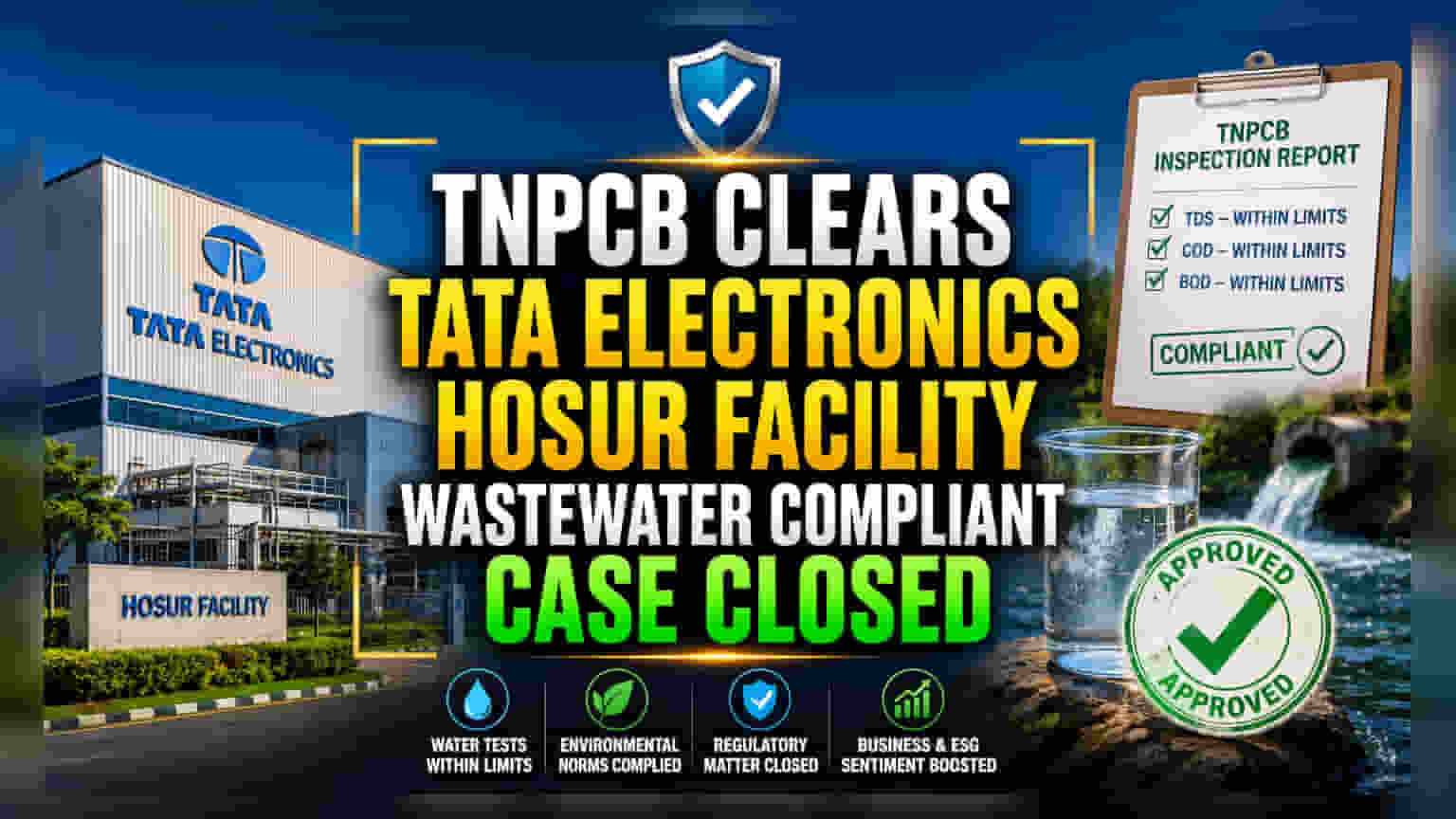


Tamil Nadu environmental regulators have cleared Tata Electronics' Hosur facility of wastewater contamination claims. The state pollution control board confirmed that the plant meets all environmental standards, removing a potential operational risk for the key manufacturing site.
What Happened
The Tamil Nadu Pollution Control Board (TNPCB) has officially cleared the Tata Electronics facility in Hosur of allegations regarding wastewater contamination. Following a routine inspection and a detailed review of a show-cause notice issued in May, the state regulator concluded that the manufacturing unit is fully compliant with environmental norms. Water sample tests, which measured critical environmental indicators such as Total Dissolved Solids (TDS), Chemical Oxygen Demand (COD), and Biological Oxygen Demand (BOD), showed all levels were within the permitted limits.
To address the earlier concerns raised by local farmers and district authorities, the company also conducted an independent audit through an accredited laboratory. The results of this independent study were shared with the TNPCB, confirming that the facility's operations are consistent with the state's environmental regulations. With the board deciding against further action, the regulatory matter is now considered closed.
Why ESG Compliance Matters For Tata Electronics
For large-scale manufacturing entities, regulatory and environmental compliance is a critical business metric. Tata Electronics is a significant part of the Tata Group’s aggressive expansion into electronics and semiconductor manufacturing. Projects of this scale require continuous operational stability to meet global supply chain commitments. Any regulatory disruption, even temporarily, can cause uncertainty regarding production timelines or order deliveries.
By resolving this issue quickly and demonstrating compliance with independent testing, the company helps protect its reputation and ensures that its large capital investments in the region remain on track. For the parent conglomerate, maintaining strong Environmental, Social, and Governance (ESG) standards is essential, as these companies often look to partner with global technology firms that hold strict requirements for their suppliers.
The Bigger Business Context
The Hosur facility is a major pillar in the group's strategy to capture a larger share of the global electronics manufacturing market. As the company scales its operations to manufacture components for smartphones and other electronic devices, its ability to manage resource usage—specifically water and power—is a key operational efficiency factor. Investors in the broader Tata Group ecosystem often monitor these large manufacturing sites for consistent output and regulatory health, as they are crucial to the group's long-term manufacturing ambitions in India.
What Could Go Wrong
While the current matter is resolved, large manufacturing plants in India face constant monitoring by local pollution control boards. Common risks for such facilities include shifts in groundwater regulations, changes in state-level discharge policies, or local community concerns about industrial impact on farming. Any future discrepancy in compliance could lead to production delays or increased costs for installing advanced waste treatment infrastructure. Therefore, maintaining transparent reporting and high-standard water management remains a necessity to avoid future operational hurdles.
What Investors Should Track
Moving forward, the primary monitorables for the business involve operational efficiency and production volume. Investors often track whether the company meets its capacity utilization targets and if it successfully scales production to meet demand from major global electronics brands. Additionally, the company’s ability to sustain its environmental and safety compliance track record will be essential for avoiding similar regulatory scrutiny, which can impact the stability of its long-term manufacturing roadmap.