

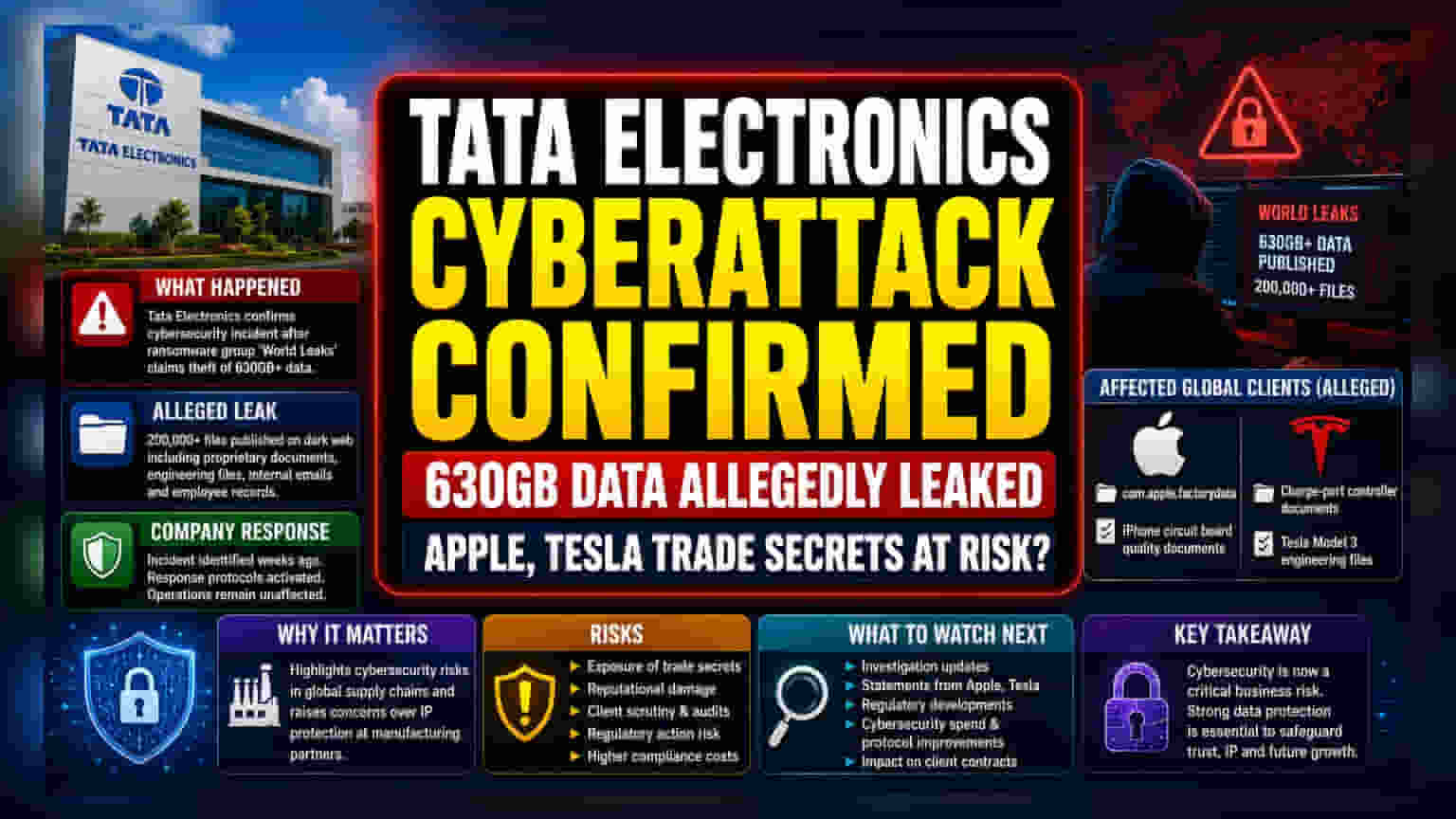
Tata Electronics confirmed a cybersecurity incident after the ransomware group 'World Leaks' claimed to have stolen over 630 GB of internal data. The leaked files allegedly include proprietary information linked to major clients Apple and Tesla. While the company stated its business operations remain unaffected, the breach has raised serious questions regarding supply chain security in the electronics manufacturing sector.
What Happened
Tata Electronics, a key player in India’s electronics manufacturing ecosystem, has officially confirmed a recent cybersecurity incident. This follows claims by a ransomware group identified as 'World Leaks,' which asserted that it had successfully exfiltrated more than 630 GB of company data. The group allegedly published over 200,000 files on its dark web leak site, which include documents purportedly containing proprietary trade secrets of major global technology clients, including Apple and Tesla. The company stated that it identified the incident a few weeks ago and immediately activated its response protocols.
The Nature of the Alleged Leak
According to reports and cybersecurity researchers who reviewed the material, the data dump contains folders and documents marked with proprietary labels. These include files titled 'com.apple.factorydata' and documents detailing quality control standards for iPhone circuit board components. Researchers also identified engineering files purportedly linked to Tesla, including documents referencing a charge-port controller for vehicle programs and designs for the Model 3. Beyond engineering documents, the leaked files reportedly contain internal emails, event logs spanning several years, and sensitive employee records, including passport copies. It is important to note that while the files contain these markings, the authenticity of the entire dataset has not been independently verified.
Why This Matters for the Supply Chain
For investors and industry observers, this incident highlights a critical vulnerability in global supply chains. Tata Electronics has been a cornerstone of the 'Make in India' initiative, significantly expanding its footprint as a contract manufacturer for global tech giants. When a primary manufacturing partner suffers a data breach, it raises questions about the robustness of cybersecurity infrastructure in the high-tech manufacturing sector. The exposure of trade secrets—if confirmed—could lead to increased scrutiny from clients, potential contract re-evaluations, and a heightened focus on the data security standards maintained by manufacturing partners.
Risks and Business Implications
While Tata Electronics has emphasized that its operations remain unaffected and no production disruptions have occurred, the reputational risk remains a primary concern. Large global corporations often have stringent data protection and intellectual property clauses in their supplier agreements. A breach of this magnitude could invite regulatory scrutiny or audit demands from affected clients. Furthermore, the incident serves as a reminder of the 'supply chain link' risk, where vulnerabilities at a mid-tier or specialized manufacturing partner can impact the intellectual property security of the largest global brands.
What Investors Should Track Next
Investors and stakeholders should watch for further updates from the company regarding the scope of the investigation. Key areas to monitor include official statements from major clients like Apple or Tesla, any potential regulatory action from government cyber-security agencies, and improvements in the company’s cybersecurity spending or protocols. Clarity on whether this breach will lead to increased compliance costs or changes in the company's client engagement terms will be essential for assessing the long-term impact on the business.