

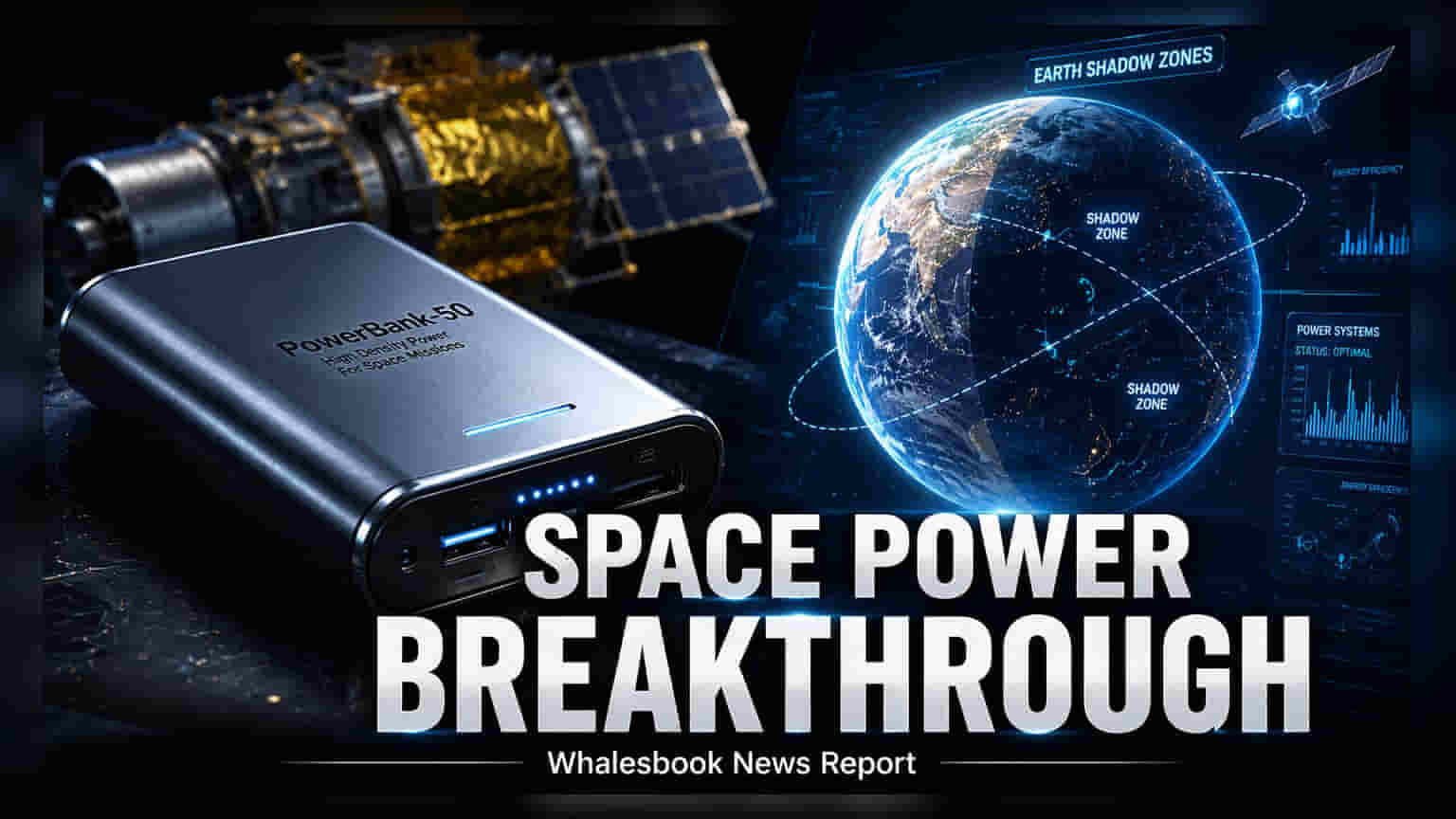
TakeMe2Space has successfully tested its PowerBank-50 battery on a Skyroot Aerospace rocket. This milestone allows Indian satellite makers to potentially reduce reliance on expensive, imported power systems. The device, designed for small satellites, is expected to lower overall mission costs by offering a locally available, space-tested solution.
TakeMe2Space has reached a significant technical milestone after its PowerBank-50 unit successfully completed its first mission in space. The power solution was launched earlier this month aboard a Skyroot Aerospace rocket and functioned as intended while powering an experimental debris-catcher payload. This successful flight validates that the hardware can withstand the harsh conditions of orbit, including intense vibration during launch, extreme temperature shifts, and radiation.
Advancing Local Component Capabilities
The PowerBank-50 is a compact unit weighing 380 grams and providing over 50 watt-hours (Wh) of energy storage. Beyond its physical durability, the device features an integrated battery management system that monitors cell health and uses internal heaters to regulate temperature in the extreme cold of space. By achieving a 'flight-proven' status, the company has demonstrated that critical satellite power components can be developed and verified domestically.
For the broader Indian space sector, this development addresses a long-standing challenge regarding supply chain reliability. Many satellite missions in India have traditionally relied on imported battery systems that often carry long delivery timelines and high costs. The availability of an off-the-shelf, space-proven power unit could streamline the satellite manufacturing process and help reduce the financial burden on startups, academic institutions, and other organizations looking to conduct space experiments.
Implications for Future Satellite Missions
The ability to source reliable power hardware locally is a key step toward increasing the frequency of Indian satellite launches. Lowering the barrier to entry for satellite construction is expected to support growth in sectors that rely on satellite data, such as agricultural monitoring, disaster management, weather forecasting, and telecommunications.
As TakeMe2Space moves forward, the primary monitorable for investors and stakeholders in the space technology sector will be the company's ability to scale production while maintaining the rigorous quality standards required for orbital missions. Furthermore, as the small-satellite market continues to evolve, the cost-effectiveness and performance of these local alternatives will be tested against international benchmarks. Future updates will likely focus on the adoption rate of this technology among other private satellite developers and its long-term reliability across various orbital missions.